Gamebirds
I almost got the first photograph taken in the wild of a Small Button-Quail (formerly Andalusian Hemipode) on Santa Maria when a bright female froze in the middle of a sandy track when it saw my approaching vehicle. The camera was on the seat beside me, but it scuttled away into cover like a small crake, neck outstretched, before I could focus on it.
More obliging were the grouse in Finland. In the Pallas/Yllas National Park in June in 2012 this Capercaillie was reluctant to leave the relative warmth of the approach road in an early morning temperature of 6˚C.

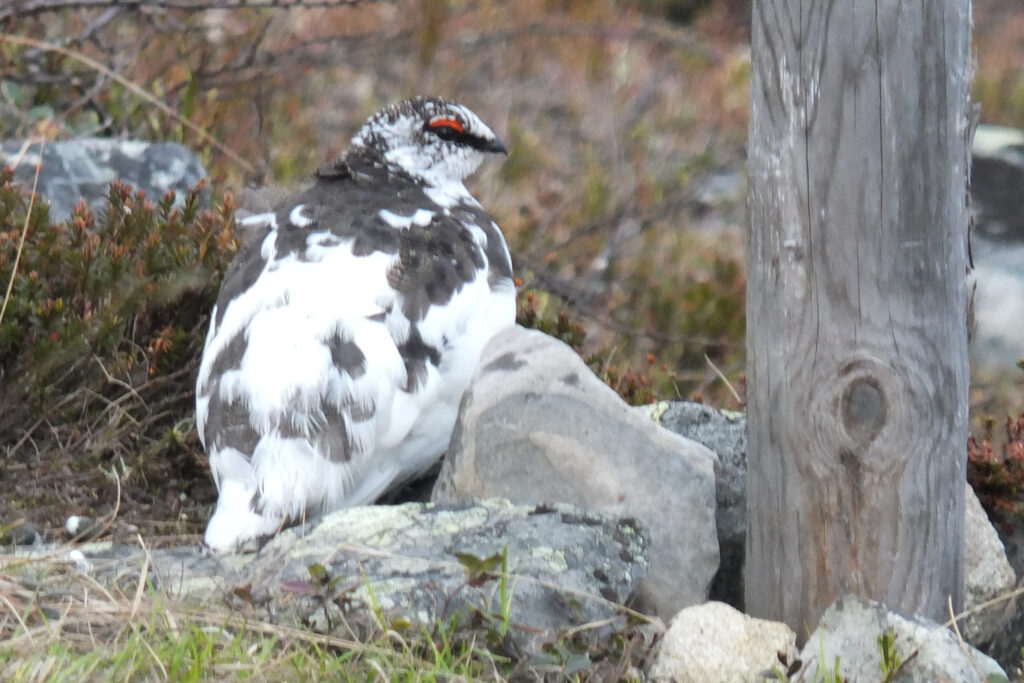
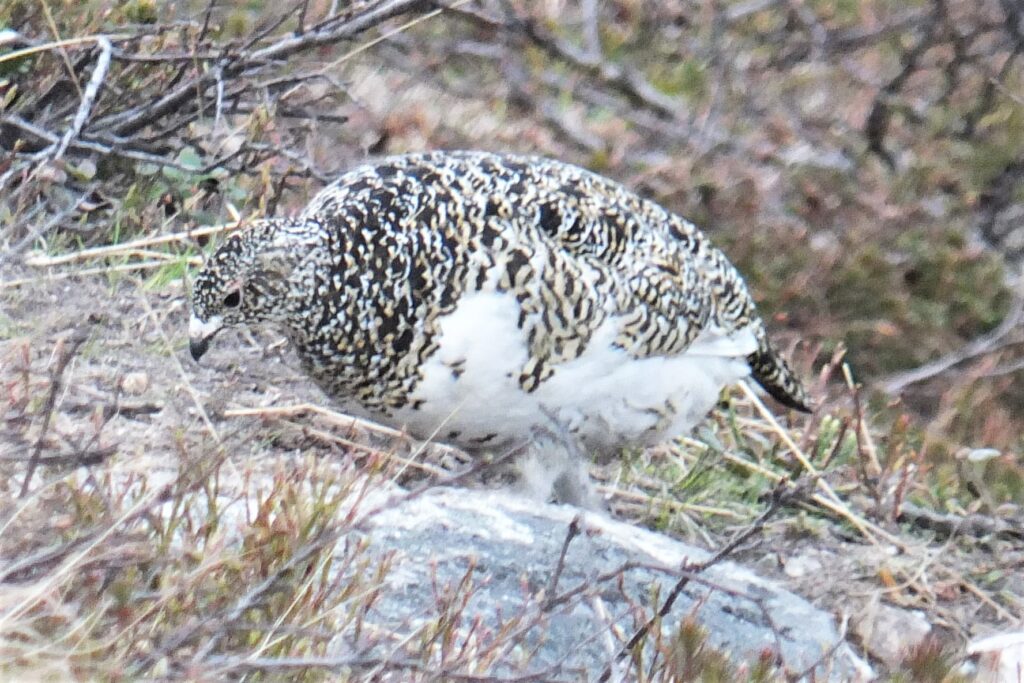
The Ptarmigans on the ridge seemed to be using the trail snow poles as protection against eagle attack.
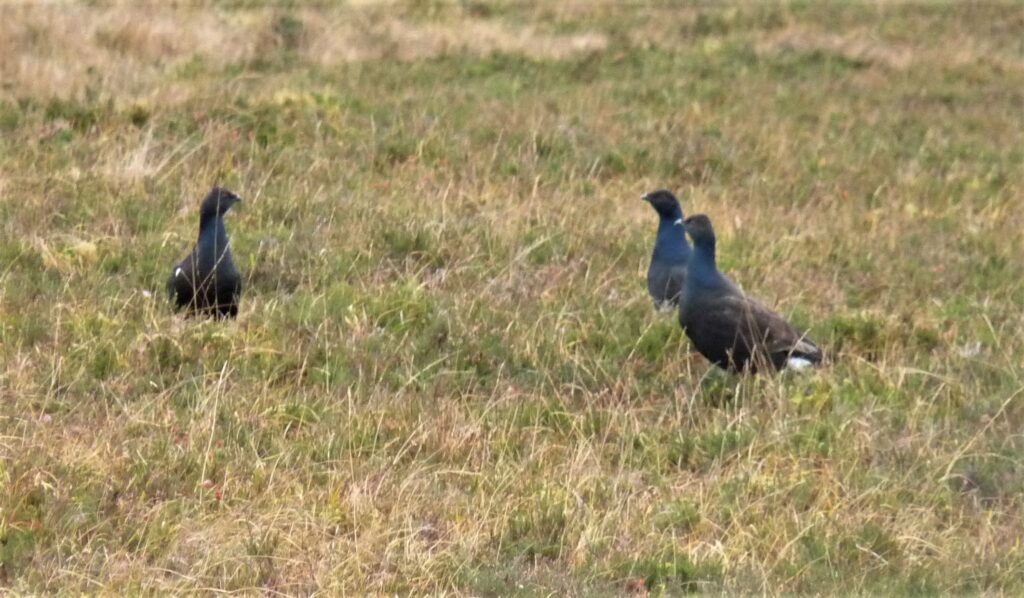
After the death of my wife, Bonnie, my second Sutherland home at Rhilochan, in Upper Strath Brora, was close to a population of Black Grouse.
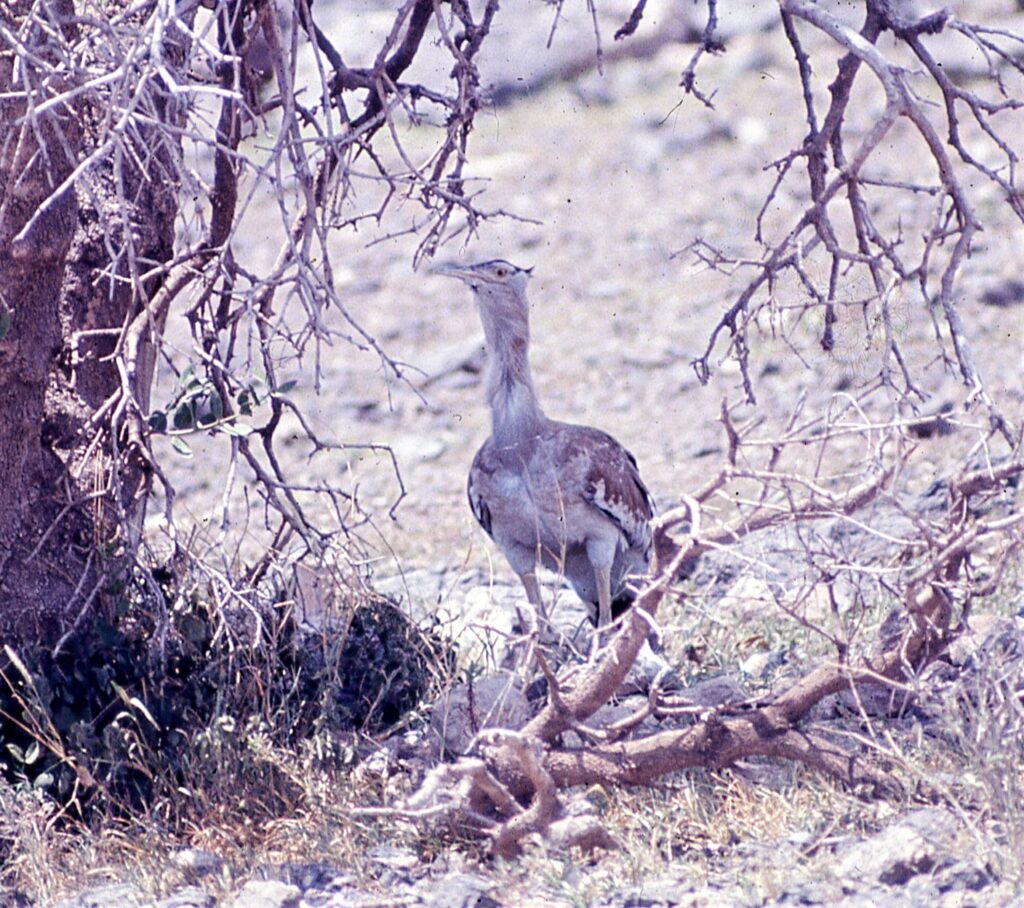
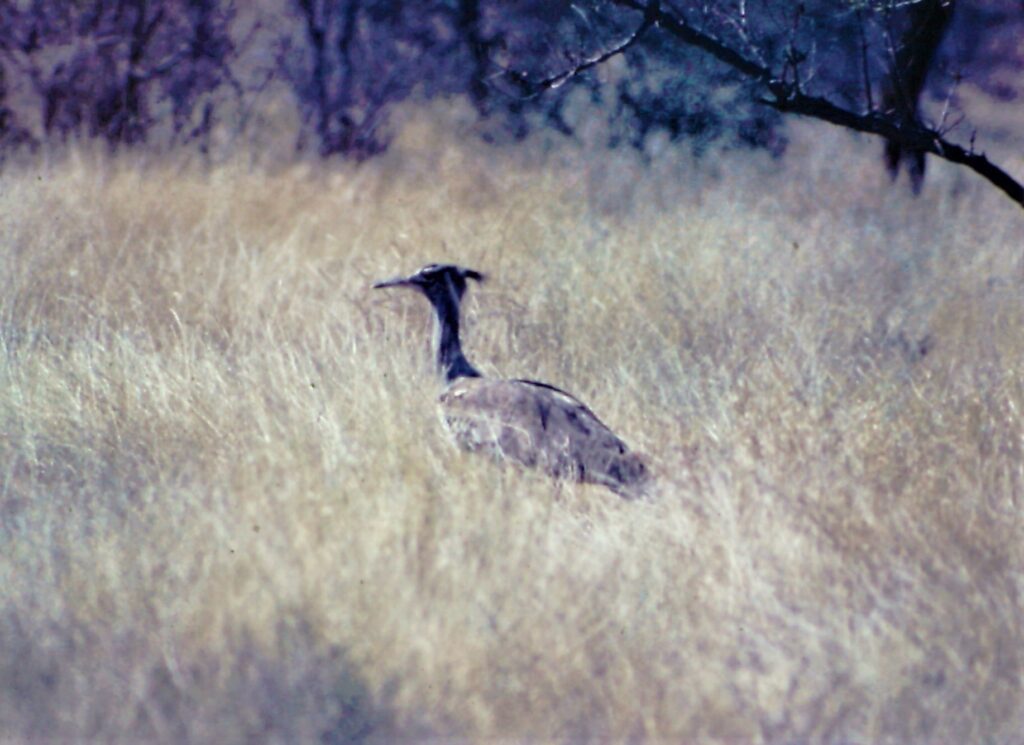
Two families with the ‘wow factor’, for me, are the bustards and sandgrouse. I am delighted my slide of an Arabian Bustard (below left), sheltering in the shade of the only tree in sight by the road to the Danakil Desert in Ethiopia, has survived the ravages of time.
There were other species in the nearby Awash National Park, including Crested and Kori’s, as well as several francolins.
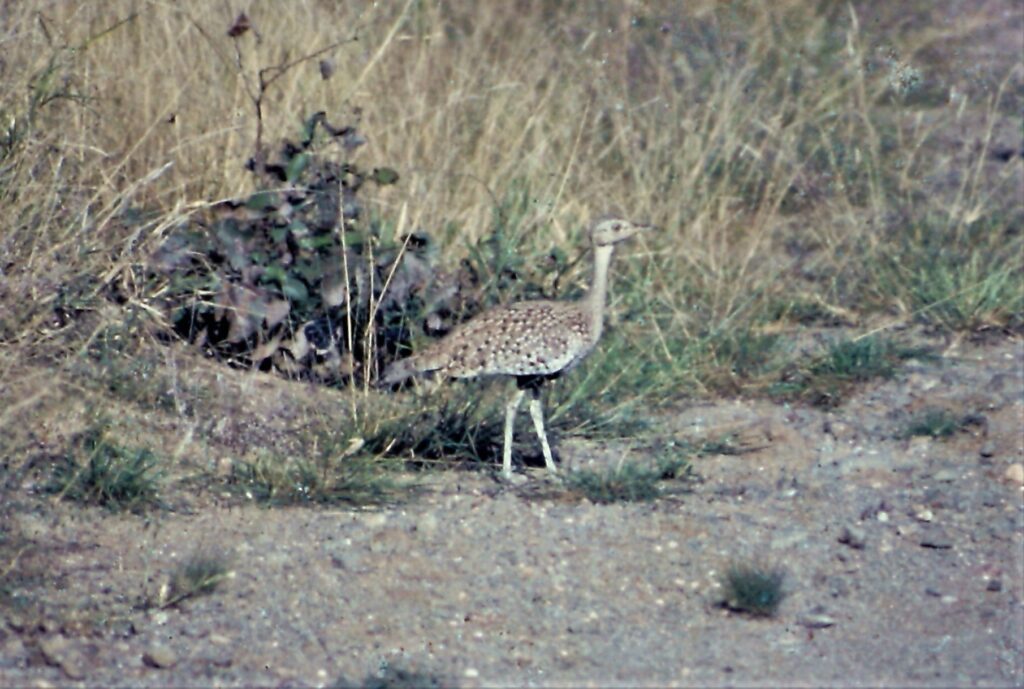
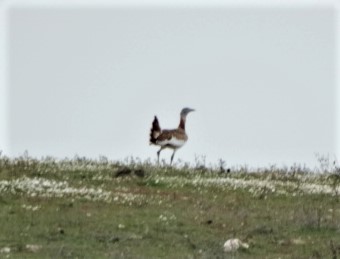
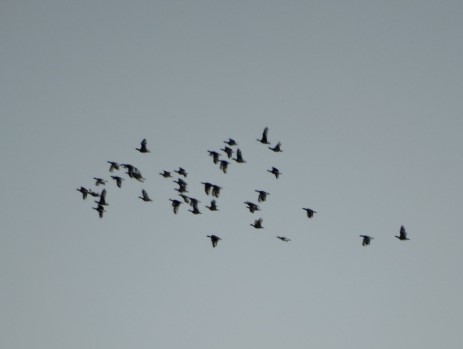
I failed to get close to Great Bustards on the ground in either Turkey or Portugal, or to Little Bustards in Portugal. Here, I have so far had to settle for a distant male Great and a flock of 38 Littles over Entradas.
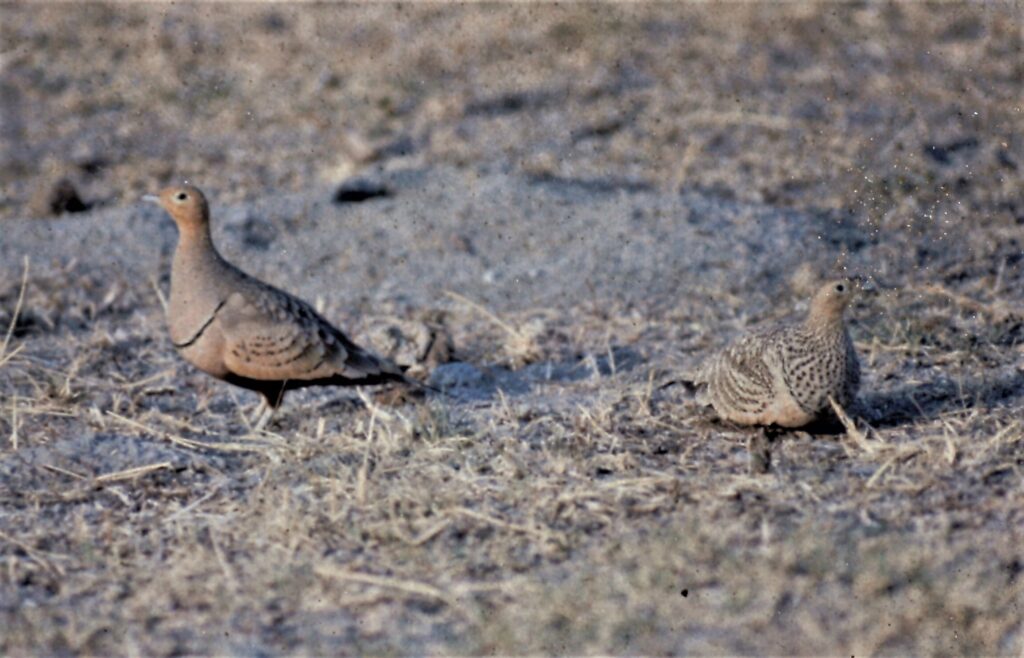
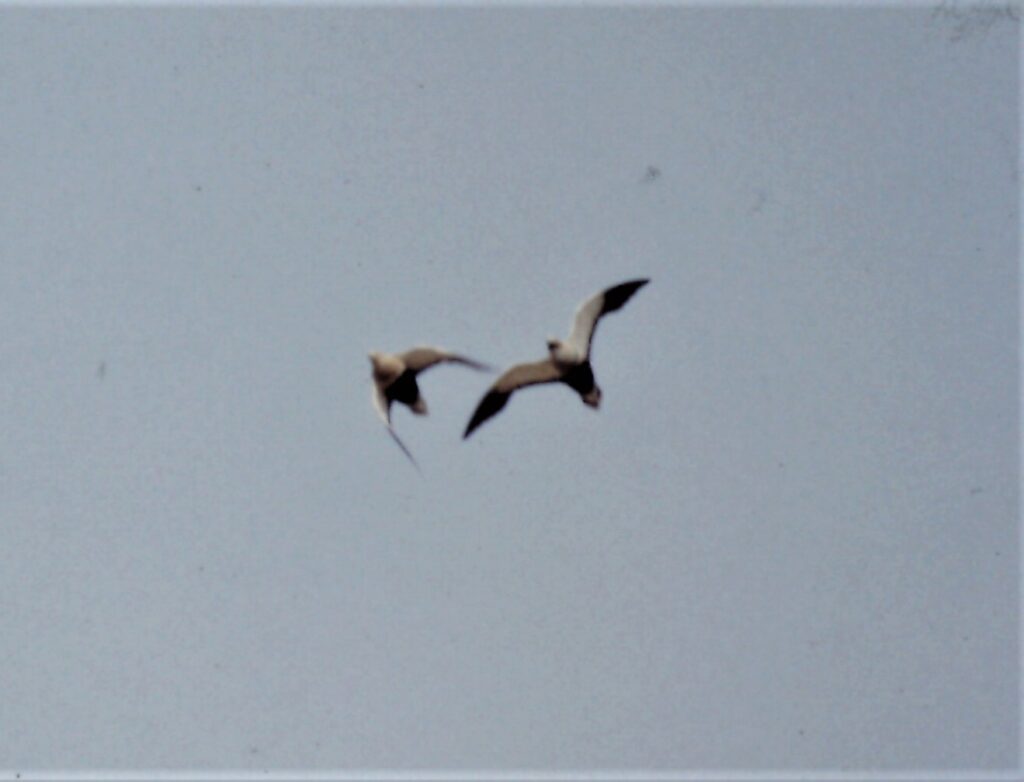
Sandgrouse are equally difficult to approach in open country but I managed to photograph a pair of Chestnut-bellied from the car in Ethiopia. Black-bellied was quite common on the central plateau in Turkey and also occurs with the bustards in Portugal but my only (partial) success with a camera was on Fuerteventura in the Canary Islands, a slice of the Sahara in the Atlantic.