My Budens Patch
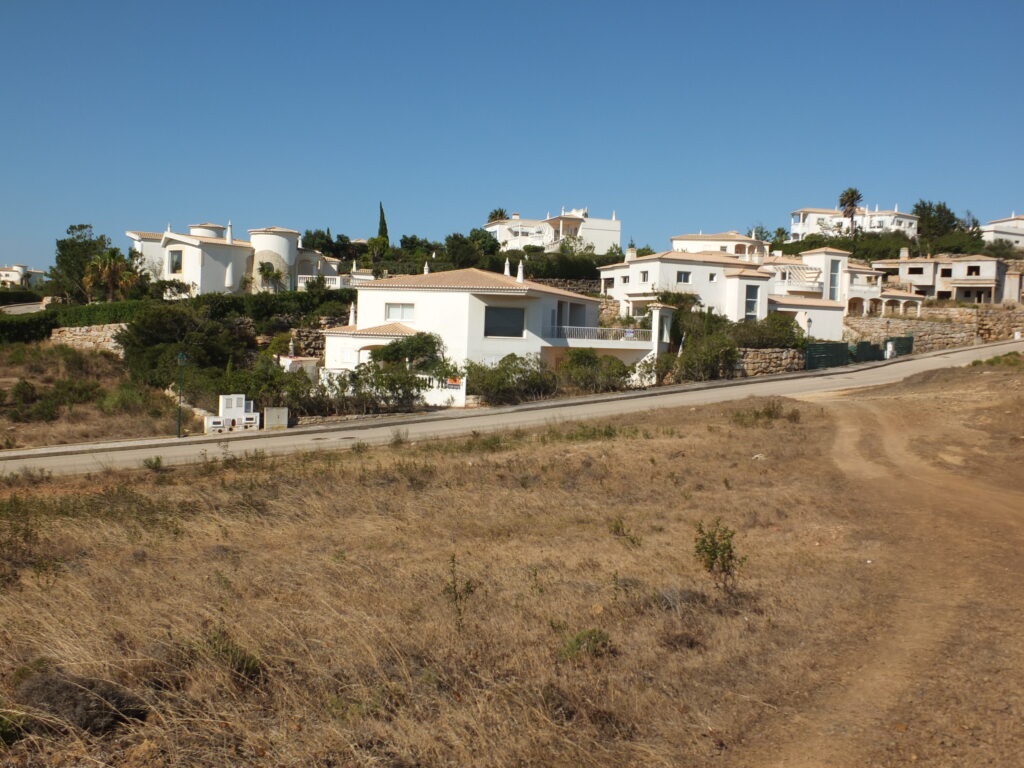
The old village of Budens, in the south-west of the Algarve, sits by the main road between Lagos and Sagres, about 20km ENE of Cape St. Vincent. It is now dominated by a new golfing estate built around the hilltop behind the village. The golf course itself, which is of some ornithological interest (having inter alia wintering Tree Pipits), occupies the N/S Santo Antonio valley, with some mixed woodland and a semi-permanent stream.
My house is on the lower, eastern side of the estate, overlooking a parallel valley rich in conifers and cistus scrub. It has proved to be right on the flight-line for migrants moving to and from the Cape and, after only eight years, boasts a ‘house list’ of over 270 species including a number new to Portugal and some even to Europe. This is partly the result of potential colonisation of Iberia by Maghreb residents, like Desert Lark, Moussier’s Redstart. Common Bulbul and House Bunting and increased vagrancy by other African species.
Now I’m in my eighties, I’m more than happy to let birds come to me and scan from my veranda on most days, throughout the year. My large Swarovski telescope gives be good views of even the smallest birds on the ridge (150m away) and overflying raptors, which can be very numerous in autumn.
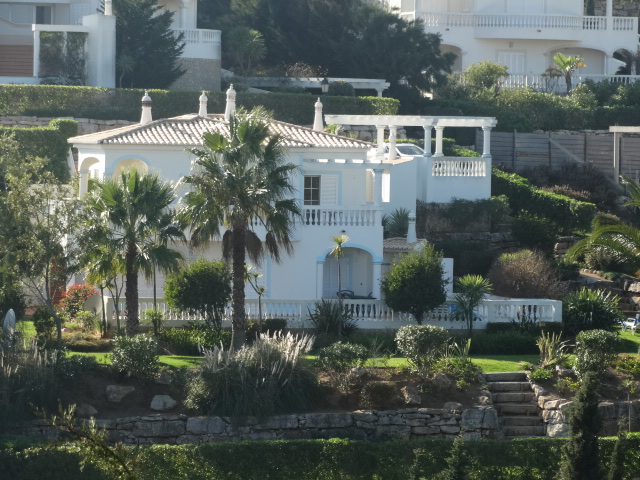
My house faces ENE, with verandas looking N, E and S
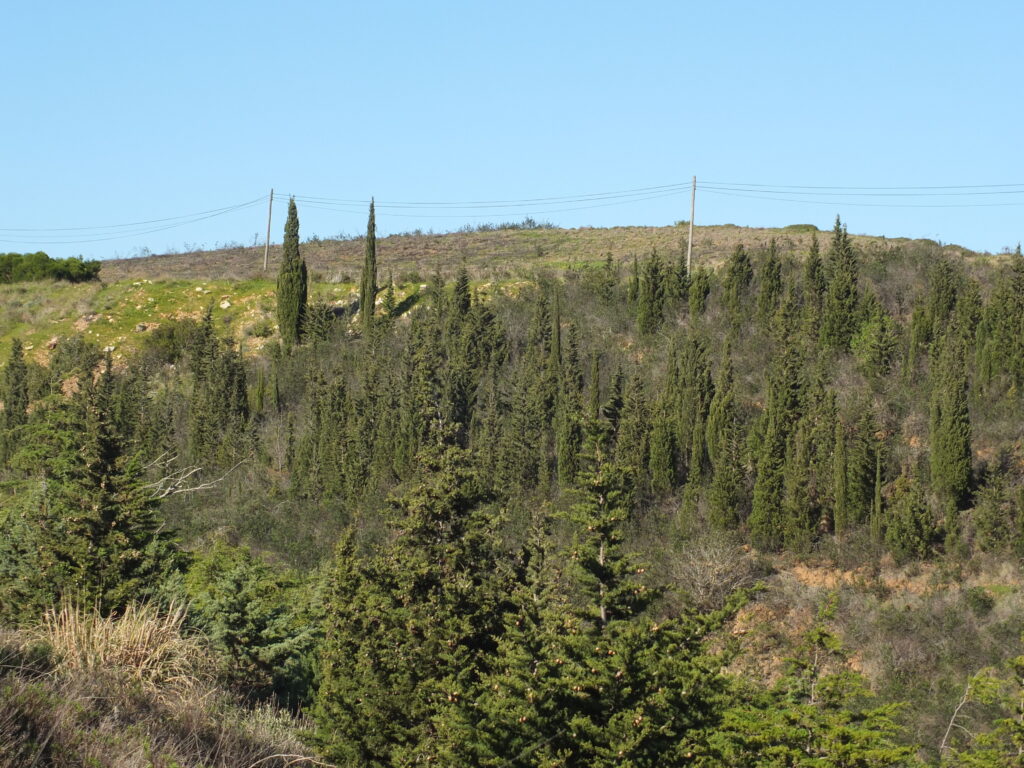
View from veranda of ridge opposite, looking N, E and S
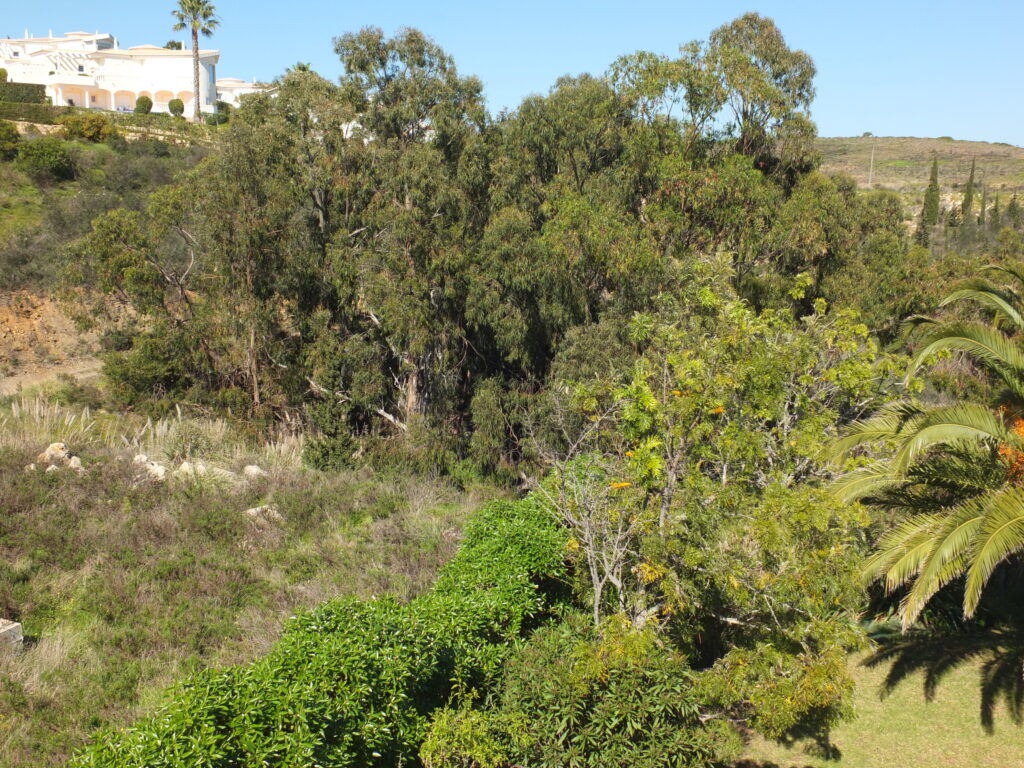
Eucalyptus copse below garden
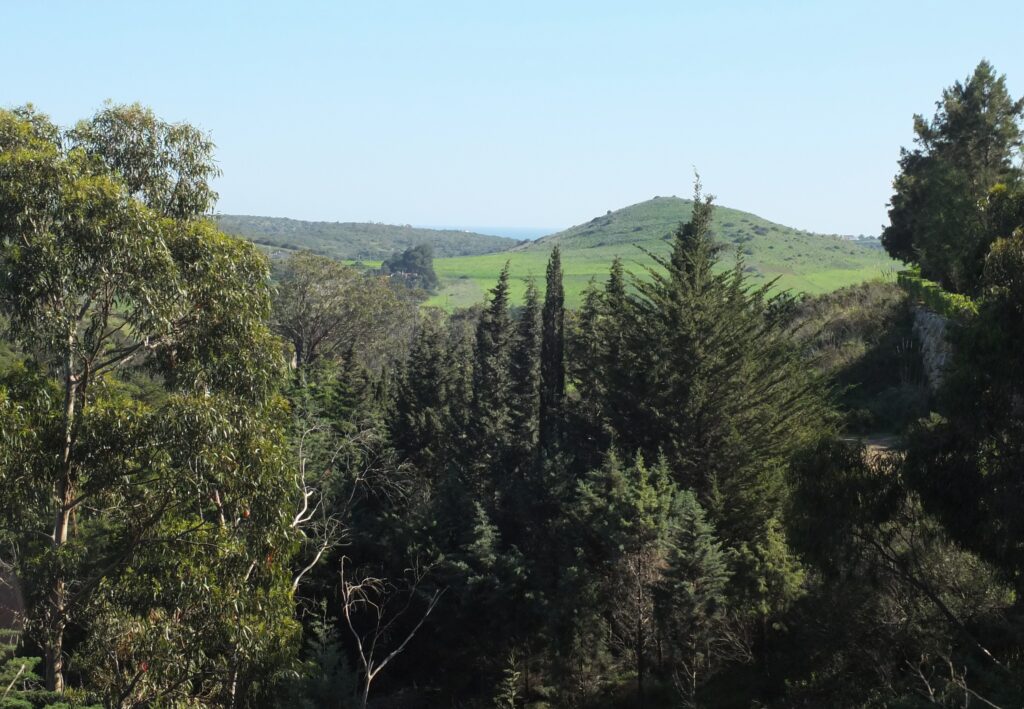
Looking S down valley (sea just visible)
Residents in the valley include Azure-winged Magpie (a roving ‘gang’ of 80+ birds visits most days), Spotless Starling, Stonechat, Sardinian Warbler and Cirl Bunting. Summer breeders are Red-rumped Swallow, Nightingale, Blackcap and Iberian Chiffchaff. Wryneck, Black Redstart and Chiffchaff are present in winter, plus numerous immigrant Blackcaps.
Beyond the ridge opposite my house, largely uniform ‘semi-wild’ country extends some 30km north-east to Foia, the Algarve’s highest peak above Monchique. Directly to the north, inland, there are no serious developments for about 80km, which explains why I saw a wolf near the abandoned farmhouse in September 2023!
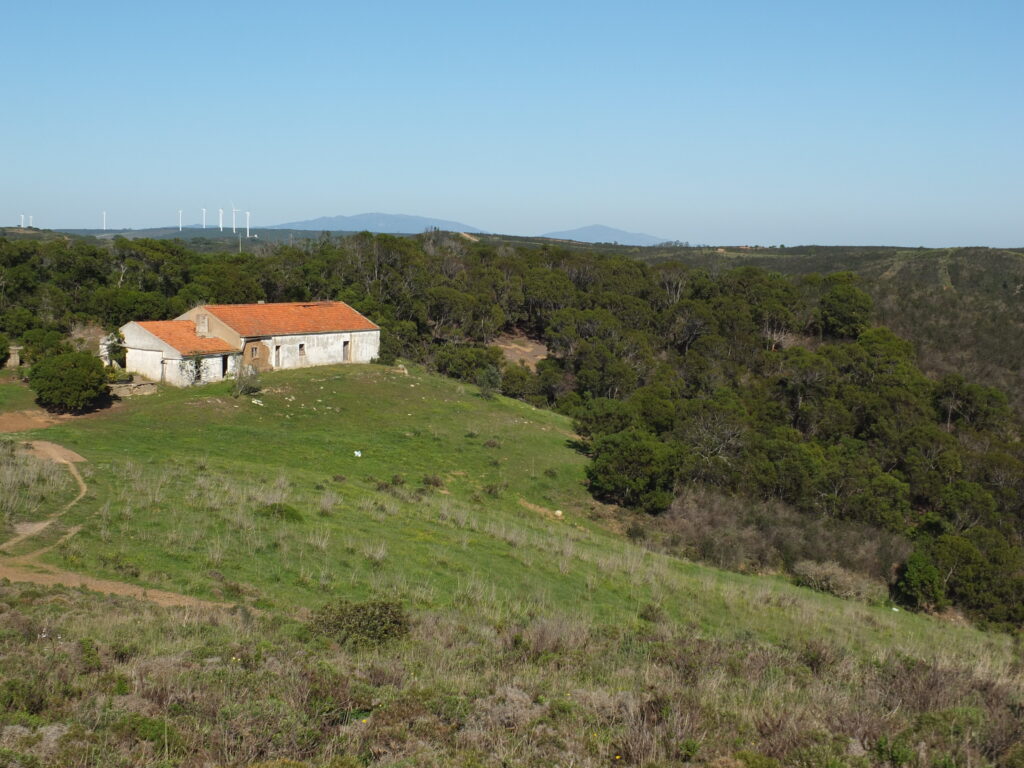
View from ridge towards Foia
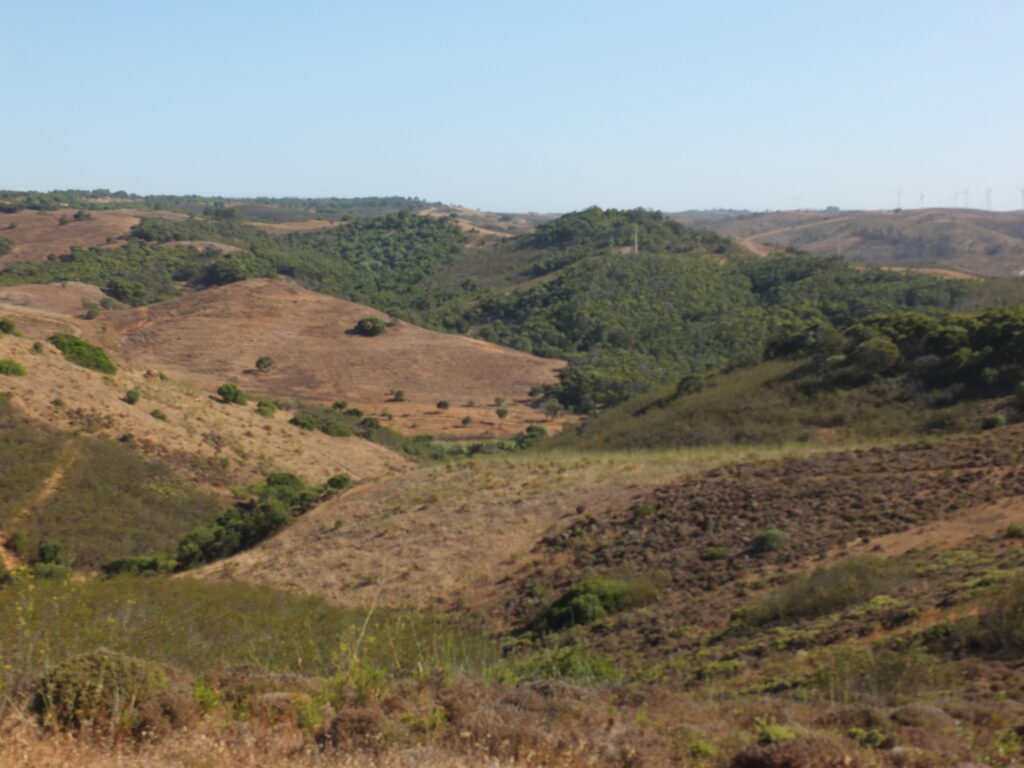
Looking N from ridge
This largely undeveloped area, dominated by cistus scrub, has breeding Short-toed and Bonelli’s Eagles, Thekla Larks, Dartford Warblers, Woodchat Shrikes and Rock Buntings. In autumn, it is crossed by migrants heading south-west. Low-level ‘filterers’ encounter the barrier of the golfing estate (see below) and most turn left down my valley, which begins at the bottom left corner of the photo.
On the coast, just over a kilometre from Budens, a larger watercourse reaches the sea at Boca do Rio, which (except after long droughts) has small lagoons behind the beach and a sizeable plain which can be flooded by winter rains. The river valley extending north-east from the plain has a reedbed.
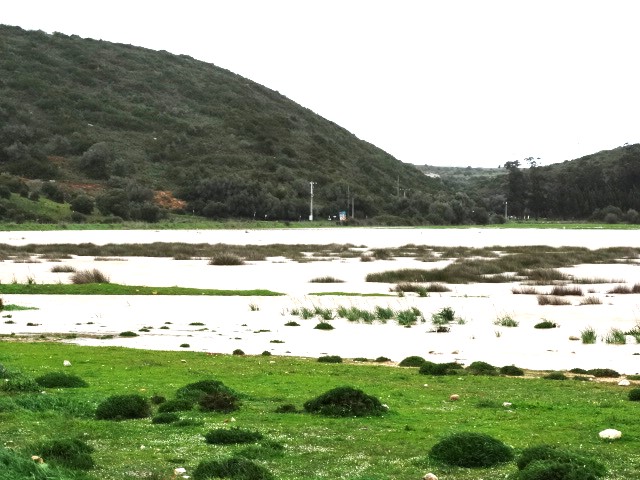
Flooded plain after heavy winter rain
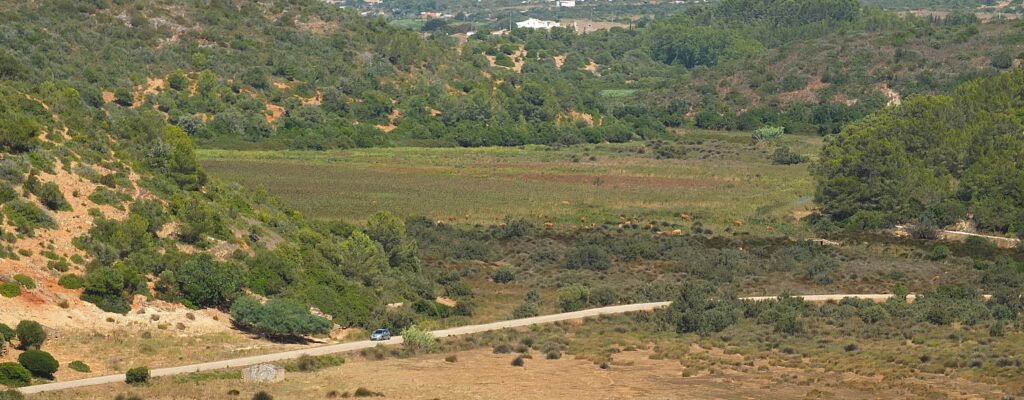
Boca do Rio reedbed
Another freshwater feature is provided by Budens’ water treatment works, just below the village.
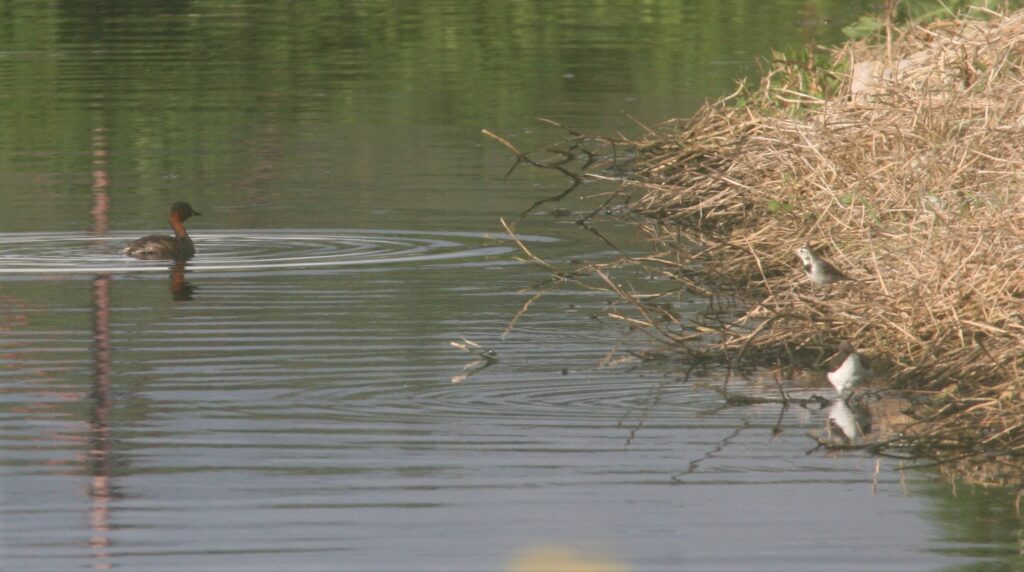
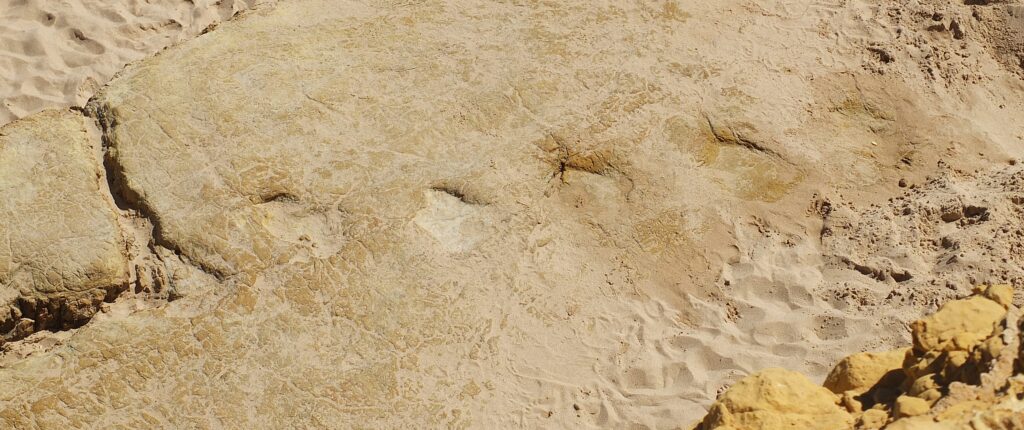
The coastal village of Salema, just west of Boca do Rio, provides me with a convenient seawatching point at the top of a low cliff (above a set of dinosaur footprints!).
To the north of Budens, a dirt road climbs up to a plateau with black pine, passing remnants of cork oak woodland. Lesser Spotted Woodpecker, Nuthatch, Short-toed Treecreeper and Crested Tit are resident in the pinewood.
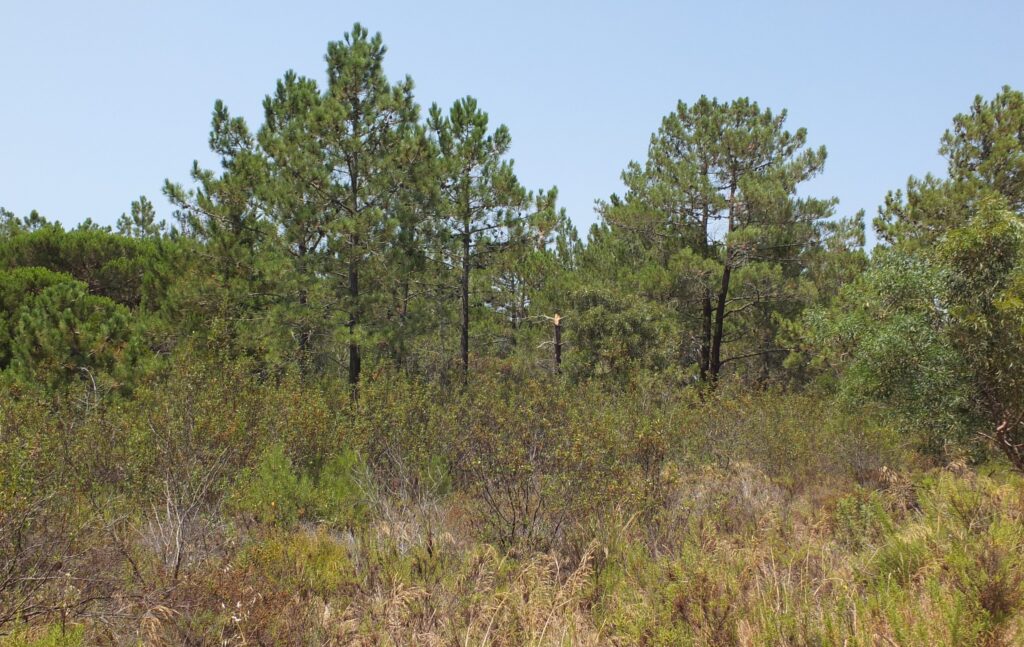
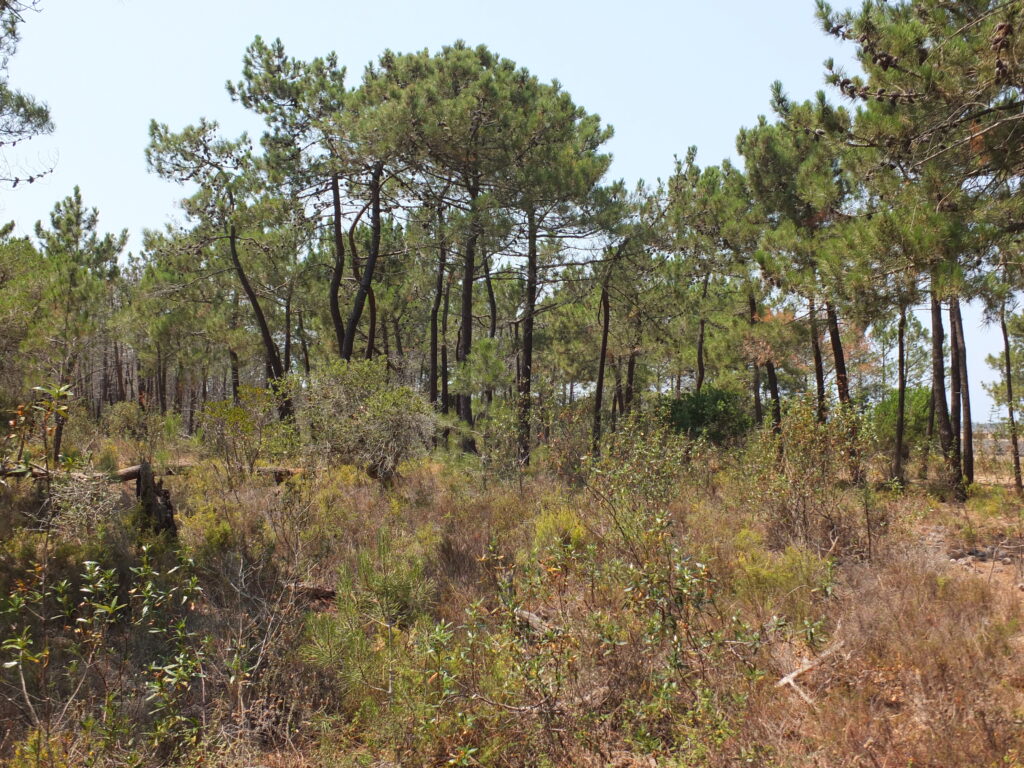
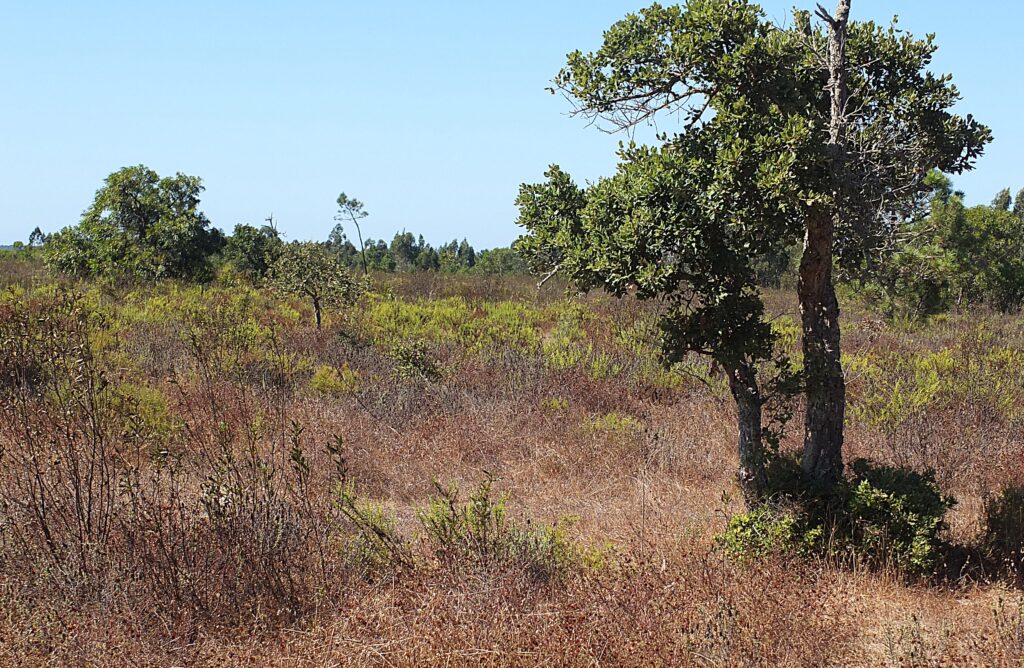
Open heathland to the west of the pines provides a unique habitat in the area favoured by Woodlark and Mistle Thrush. The declining Tawny Pipit still breeds here.
In 2022 I published ‘Birds from Budens and Salema, Algarve’, detailing all my sightings during my first five years here (2017 – 21). It is available free from me to anyone visiting the area (e-mail: avalgarve@gmail.com), but I am not prepared to post copies abroad. The following year I published ‘Rare and Scarce Birds in south-west Algarve’, analysing the occurrences I have witnessed (some of them astonishing!) in the context of climate change. This is available as an e-book on Amazon.