Sparrows and Finches
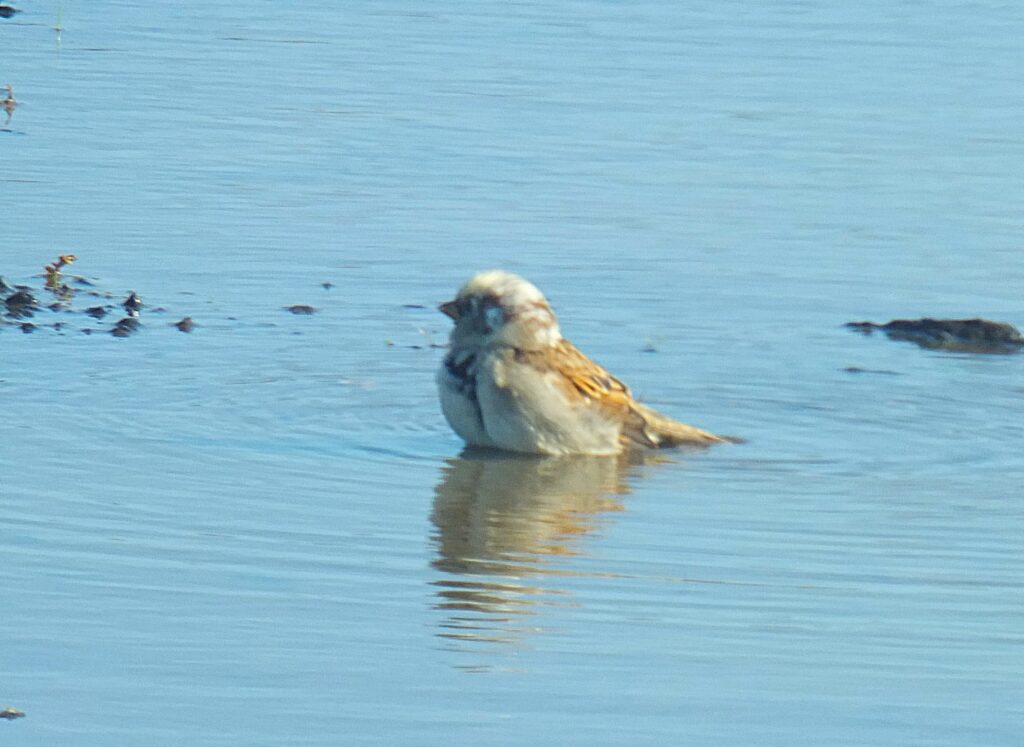
On my return from Pakistan in the seventies, I gave a lecture to the Teesmouth Bird Club which included a photograph of Sind Jungle Sparrow – like a sleek House Sparrow with a more musical song. In the audience was my fellow founder member of the TBC, Denis Summers-Smith, who ‘called it’ before I could even say what it was! Much later, I tried to convince him the white-headed sparrow I had found on Santa Maria was a hitherto undiscovered species, but for some reason he didn’t buy it.
In early September 2004 I received a phone call from a fisherman in Kinlochbervie, on the west coast of Sutherland. An all-red finch without crossed mandibles was visiting the bird table in his garden. Summer Tanager was the only species I could think of that would be red at this season, so I drove over the following morning. It did not keep me waiting, but was clearly not a tanager. Even the soft parts were pink.
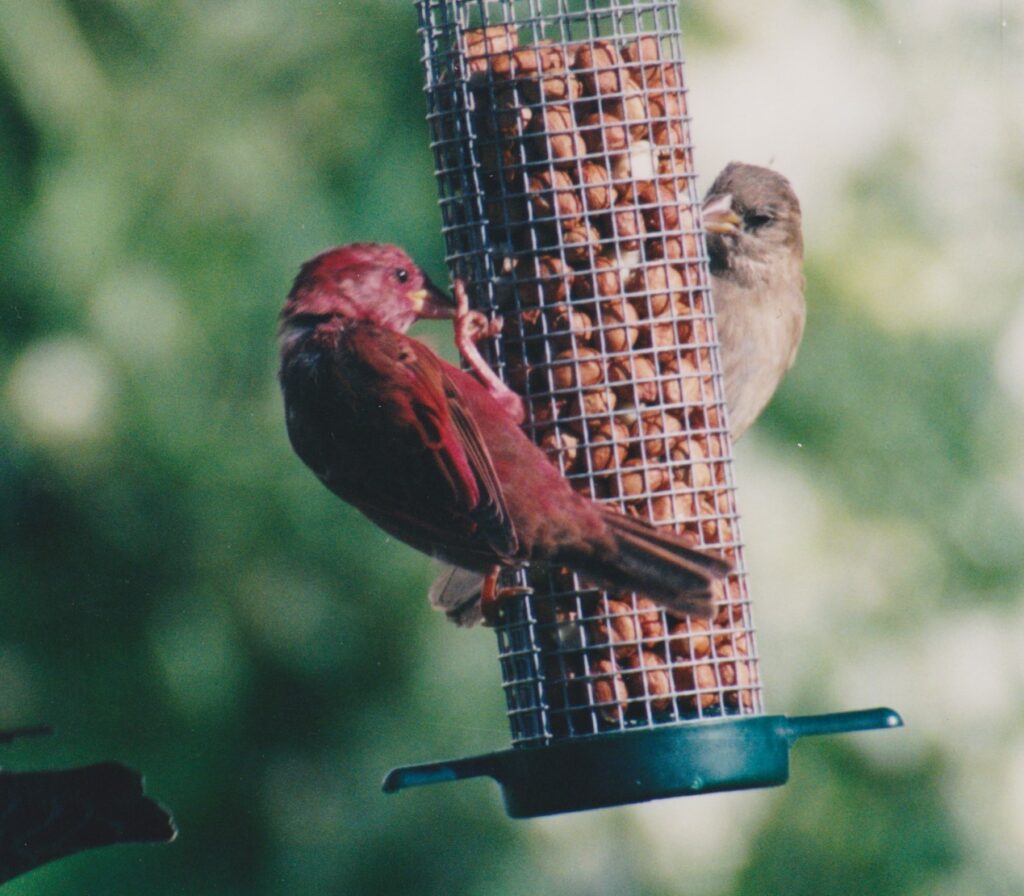
After I had photographed it, a House Sparrow flew in with some red in the plumage – clearly both had to be stained or erythritic sparrows. Suspecting boat paint may have polluted a puddle in the nearby harbour, I went to investigate and discovered sparrows were feeding on a mound on the opposite side of the harbour. It was salmon food, covered only by netting!
I published details of this occurrence in ‘British Birds’ and, to the delight of my Kinlochbervie informant, a half-page photograph of the bird appeared in the ‘Sunday Express’.
To continue the ‘pink’ theme, my Bar-tailed Larks on Cyprus in April 2000 (see above) were accompanied by two Trumpeter Finches. The previous ten island records of this nomad were all of singletons.
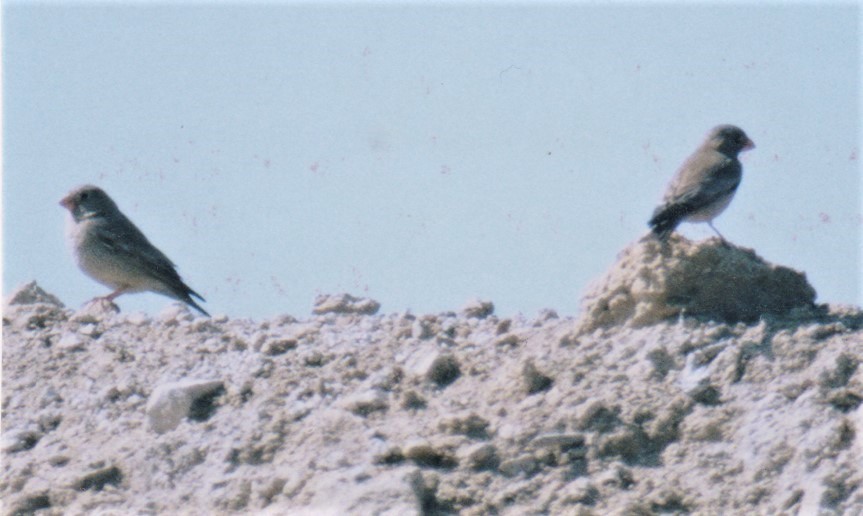
I also saw this species on Paxoi during the large ‘fall’in May 1992, which was only the seventh record for Greece and the first for the Ionian islands. I now see it occasionally on my Algarve patch, almost always after south-easterly winds. Although there is an established population in eastern Spain, arrivals elsewhere most likely come over from the Maghreb.
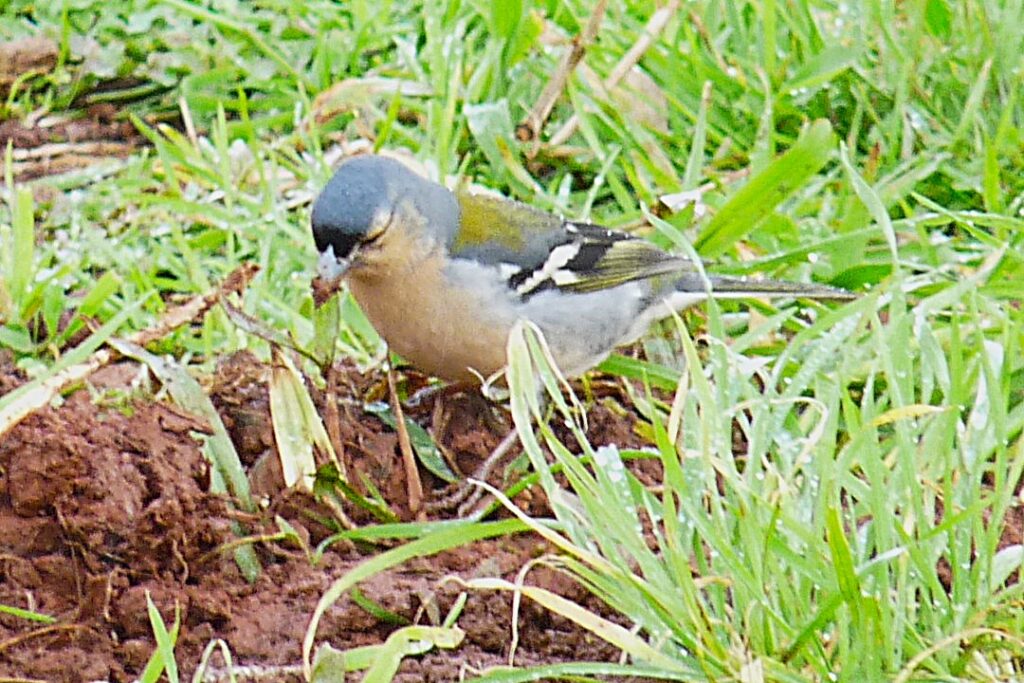
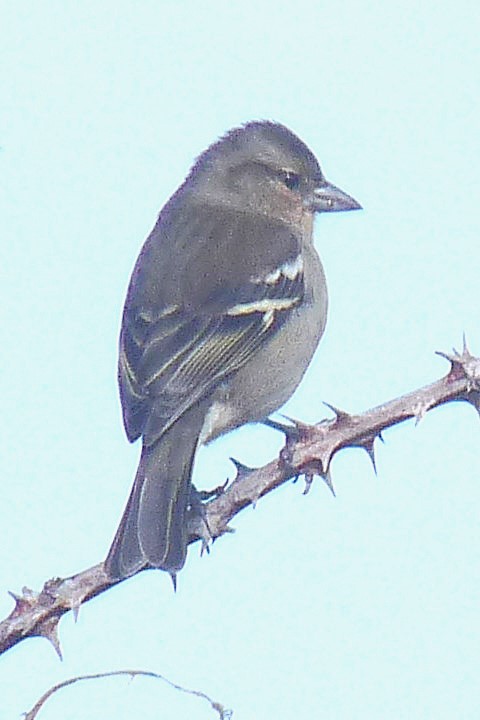
In the Azores, the Chaffinches differ markedly from mainland birds. The males have prominent dark foreheads and the females are darker. Although the song is similar, their calls are quite different, lacking the familiar ‘pink’ and alarming harshly, rather like Great Tit. Initial DNA analysis indicates they are worthy of specific status.
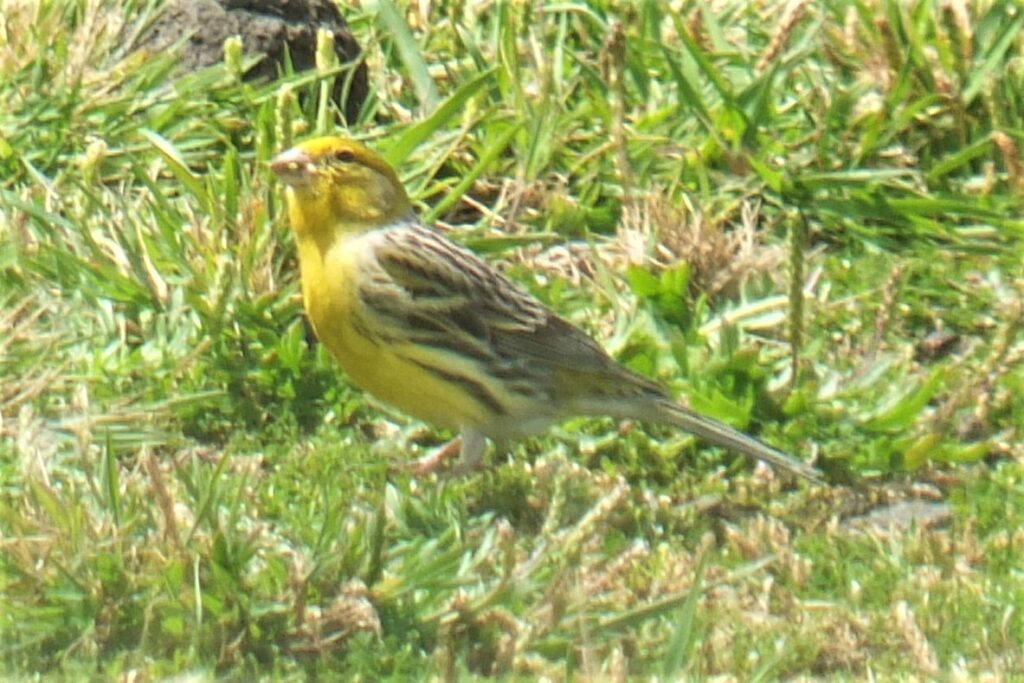
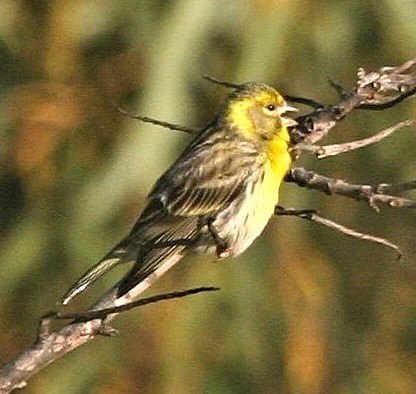
The commonest finch in the Azores is the Atlantic Canary which, uniquely for a passerine, moves between the islands. After the breeding season I once estimated over 11,000 on a six kilometre transect of the west coast of Santa Maria! The males are larger and brighter than Serin (below right). They also have more varied calls, one (confusingly) resembling a distant skylark.
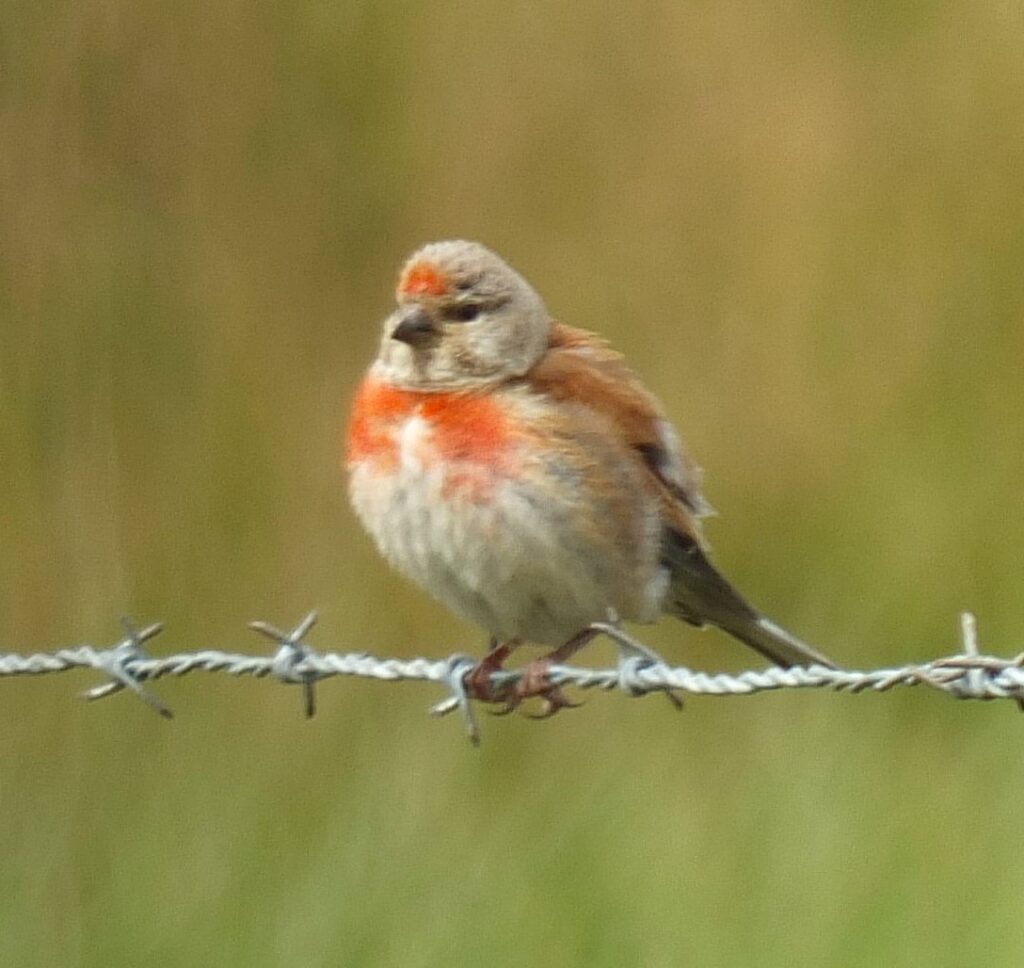
Linnets hardly stir the blood in Europe, being widespread and fairly sedentary. However, this smart male is worthy of inclusion.
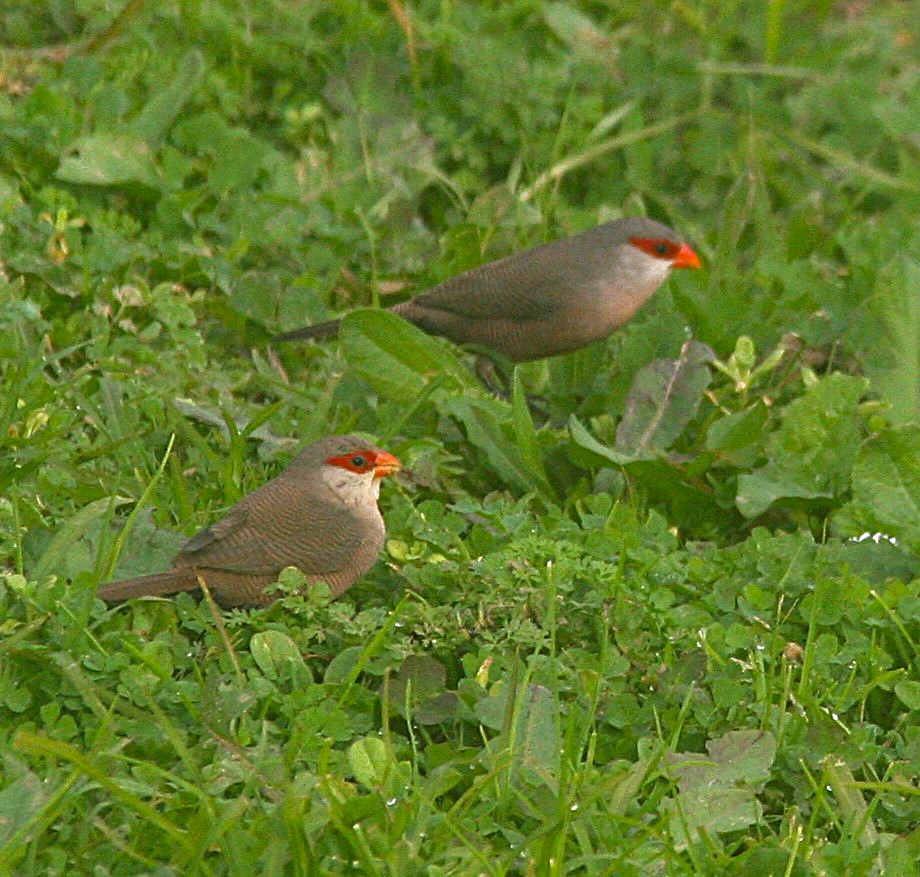
In the Algarve they have competition from established introductions from both Africa and India: Black-headed Weaver, Yellow-crowned Bishop, Chestnut Munia, Red Avadavat and Common Waxbill, which is widespread and numerous. They have bred once in my garden, in a bottle-brush tree.