Waders
Born in Middlesbrough, just a stone’s throw from the huge tidal Seal Sands in the Tees estuary, I cut my teeth on waders. Thousands wintered there. Tragically, in the early sixties, much of the flats were reclaimed for industrial development.
Today, the RSPB Saltholme Reserve provides some compensation for their loss. Although it already has breeding Avocets, it still awaits the arrival of Black-winged Stilt. Just a question of time as global warming accelerates! This typically vocal bird was photographed in a saltpan near Tavira in eastern Algarve.
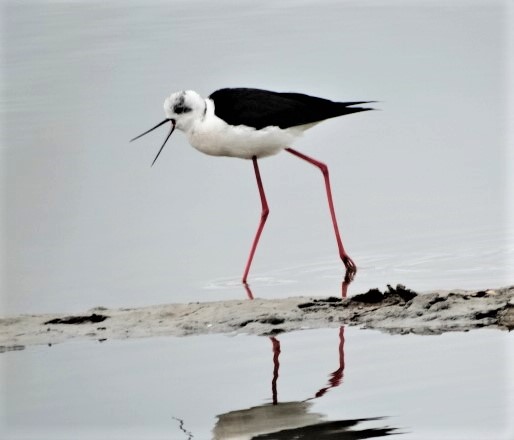
In the sub-tropics Black-winged Stilts can occur in large numbers. At Kharrar Jheel near Renala Khurd, south of Lahore in Pakistan, there were at least 4000 in May 1974 and still over 2000, with hundreds of other passage waders, that October.
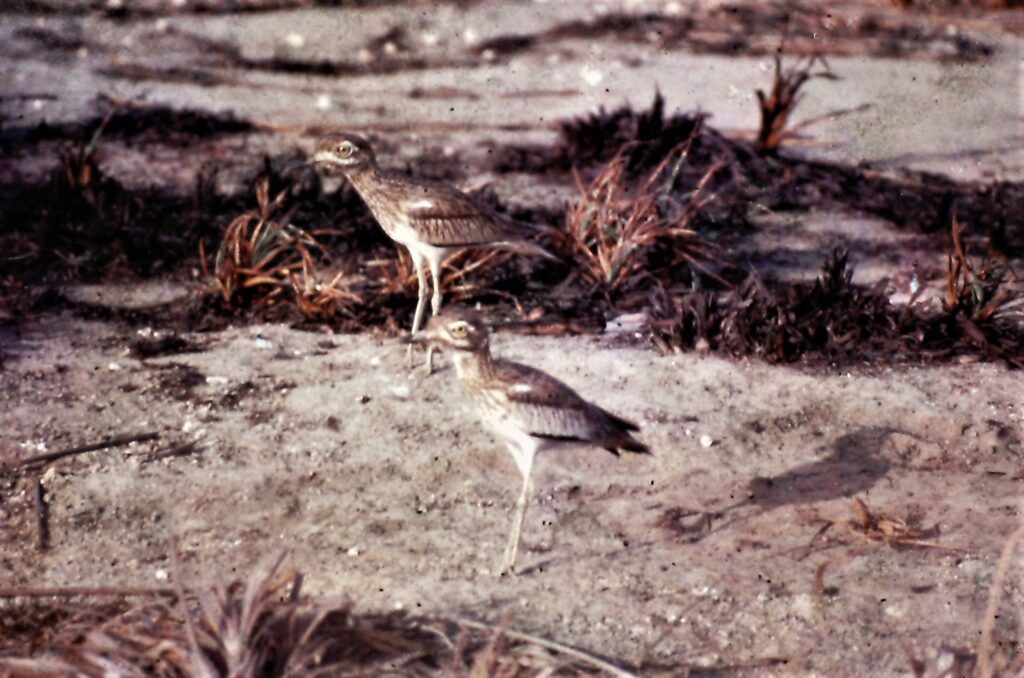
Thick-knees are widespread in the Old World, with Great Stone Plover, which I saw in Sri Lanka, perhaps the most impressive. My photos of both it and a desert form of Stone Curlew in Pakistan have not survived but, curiously, a much older slide of Senegal Thick-knees in The Gambia has.
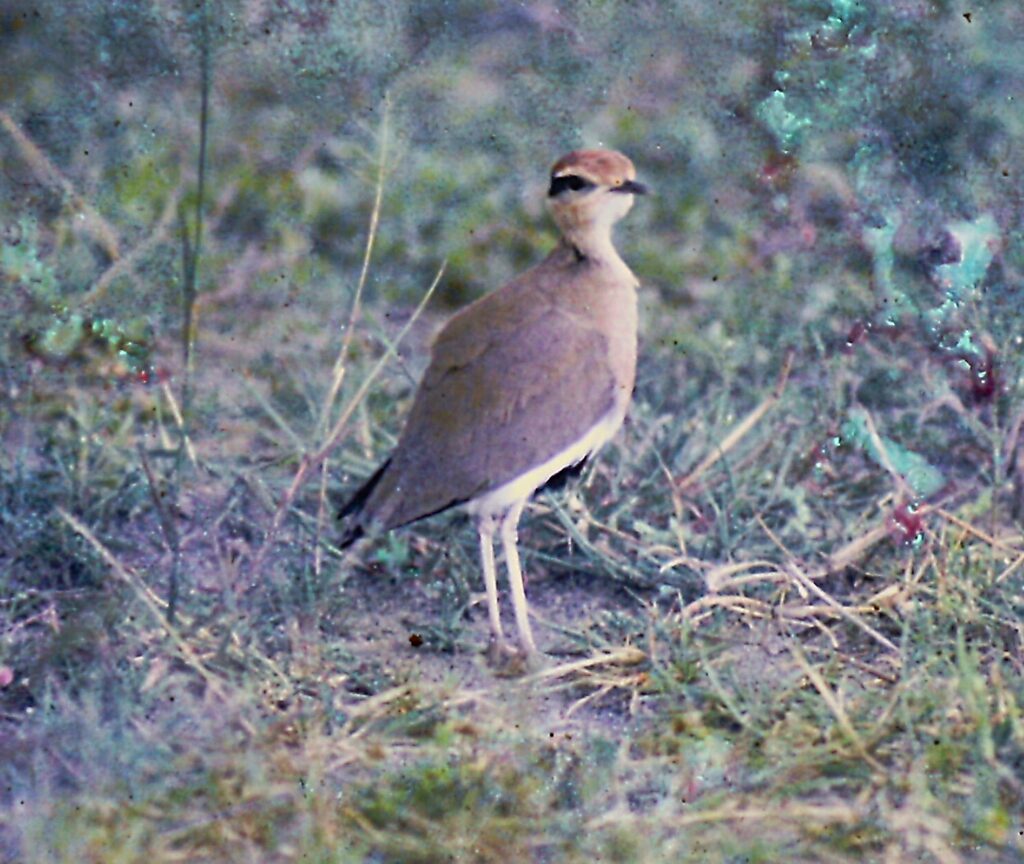
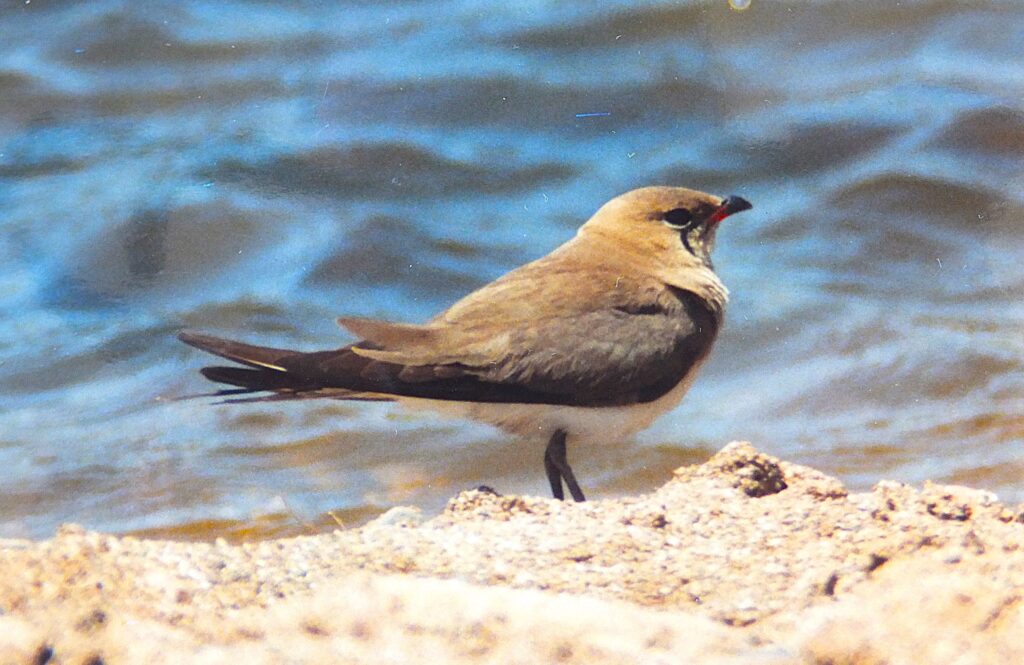
Temminck’s Courser occurs right across Africa in the northern sub-topics. Collared Pratincoles have a much wider distribution but this storm-blown individual in eastern Crete in late June 2005. Most of its features matched Black-winged except for the axillaries, which were darkish purple. Collared/Black-winged hybrids are not unknown.
The large Vanellus plovers are particularly well represented in Asia and Africa with some, like Red-wattled in the Sub-Continent and Crowned Plover in East Africa being common and widespread. Some occupying more specialist habitats are harder to find, no more so than the Ethiopian highlands endemic, Spot-breasted Plover. I was fortunate to chance upon a sizeable flock well to the north of Addis Ababa and used up a whole film with birds in various poses, including wing-stretching, knowing there were few, if any, images of the species available. Before these were mould damaged, Peter Hayman ‘preserved’ some in his excellent artwork for ‘Shorebirds’. Two of the survivors are reproduced below.
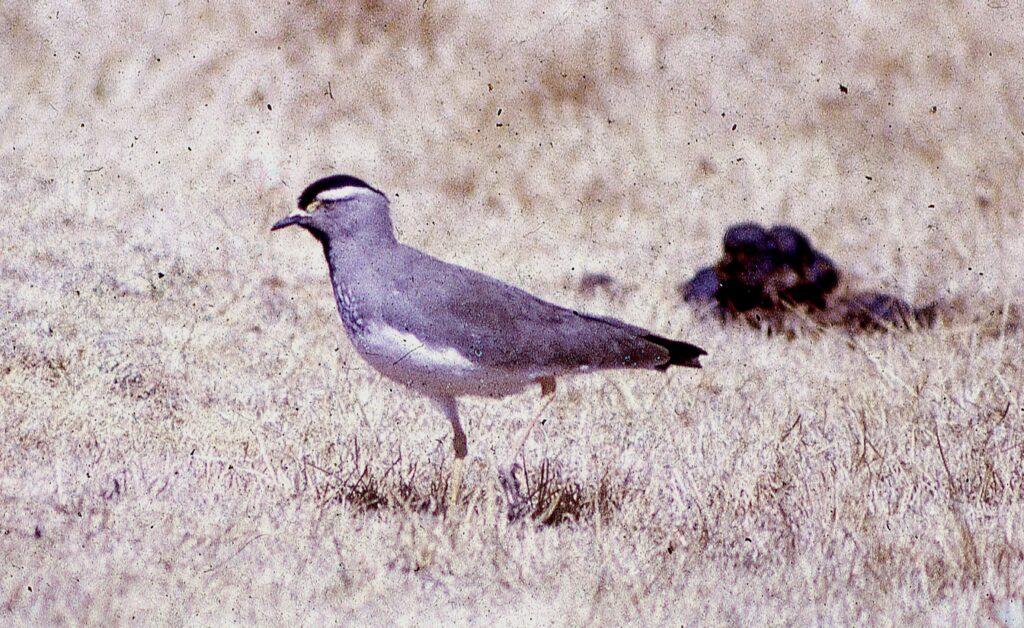
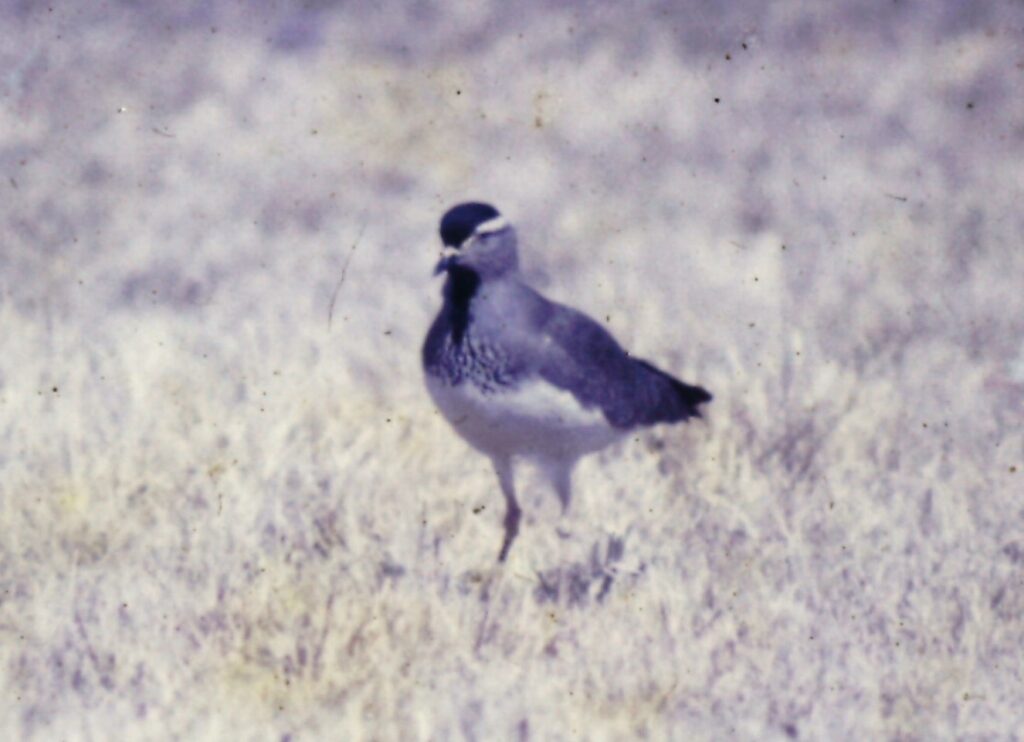
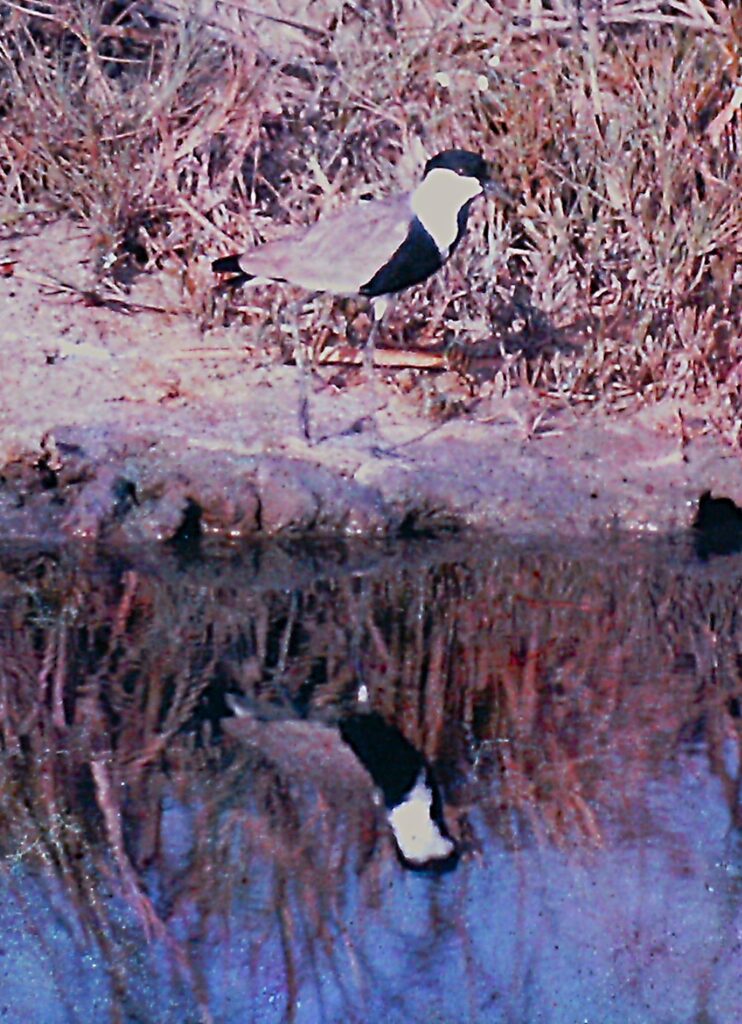
Spur-winged Plover was common in coastal West Africa; less so in the East Mediterranean.
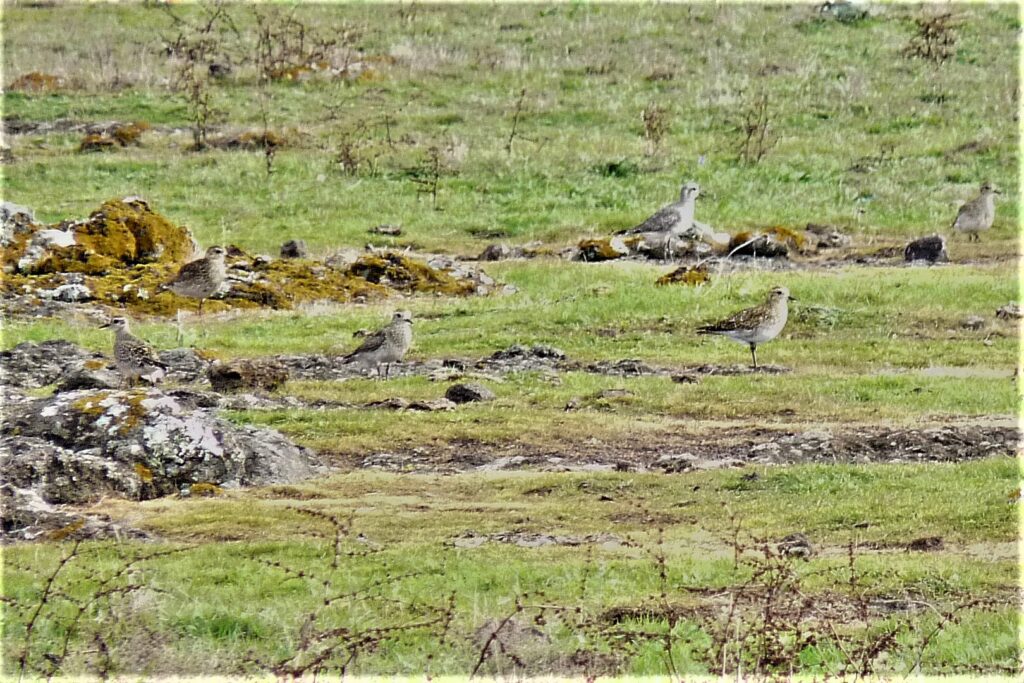
In contrast, one size down, the Pluvialis family has only four world representatives and on Santa Maria I obtained a unique image of all four species together: American Golden Plover (extreme left), European Golden Plover (back left), two Pacific Golden Plover (front centre) and Grey Plovers (back right).
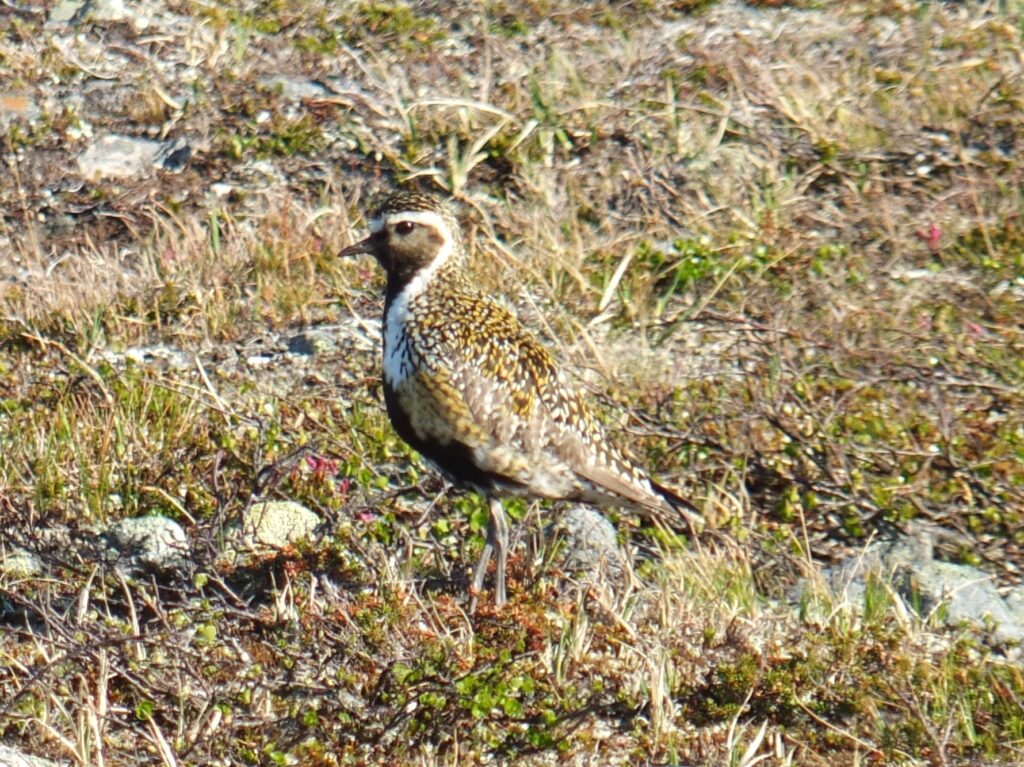
Although I had a nationally important population of European Golden Plovers breeding on the moorland above my Brora home (later decimated by an ill-sited windfarm which Scottish Natural Heritage and the RSPB failed to prevent) the bird below was in the Yllas/Pallas National Park in northern Finland amongst breeding Bar-tailed Godwits.
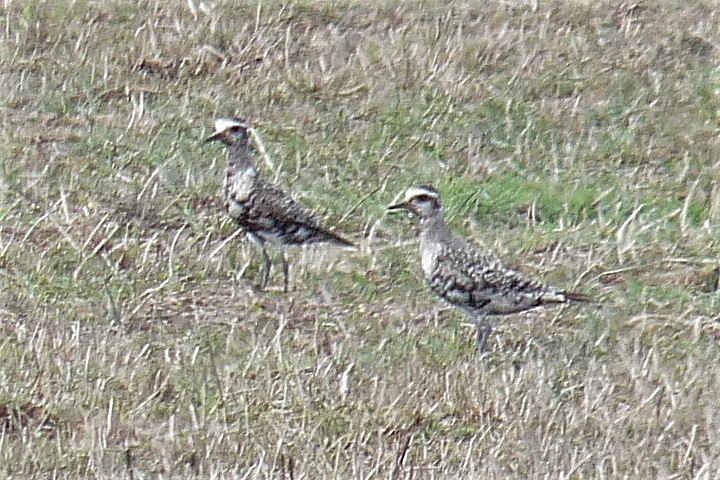
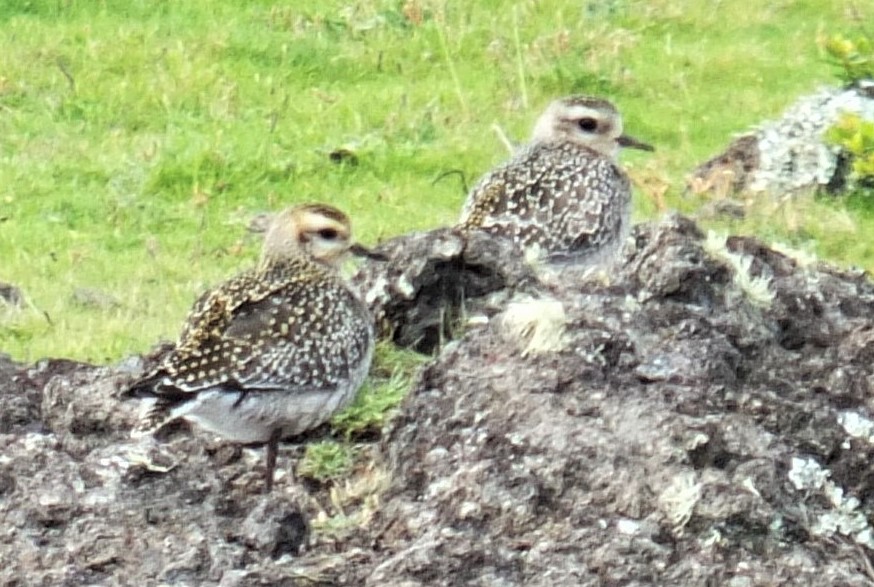
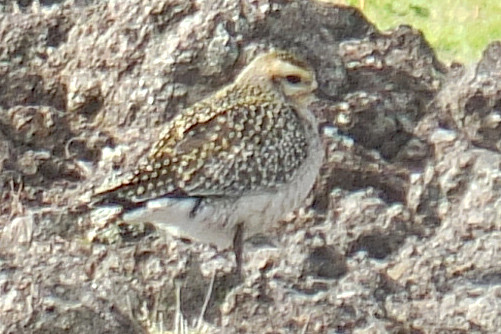
After a large arrival of Nearctic shorebirds in early October 2012 (including hundreds of White-rumped Sandpipers) there were no less than nine ‘Lesser’ Golden Plovers on the island: seven American and two Pacific. The latter, formerly considered an extreme rarity in the Azores, occurred each autumn and even once in spring. Pacific is smaller and more compact than American (more like a small European) and the juveniles are quite gold-spangled, unlike the greyer Americans, which have obviously projecting primaries. The calls of the two species also differ.

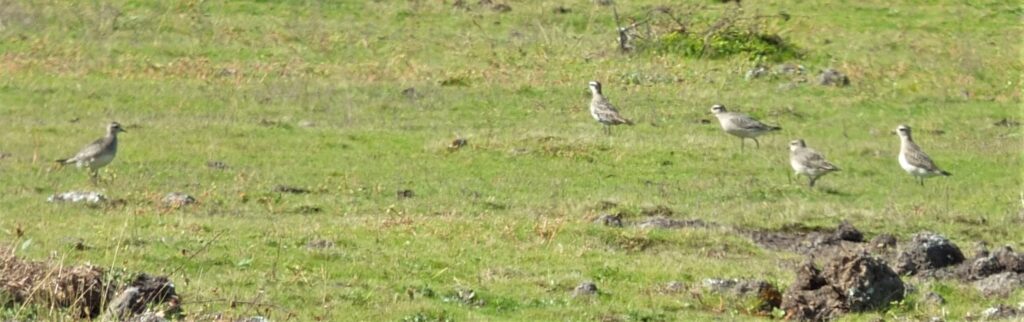
Downsizing another notch, Santa Maria produced two more plover treats: regular overwintering by Dotterels and the first breeding Killdeers in the Western Palearctic.
Because of their confiding nature, Dotterels are a photographer’s dream. Female Dotterels are brighter than males and leave them to bring up their young.
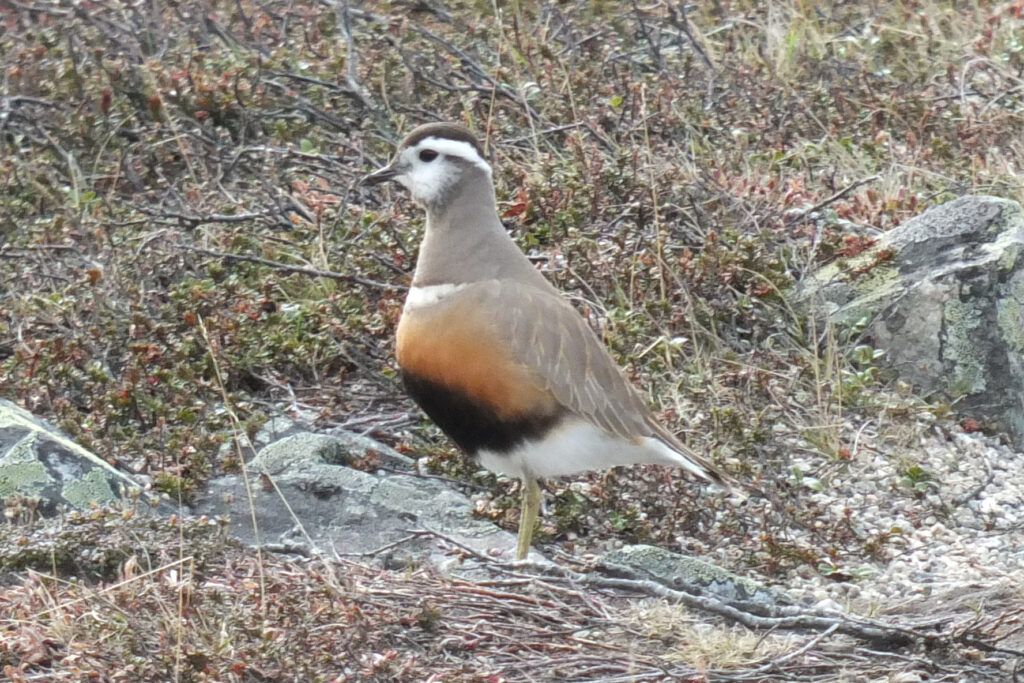
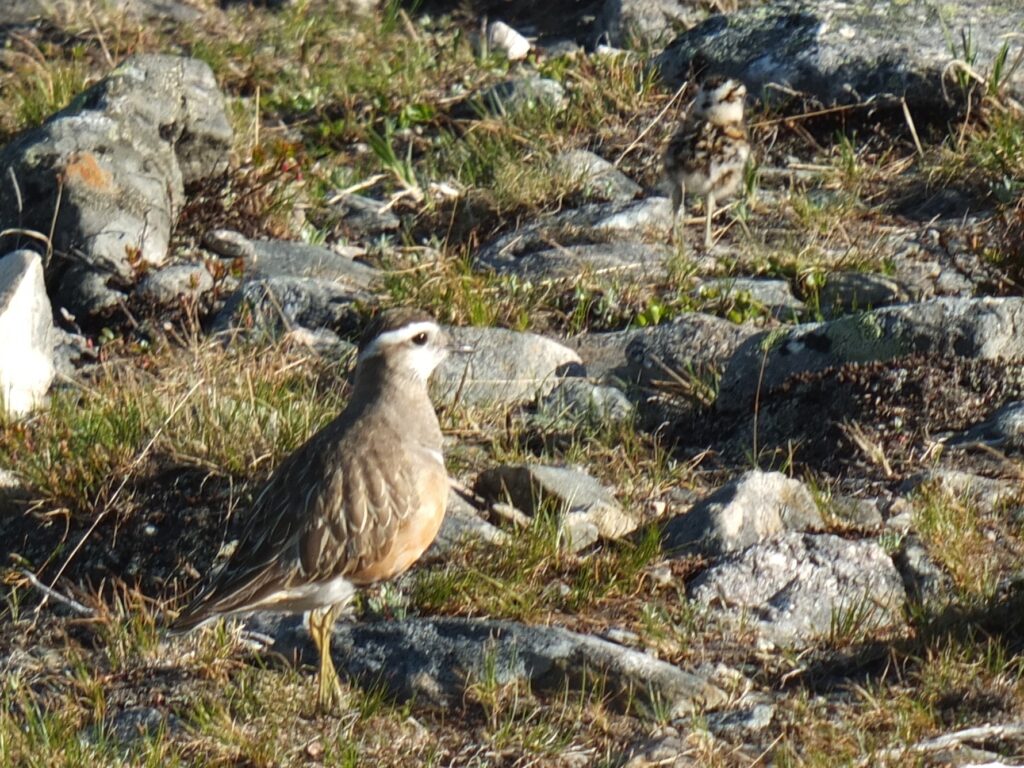
In the east Med. I witnessed flocks of Dotterels moving north through the central plateau of Turkey in spring, but in western Greece, a bird found on the Ionian island of Kefallinia in April was only the second record for the region. Formerly considered an extreme rarity in the Azores, it was a regular autumn migrant on Santa Maria.
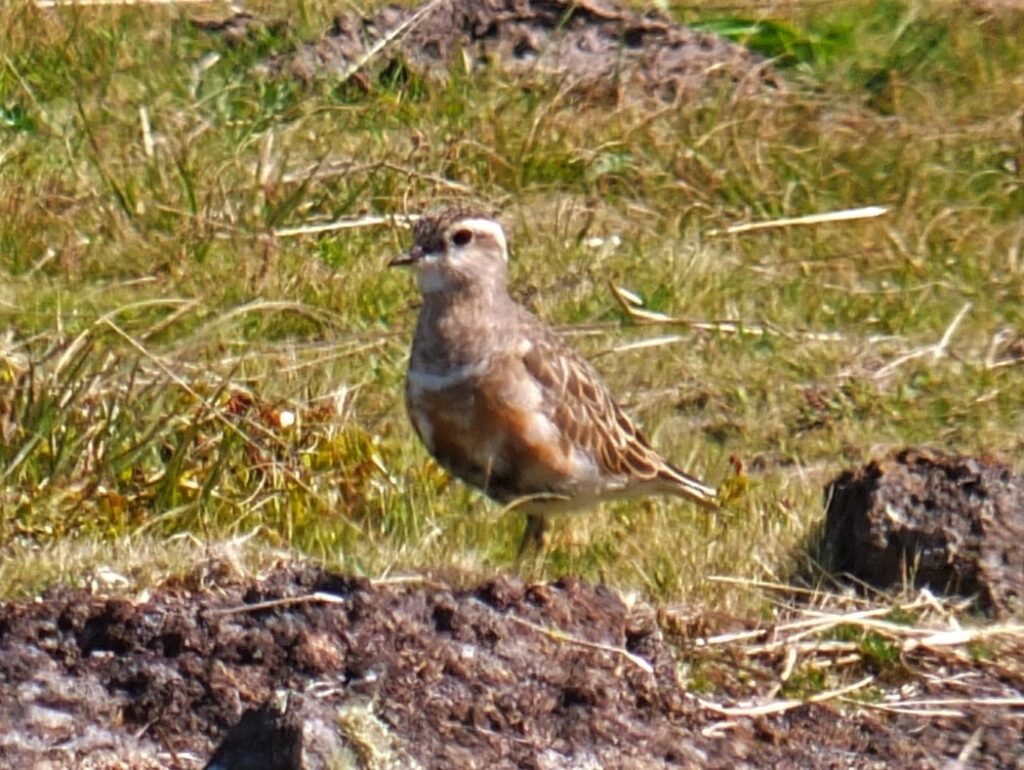
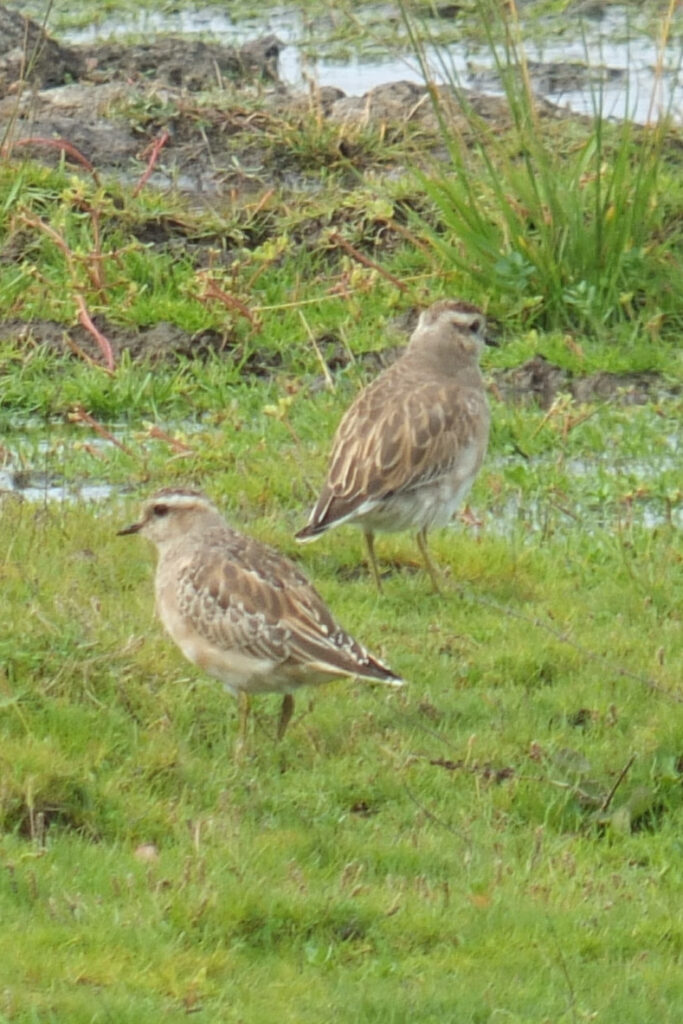
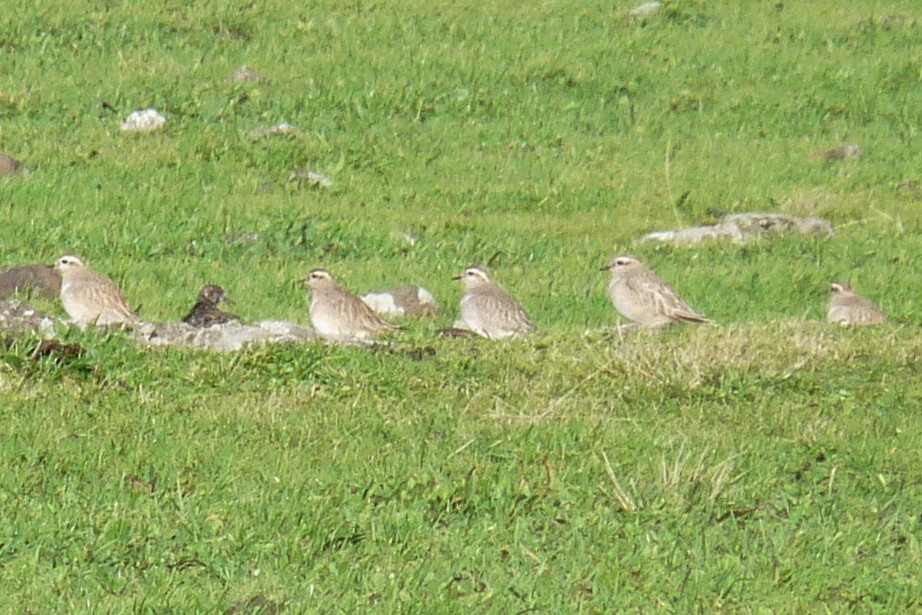
Because of its perceived rarity status, I got quite a surprise when I found this flock on the north pastures on Santa Maria during my first winter there. But this proved to be an annual phenomenon.
During that same winter (2009/10) I saw single Killdeers at two sites on Santa Maria. I assumed it was the same two birds that were together in the south in March.
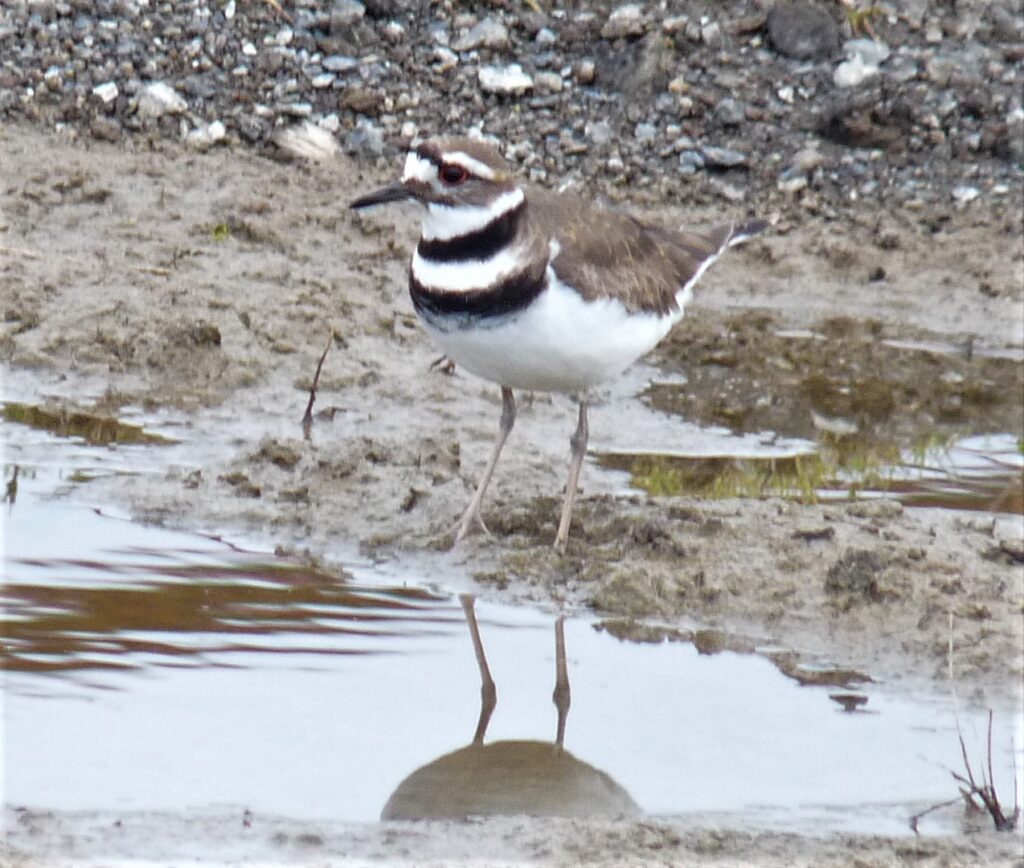

Then, in late May, there was an adult near a pool near the airport and, whilst I was photographing it, two well grown chicks walked out of the long grass! The first breeding record of the species in the West Palearctic.
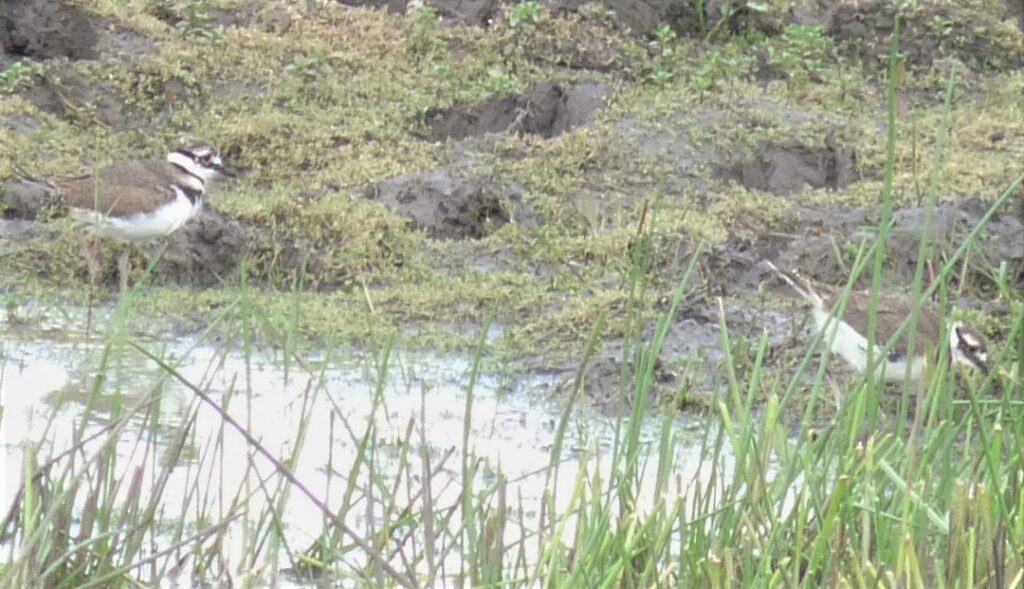
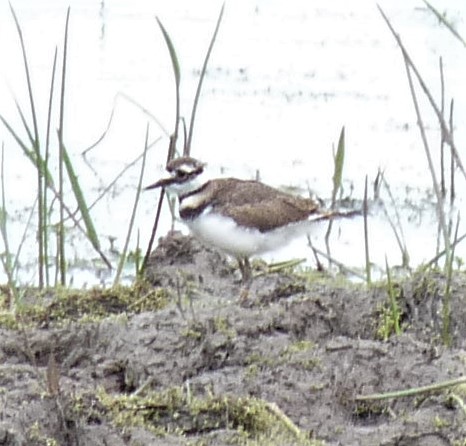
I was unavoidably absent from the island in 2011, but Joaquim Theodosio was able to confirm repeat breeding (another W. Pal. first for any Nearctic species!). When I returned that winter, there were five birds together – the two adults, the two young from 2010 and the one surviving juvenile from that spring. The pair’s third attempt in 2012 failed and only one individual remained on the island into 2013.
Of the smaller plovers, Santa Maria has a resident population of pasture-breeding Kentish Plovers. It is often the first bird seen when you land at the airport, as some congregate on the runway apron. Despite predation of the chicks by Azores Gulls, feral cats and ferrets, this isolated population, now possibly a different race, seems to be stable.
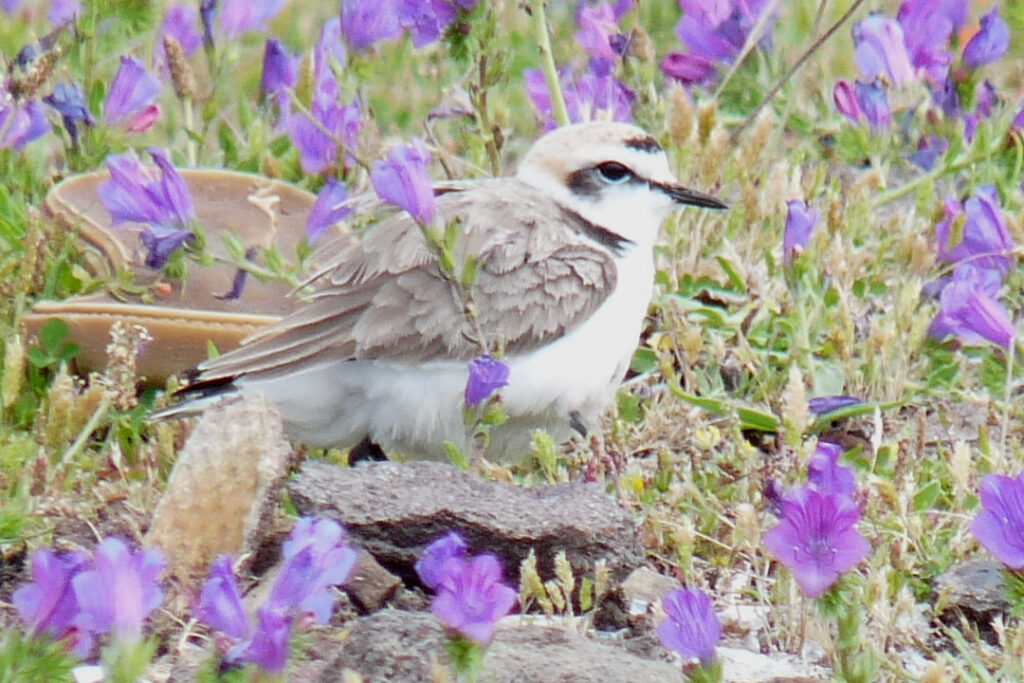
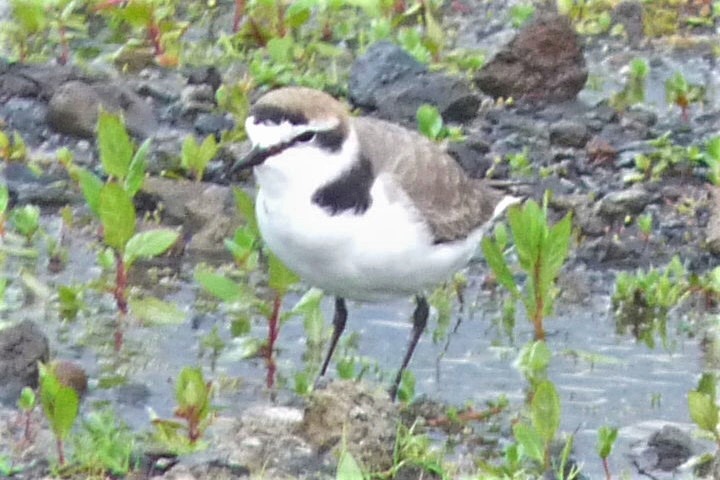
In 1952 my parents took me to see the first Little Ringed Plovers breeding in Yorkshire near the present RSPB Reserve at Fairburn Ings. When I published ‘The Birds of Sutherland’ in 1997 the species had still not reached the far north, even as a migrant. One flew north-east past Brora on 23 April 2001 and I also saw singles in August and October 2005. Some of the pebbly rivers in the county look ideal for future colonists.
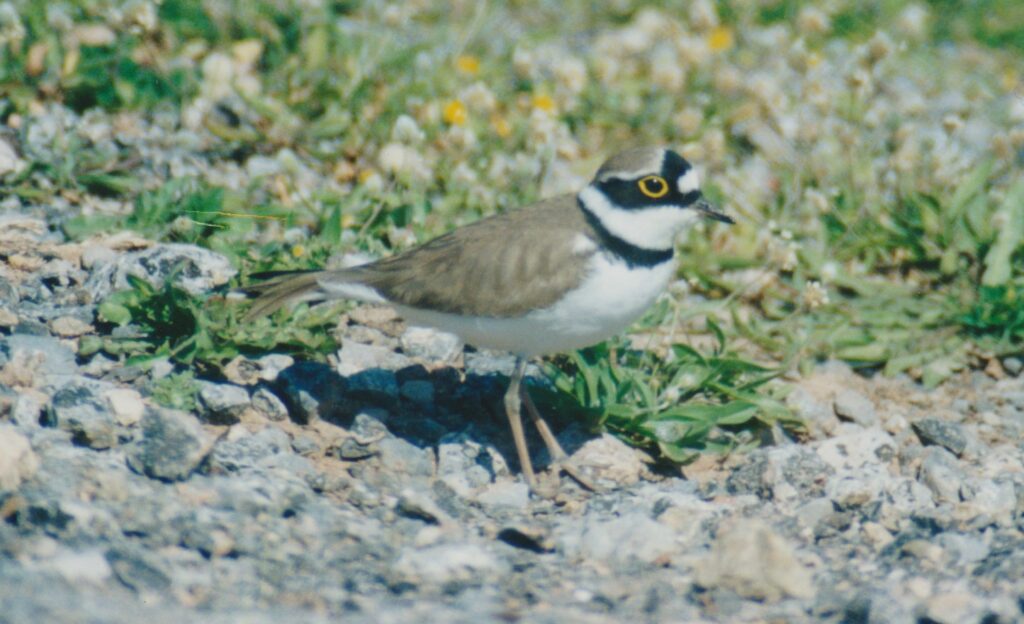
I saw only one Little Ringed Plover on Santa Maria, where the Nearctic Semipalmated Plover was commoner than Ringed. They occurred in small flocks in autumn, sometimes overwintering. One first year bird even summered with the Kentish Plovers. Some individuals are ‘hyperactive’ compared to the sedate Ringed, running like Sanderlings and bobbing to the vertical. A few were aggressive towards their own kin.
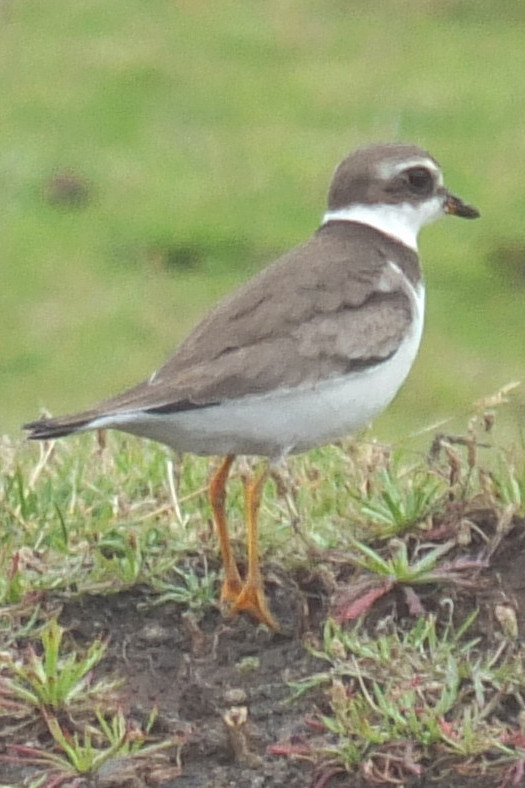

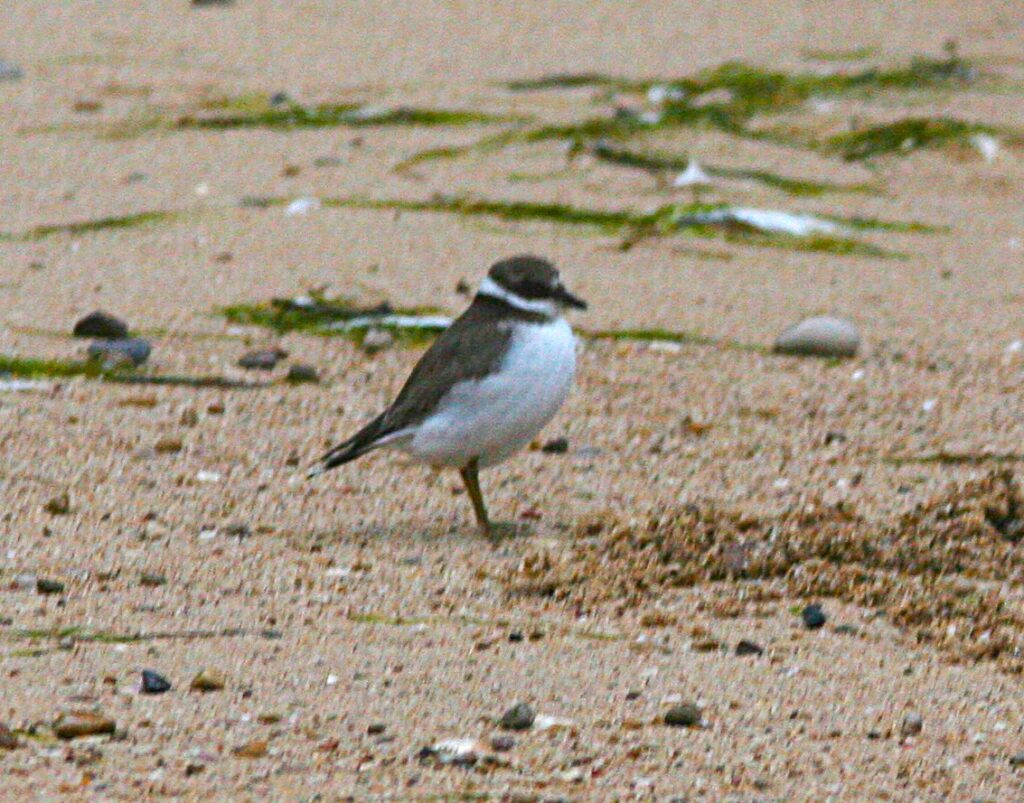
The adult winter bird below (caught in the act of bobbing in the right photo) was on the beach at Boca do Rio, close to my home in the Algarve, on 2 November 2017 and, rather surprisingly (given the numbers reaching the Azores), was the first for mainland Portugal.
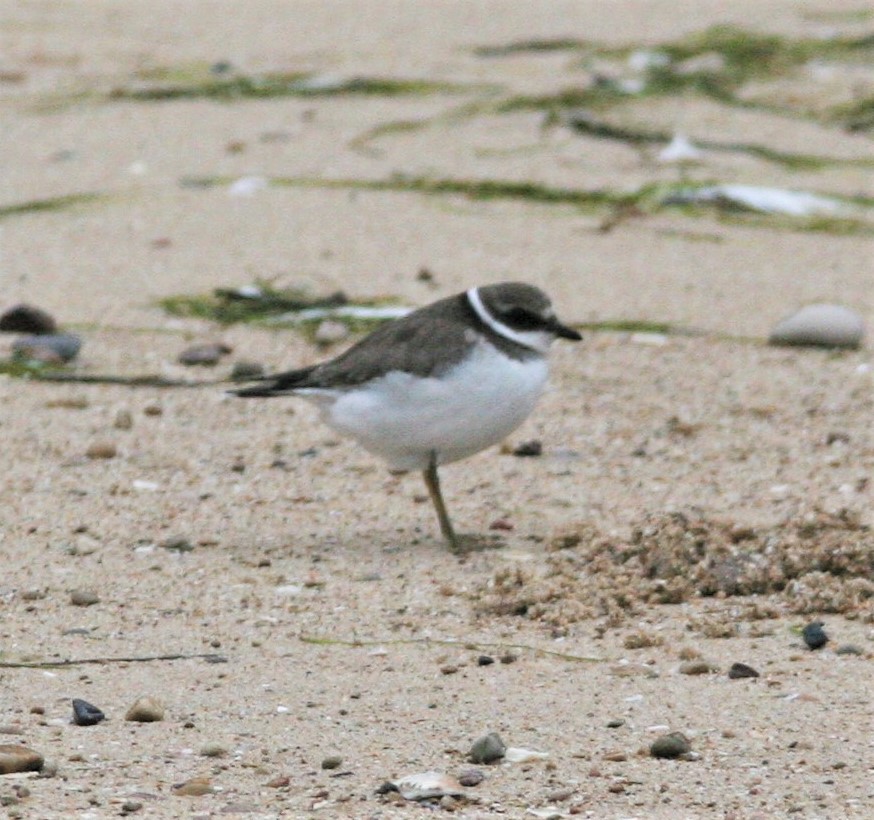
Nearctic ‘peeps’ outnumbered Little Stints on Santa Maria, often allowing close approach. Unlike in northern Europe, Western Sandpipers, which winter in Florida, are more or less annual visitors whilst Semipalmated Sandpipers, most of which migrate to South America, are less reliable. This situation is mirrored by the two dowitchers (see below), for the same reason.
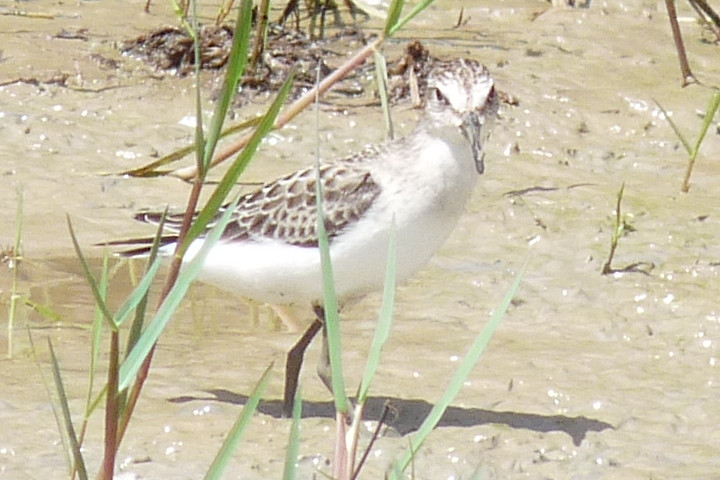
In early September 2010 there was an influx of ‘peeps’, with Semipalmated the most numerous (at least twelve). The ‘salt and pepper’ transitional plumage of adult Semipalmated is diagnostic at this season. Note the pronounced head markings of Western (top).
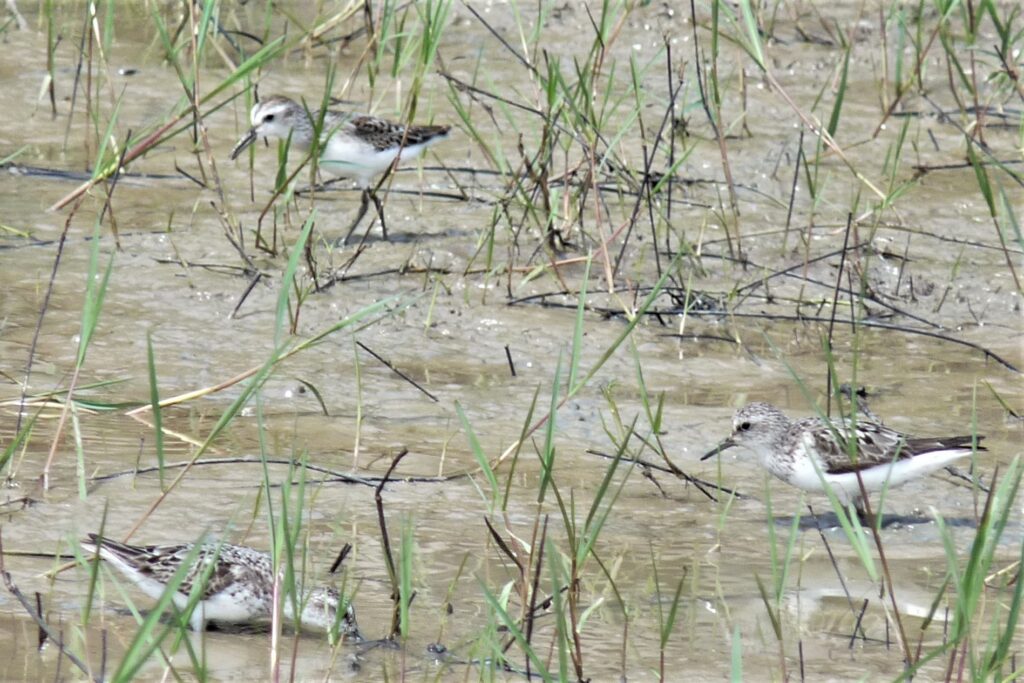
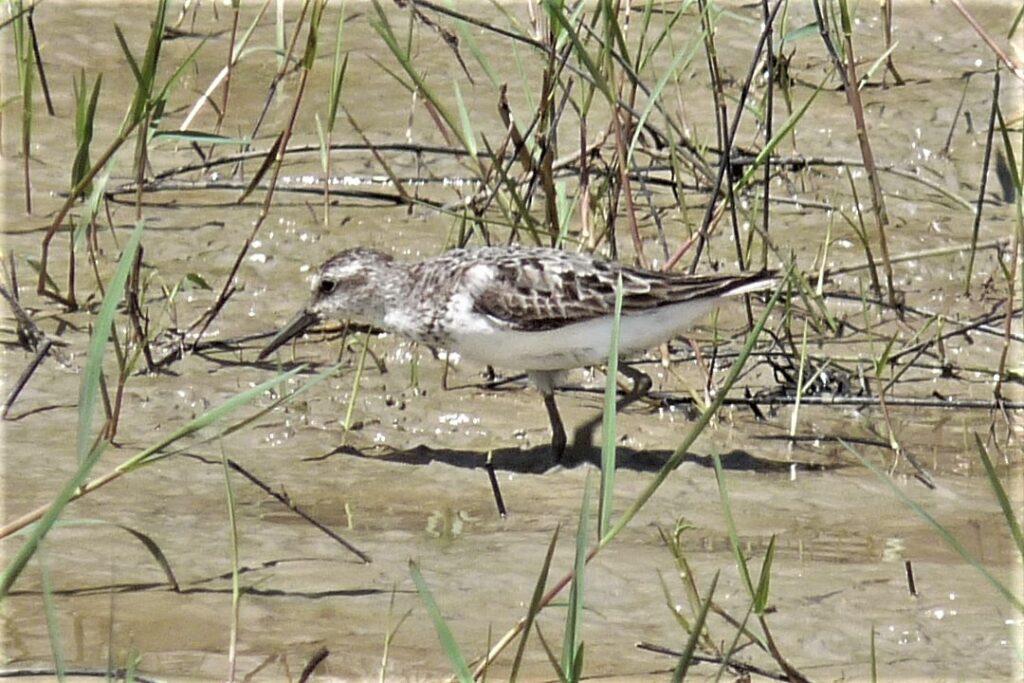
In the images below, note the longer legs of Western, which can feed in deeper water than Semipalmated.
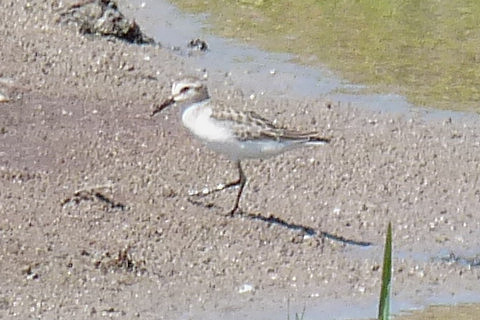

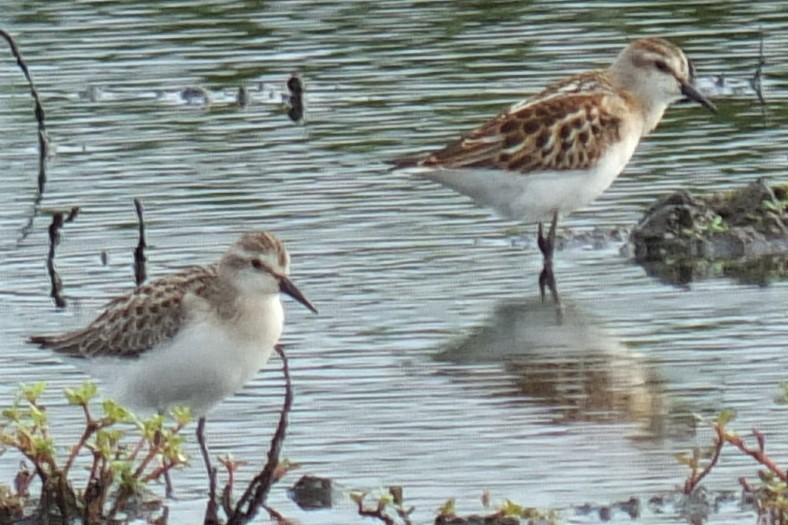
A few Little Stints do occur in autumn, including this adult/juvenile duo, but Curlew Sandpiper is less than annual. When they do arrive, they tend to be very obliging!
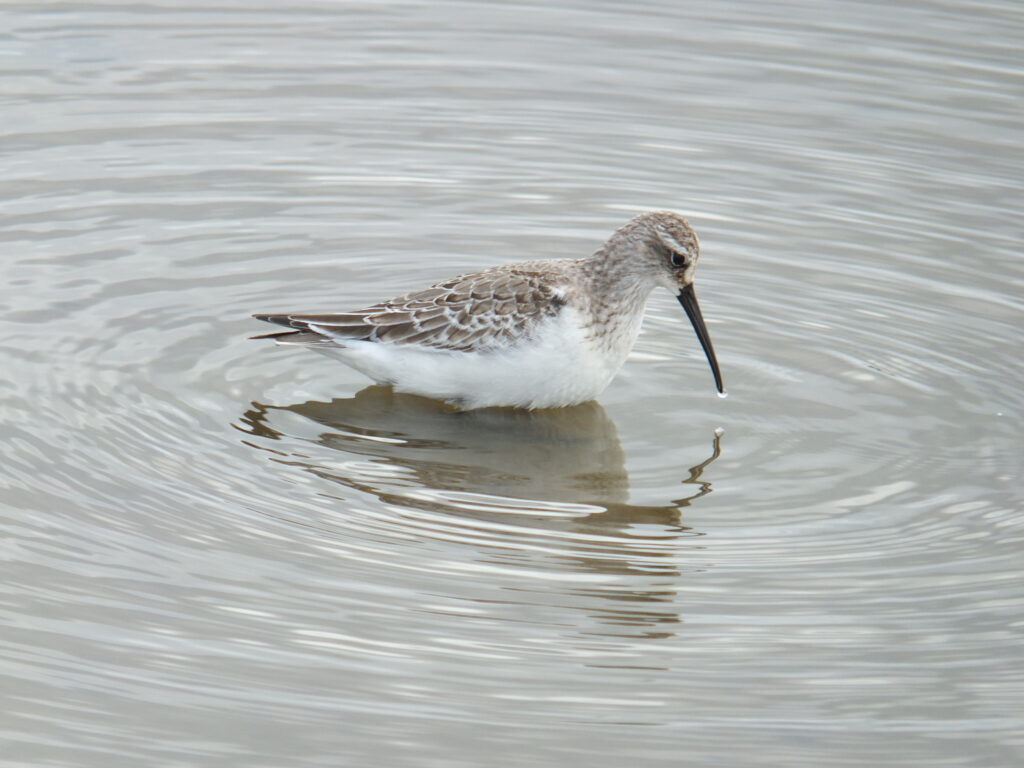
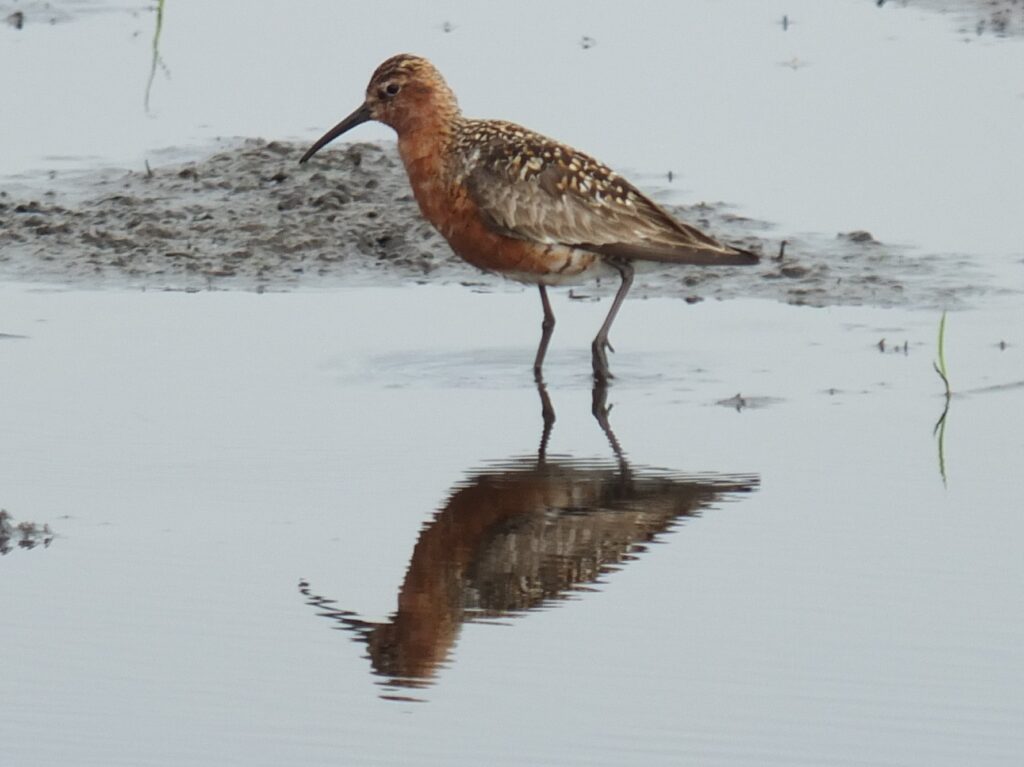
Curlew Sandpiper in breeding plumage is something else. I spent a week in Denmark after my Lapland trip in 2012. I was surprised to see many passage waders at the Tipperne Reserve in early July, possibly the result of the appalling spring weather in the far north, which included quite a few Curlew Sandpipers.
White-rumped Sandpipers occurred on Santa Maria every autumn, usually in single figures, but in early October 2012 there was a huge arrival, with hundreds resting and feeding in the island pastures and other flocks flying south-west offshore.
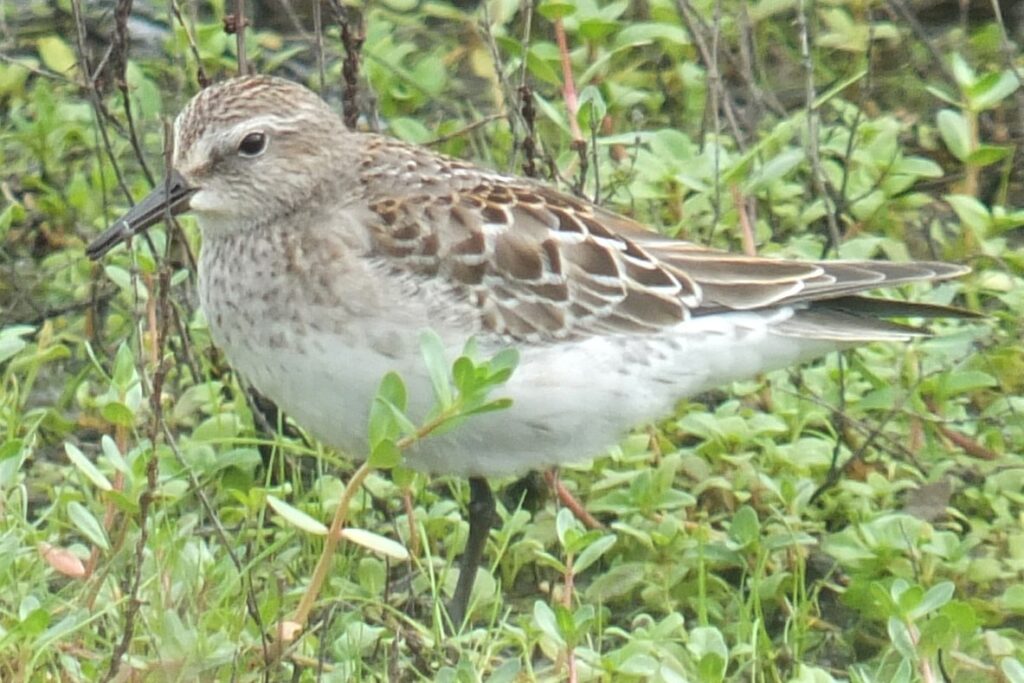
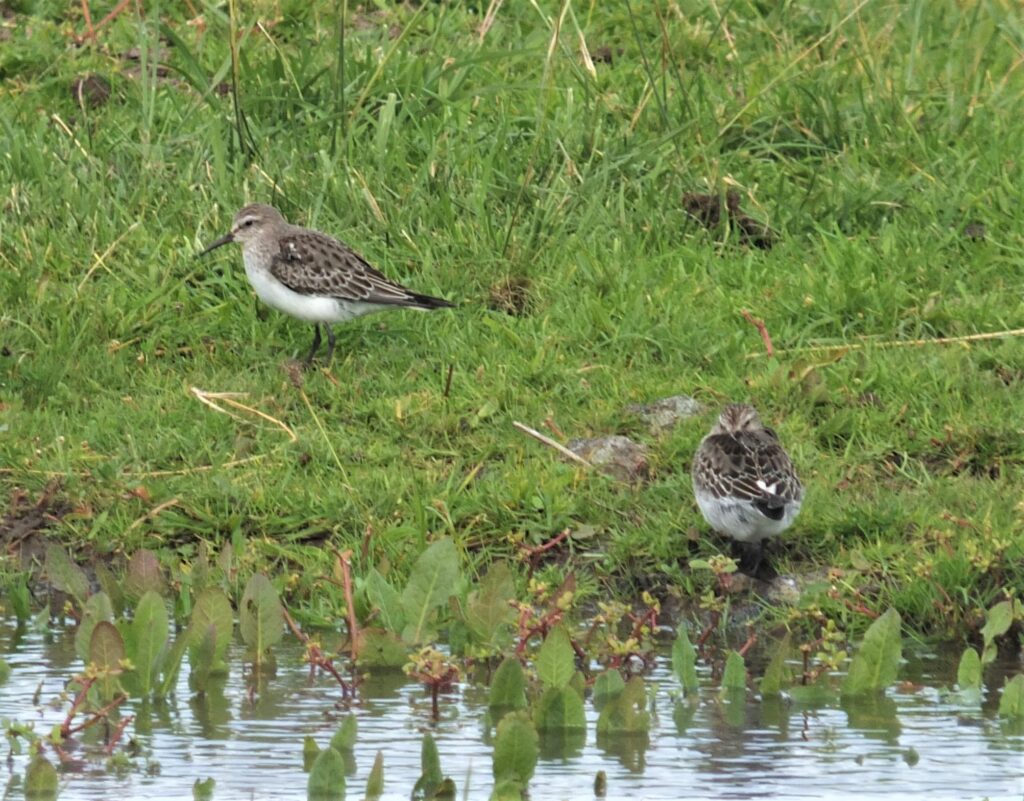
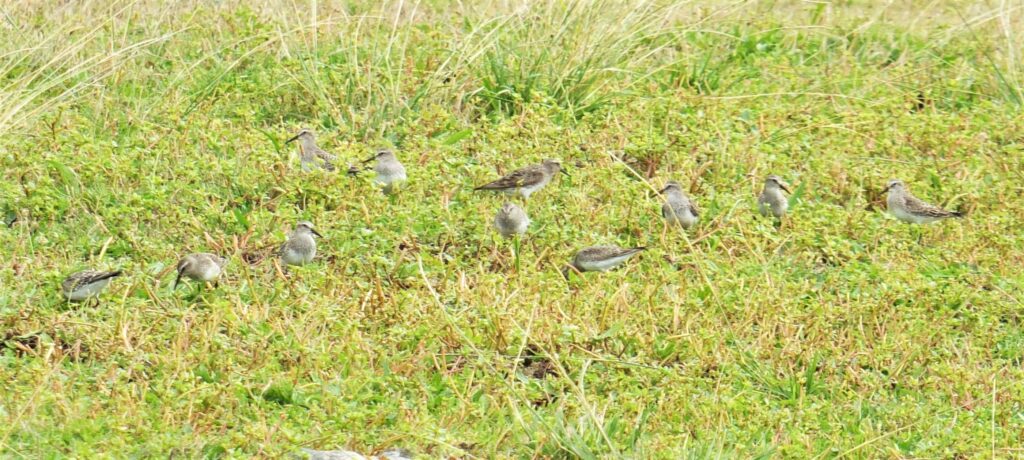
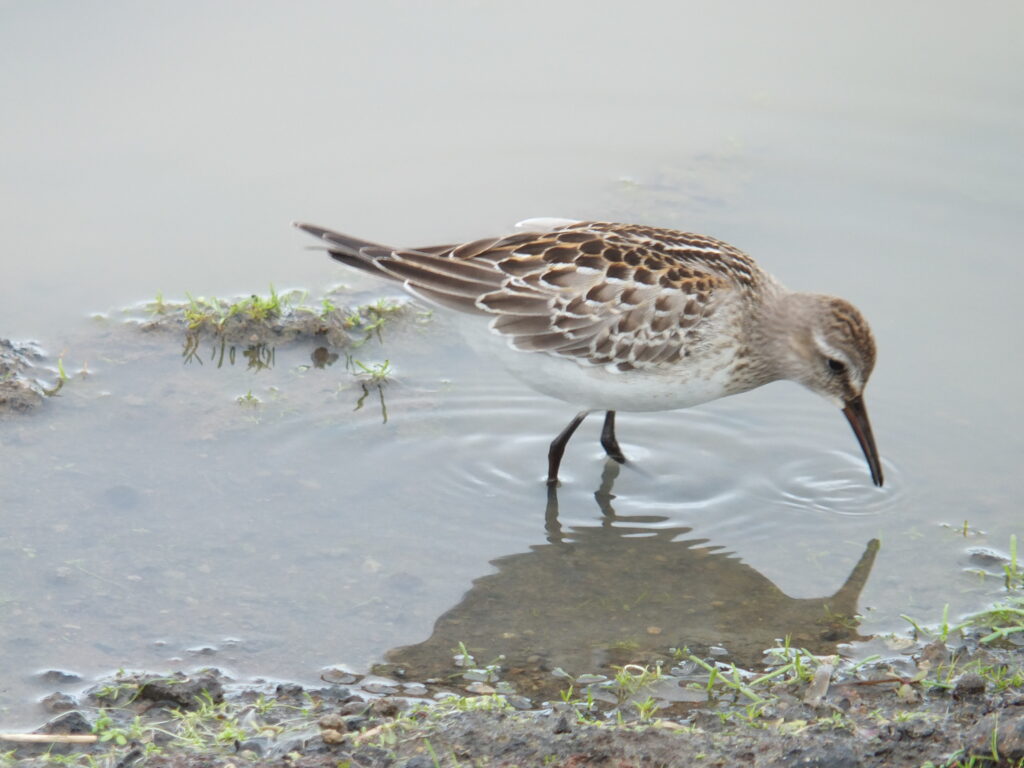
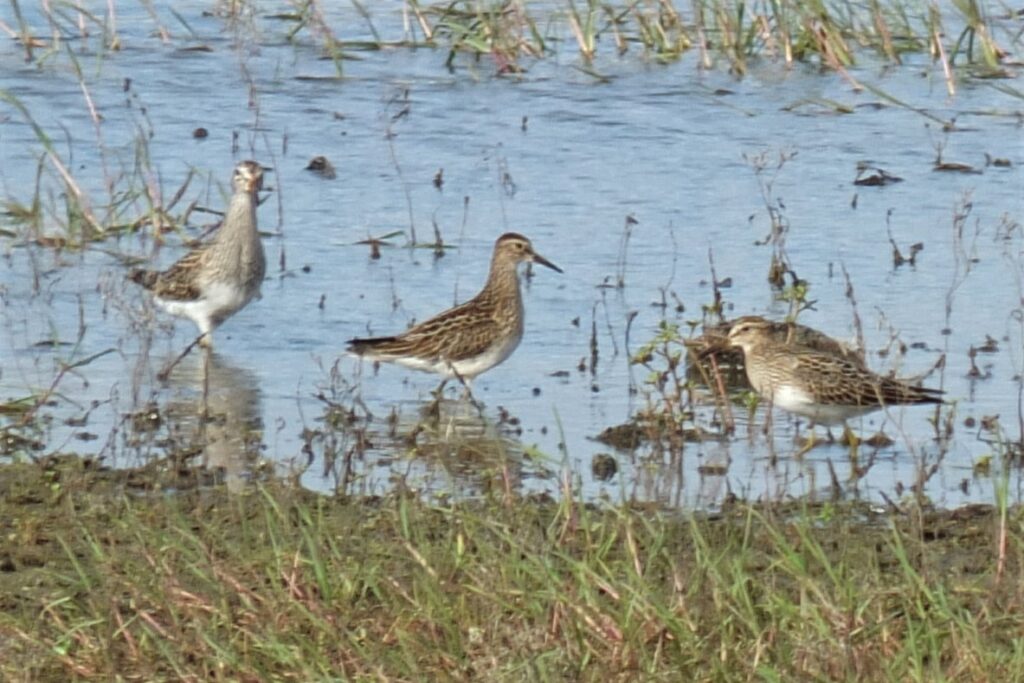
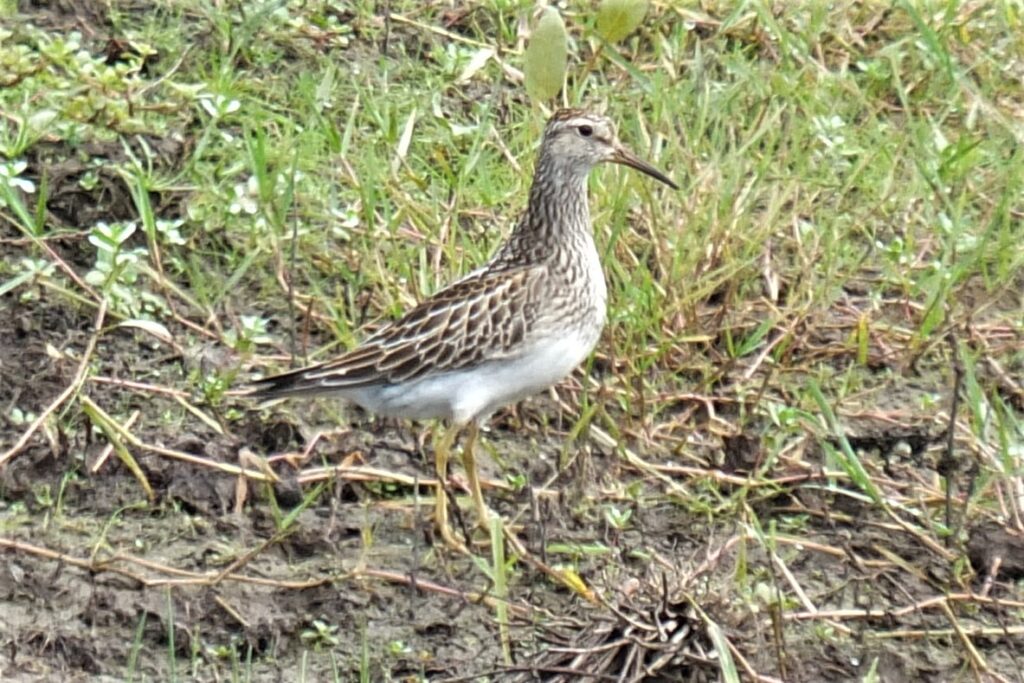
Pectoral and Buff-breasted Sandpipers are also annual autumn visitors, the former in double figures during the October 2012 invasion. The typical September medley below shows Pectoral, White-rumped and Semipalmated Plovers with an Atlantic Canary in attendance.

Small flocks of Pectorals are not unusual in the right weather conditions.
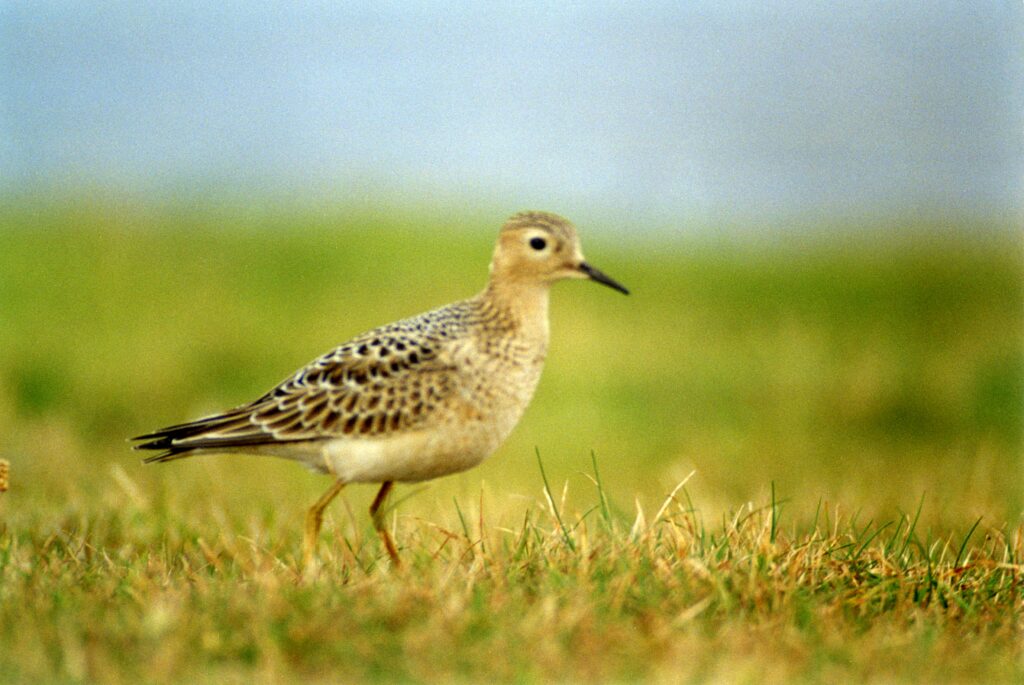
This Buff-breasted Sandpiper on Santa Maria was feeding amongst White-rumped Sandpipers during the October 2012 invasion.
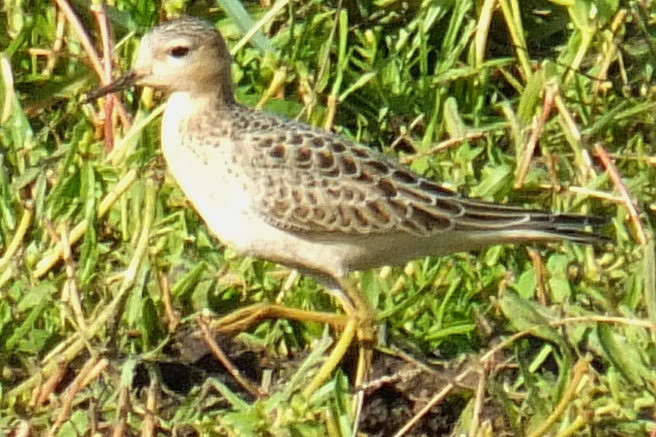
In Britain, apart from one on North Ronaldsay, all my Buff-breasteds had been on the Isles of Scilly until I received a phone call in Sutherland from non-birder Robin Noble. He had been at Stoerhead on the west coast and seen a strange wader on the clifftop which he thought might have been an Upland Plover. His description better fitted Buff-breasted, so I went over the following morning and found the bird still in the same place. It was only the second record for Sutherland, first seen on exactly the same date (26 September) as the first, found by the late Donnie MacDonald at Dornoch forty years earlier.
Very little was known about the birds of Santa Maria before I arrived in 2009. As it is by far the oldest Azores island (emerging for the second time six million years ago), the landscape has been worn down to a much great extent than on the other islands, barely a quarter of a million years old. As a result, it offers ideal habitats for terrestrial species rare or absent from the other islands. This explains the Small Button-Quails, which probably colonised when the Atlantic was narrower, and the breeding Killdeers I discovered.
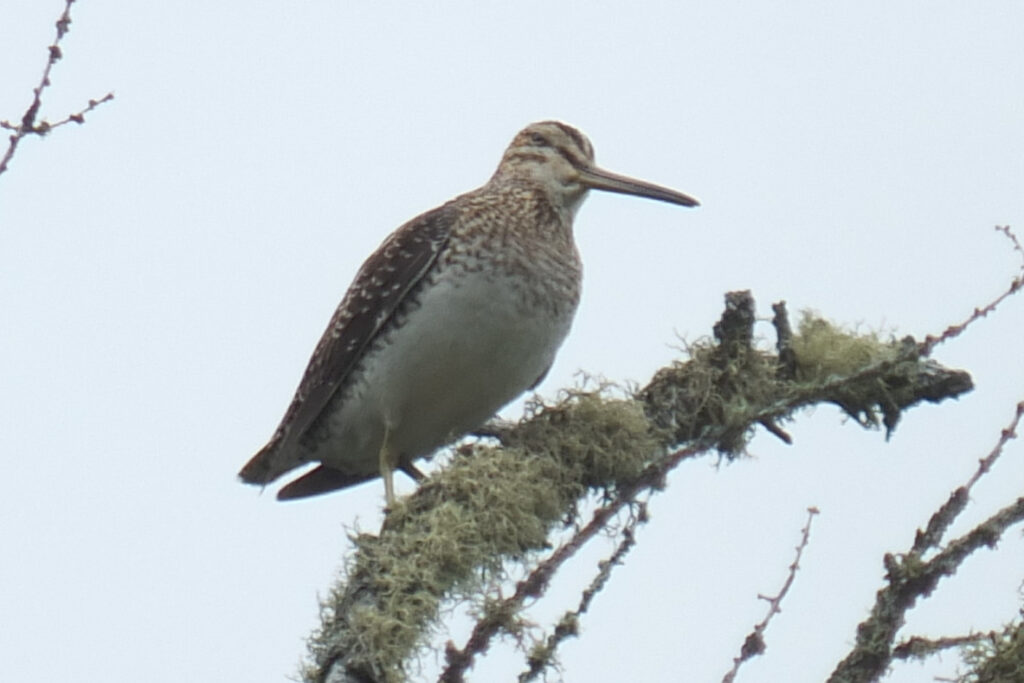
It is also beloved of migratory snipe (including four Great, one of which overwintered, and an amazing flock of 25 Jack Snipe in March 2010) and is undoubtedly the best place in Europe to see Wilson’s. This arrives in flocks in autumn, overwinters and sometimes lingers late into the spring. Although once ‘lumped’ with Common Snipe, it is a very different animal: smaller, with more slender, blunt-tipped wings and a shorter bill. It is also much more confiding than Common, sitting tight or slipping quietly away, low down, to an alternative refuge. Prominent ‘portcullis’ grey barring on the flanks and plain brown underwings are diagnostic plumage features. It also has much less white on the trailing edge of the wings.
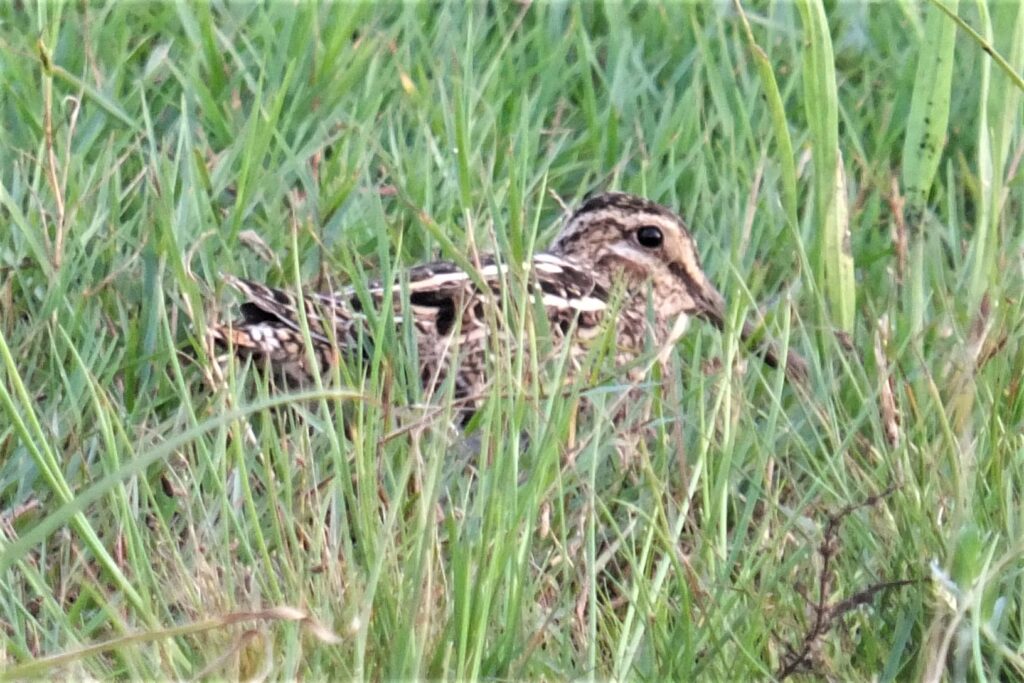
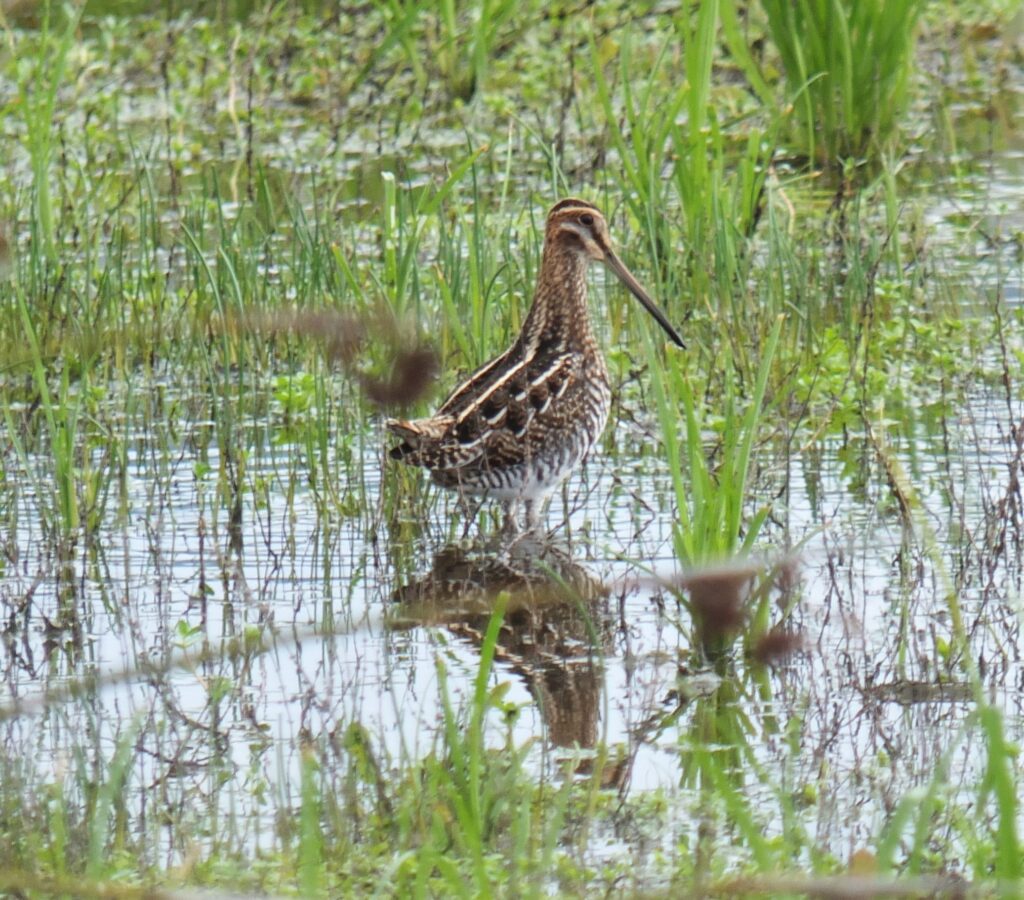

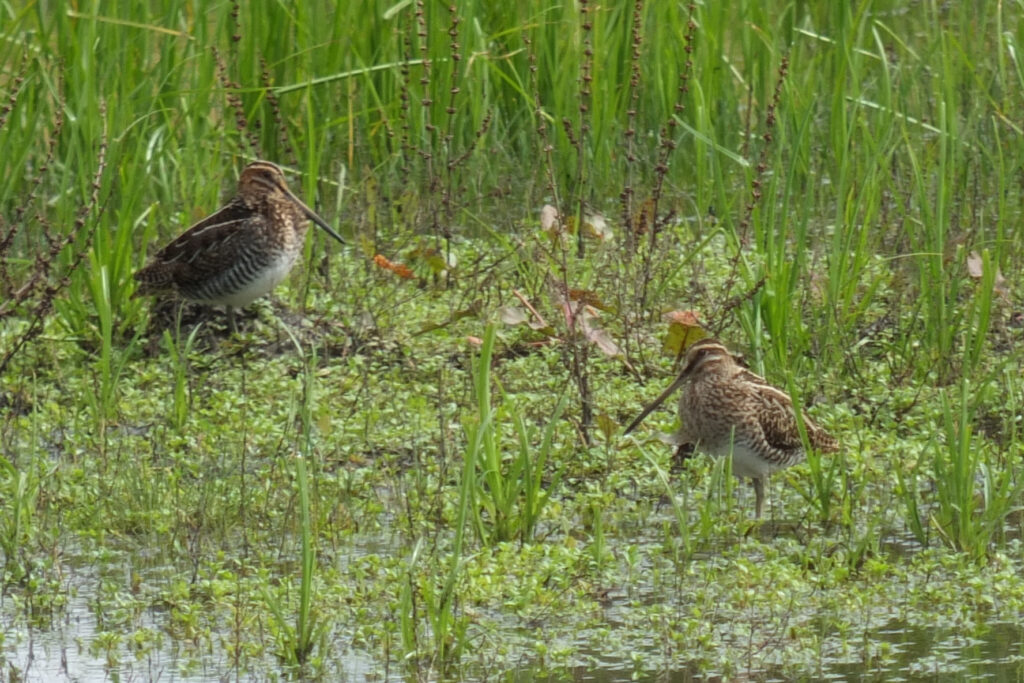
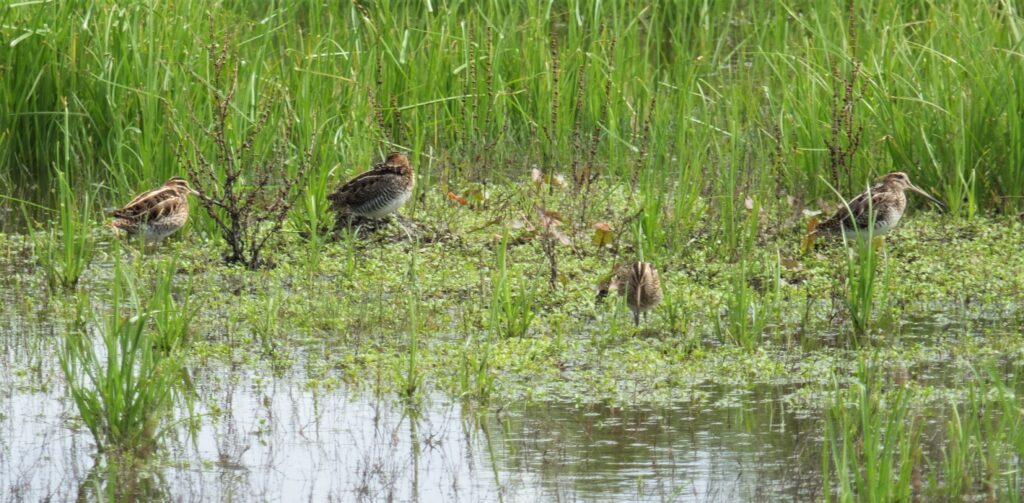
In Ontario in 2013 I encountered breeding birds in several locations and found them equally tame at this season.

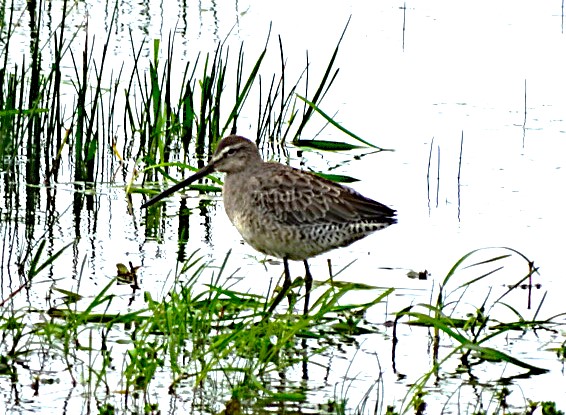
Unlike in northern Europe, Short-billed Dowitcher is the commoner of the two species in the Azores as it winters in the southern US. However, my first dowitcher on Santa Maria was this Long-billed, confirmed by its reedy call.
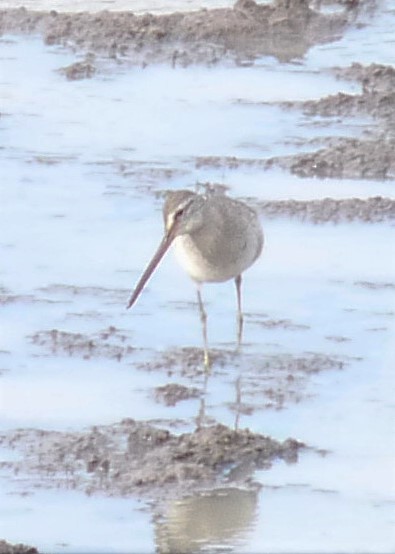
Short-billed looks distinctly greyer in non-breeding plumage and has a guttural, turnstone-like call. I saw two autumn birds and one overwintered with two Greenshanks and a Redshank (itself an Azores rarity!)
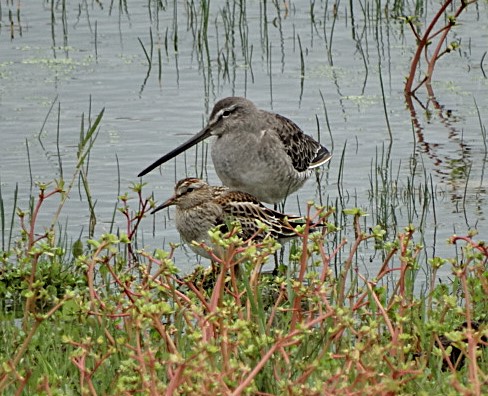

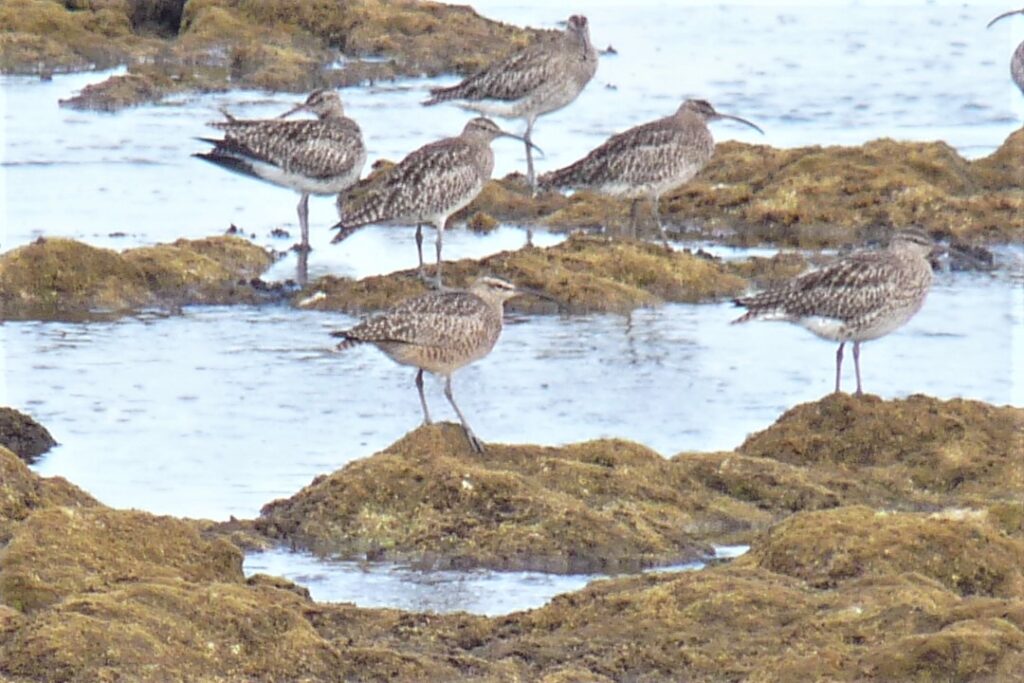
Around thirty Whimbrels spent each winter on Santa Maria and for several years they were accompanied by a single Hudsonian.
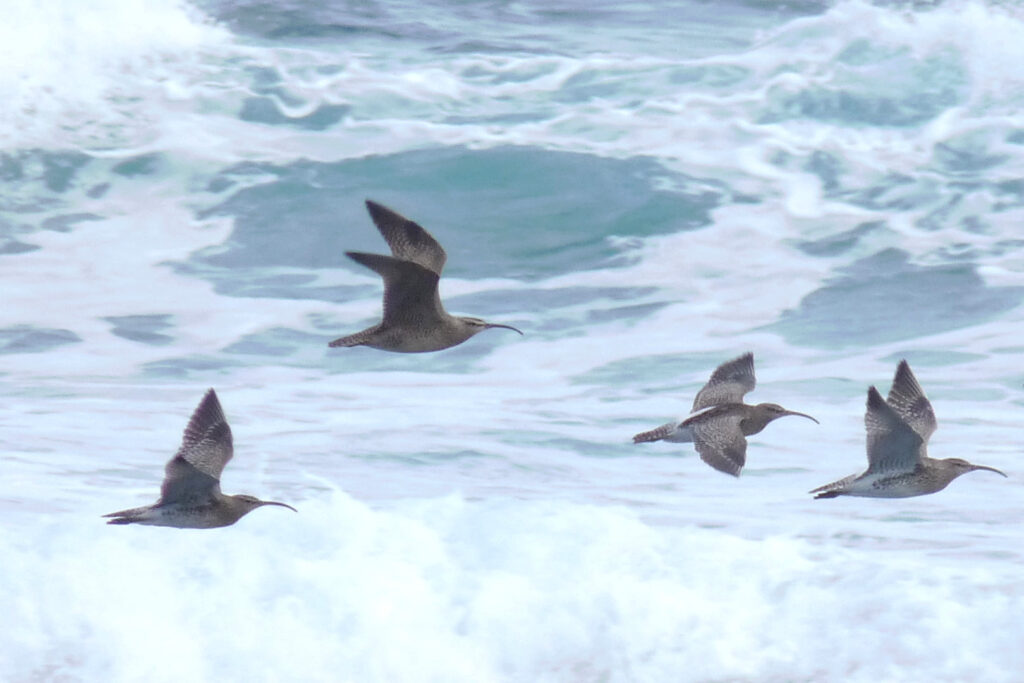
This had clearly returned with them to their breeding grounds because, one autumn, the Hudsonian was briefly accompanied by a hybrid with intermediate characteristics. Is the Siberian race variegatus, which exhibits similar plumage traits,just a stable hybrid form?
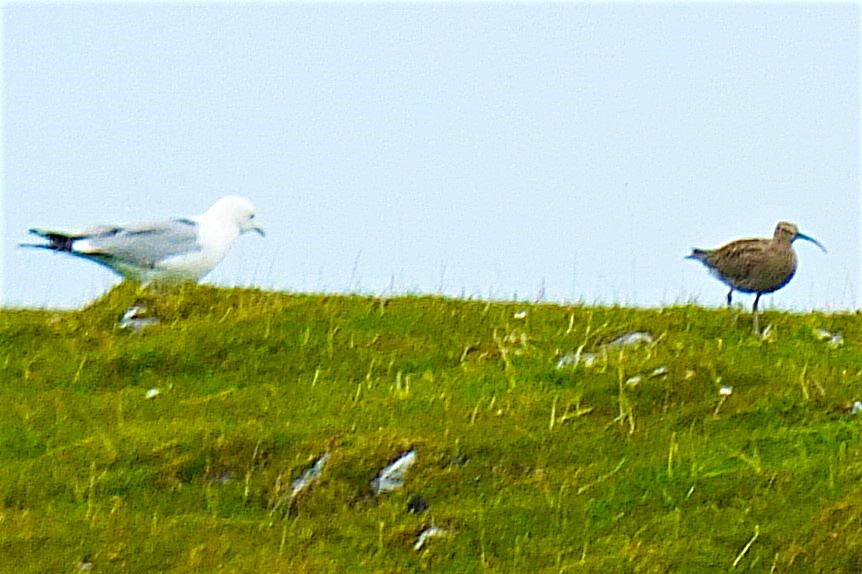
Two normal hudsonicus were seen together on Santa Maria in late April 2010 and mid-September 2012. Earlier in 2012, there was a tired, rufous individual at Durness, Sutherland on 20 May (below right). Dean MacAskill and I saw another rufous individual resting in riverside debris at Lagos, Algarve on 2 May 2022.
.
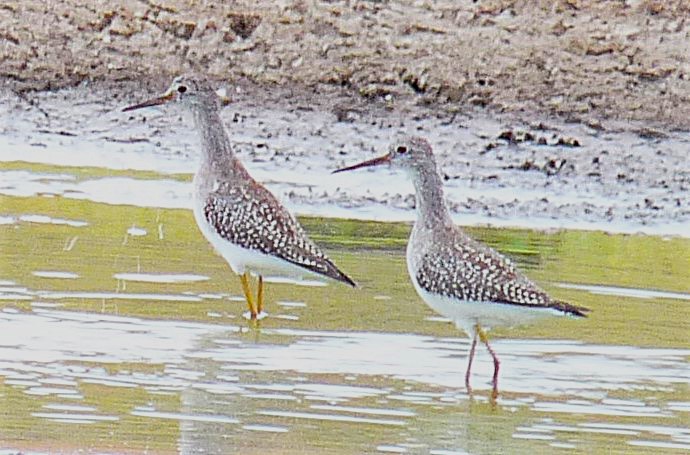
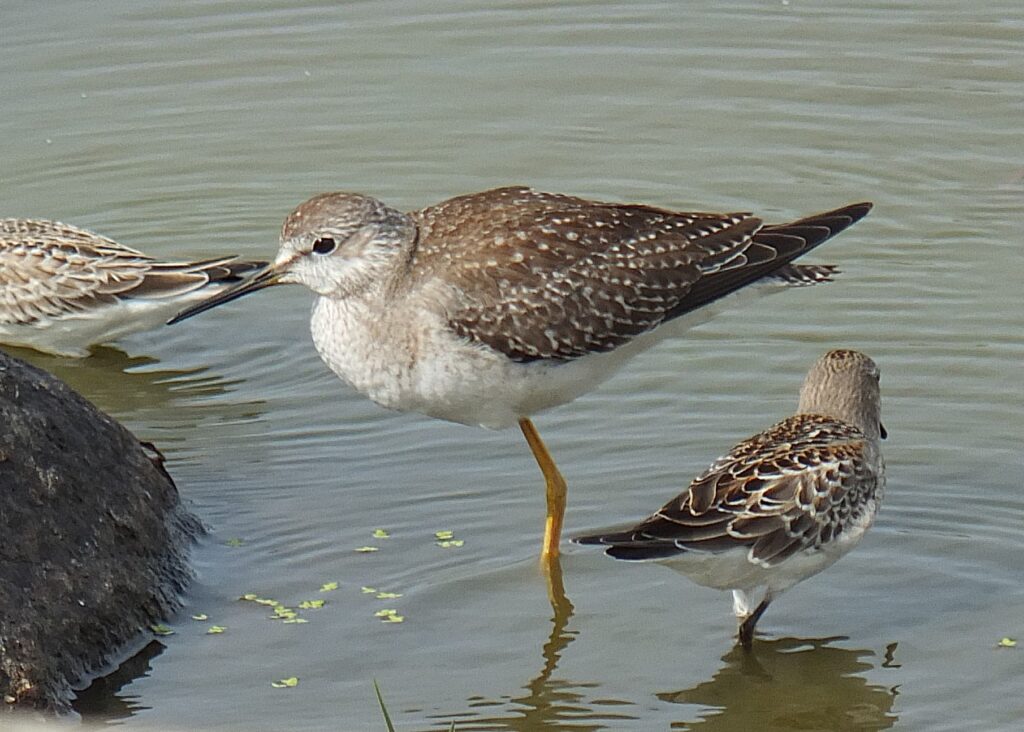
Lesser Yellowlegs were regular visitors to Santa Maria in autumn (there are also winter and spring records) and they are far more approachable than Greenshank. The bird below right was with White-rumped Sandpipers.
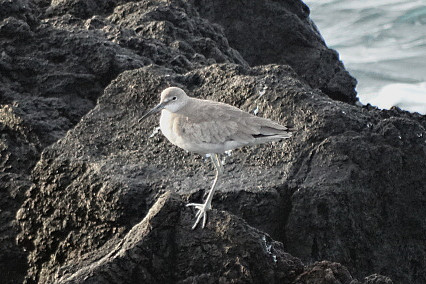
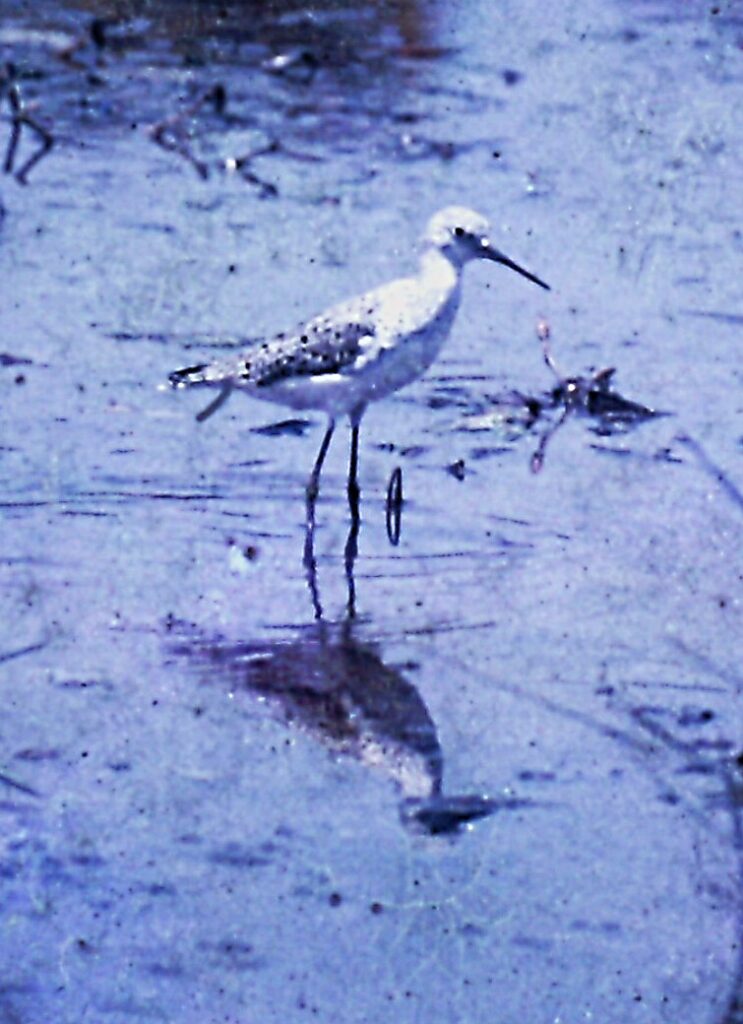
During a visit to neighbouring Såo Miguel I managed to catch up with an overwintering Willet on rocks near the harbour. I first encountered Marsh Sandpiper in The Gambia (below right), where there was a small wintering population. Most migrate south-east from their breeding grounds, witness the 1000+ at Kharrar Jheel, Pakistan as early as late July in 1973.
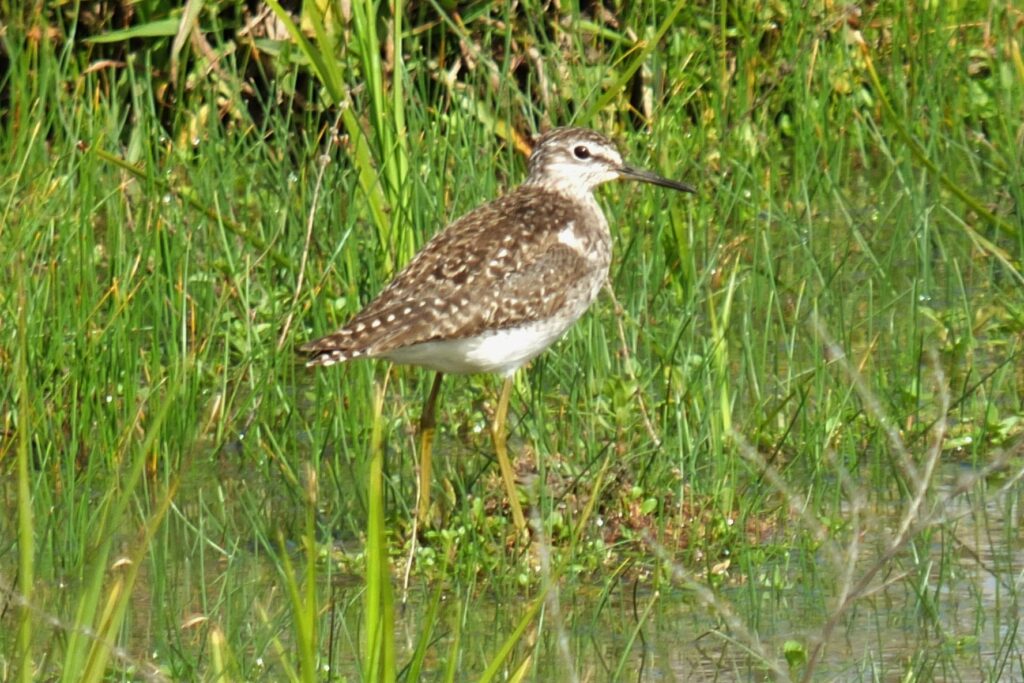
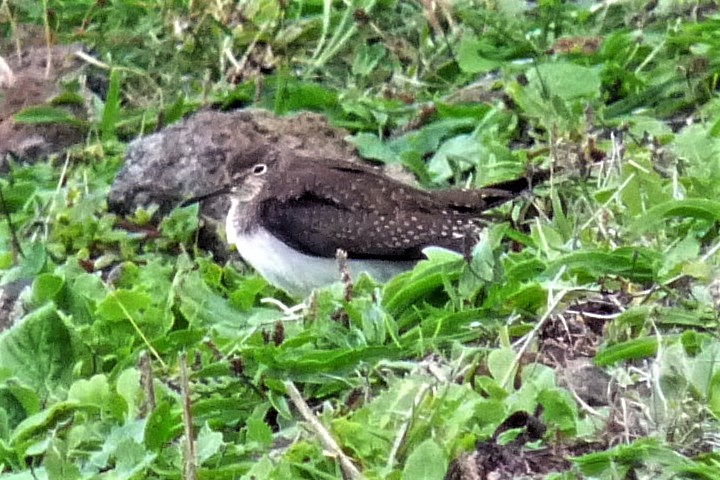
Wood Sandpiper was considered a semi-rarity in the Azores but proved to be a regular passage migrant in spring and autumn on Santa Maria. This spring bird (below left) stayed for several days and got used to my daily checks. Dominic Mitchell and I found an exhausted Solitary Sandpiper (below right) on the north coast in October 2009 but I subsequently saw only two more, both in the autumn of 2012.
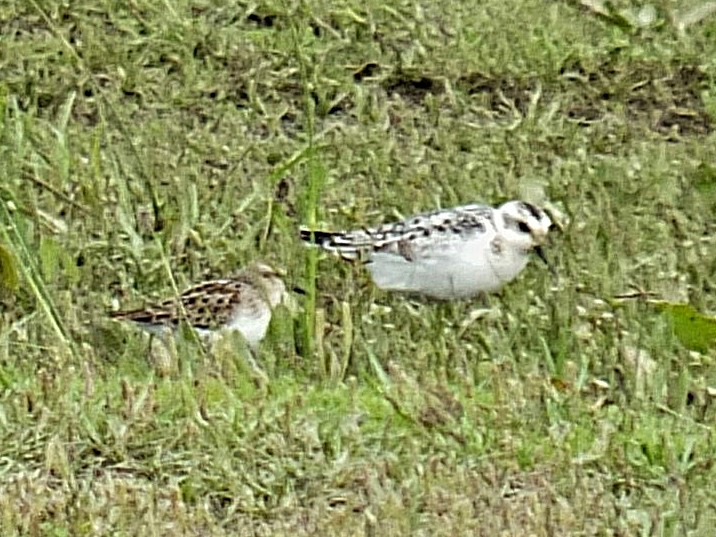
The best area for migrants on Santa Maria is a flat area of degraded lava flow in the north-west, now mainly grassed-over, known as Abegoaria Grande (which roughly translates as ‘big field’). It had a few small seasonal pools and one larger, permanent cattle pond. In late September 2012 there was an unlikely duo in the grass close to one of the pools: a juvenile Little Stint and a Grey Phalarope in the rarely seen transitional stage between the juvenile and first winter plumages. The two were together for three days and left at the same time, suggesting they had probably met over the ocean on their southward migration and formed a bond. I did not see the phalarope enter the water at any stage, so it would have been interesting to know how it spent its first winter.
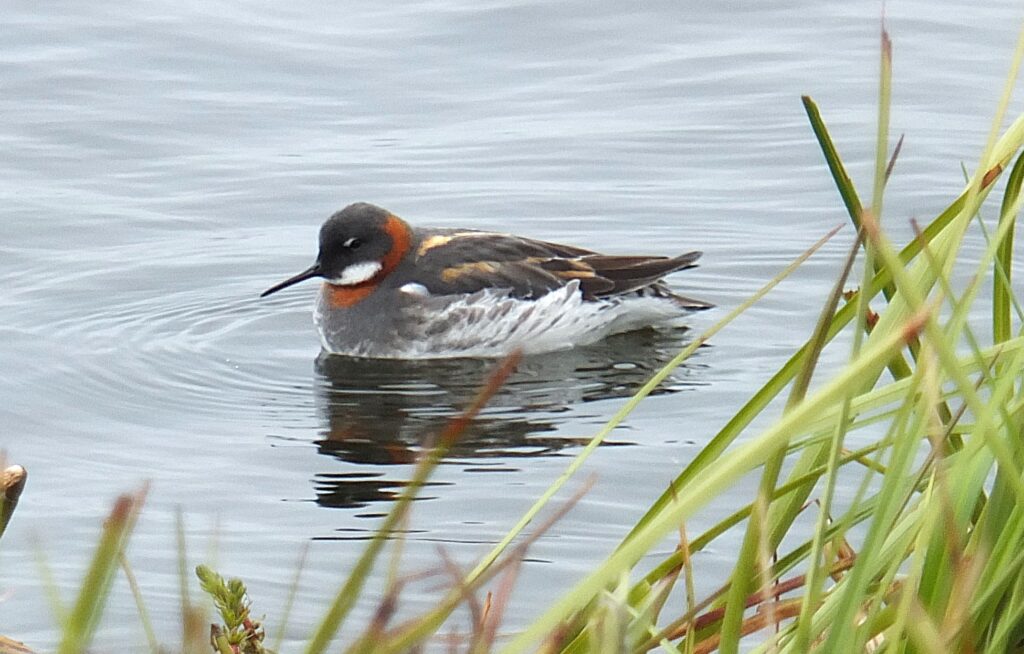
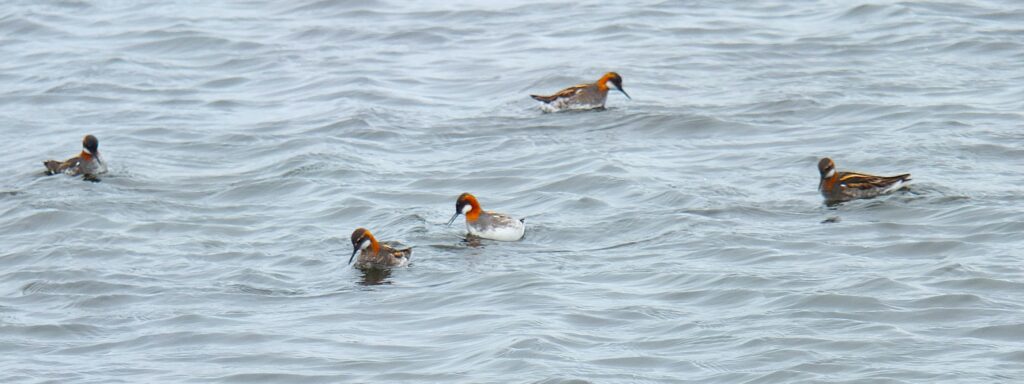
Phalaropes have given me much pleasure over the years, after seeing my first Grey at Teesmouth in 1955 and first Red-necked on North Uist in 1970. I saw one large movement of Grey Phalaropes off Tresco in early October (more than a hundred before breakfast!) and hundreds off the Algarve in December 2022, but Red-necked have always been in small numbers (up to five together in Turkey) until I counted more than forty on a small lake at Vådso, by the Varanger Fjord in Norway, in June 2012.