Waterbirds
In the Azores, Pied-billed Grebe appears to be resident on the eastern island of São Miguel but visitors to Santa Maria are probably newly arrived migrants. This bird shared its pool with a Tufted Duck, itself uncommon.

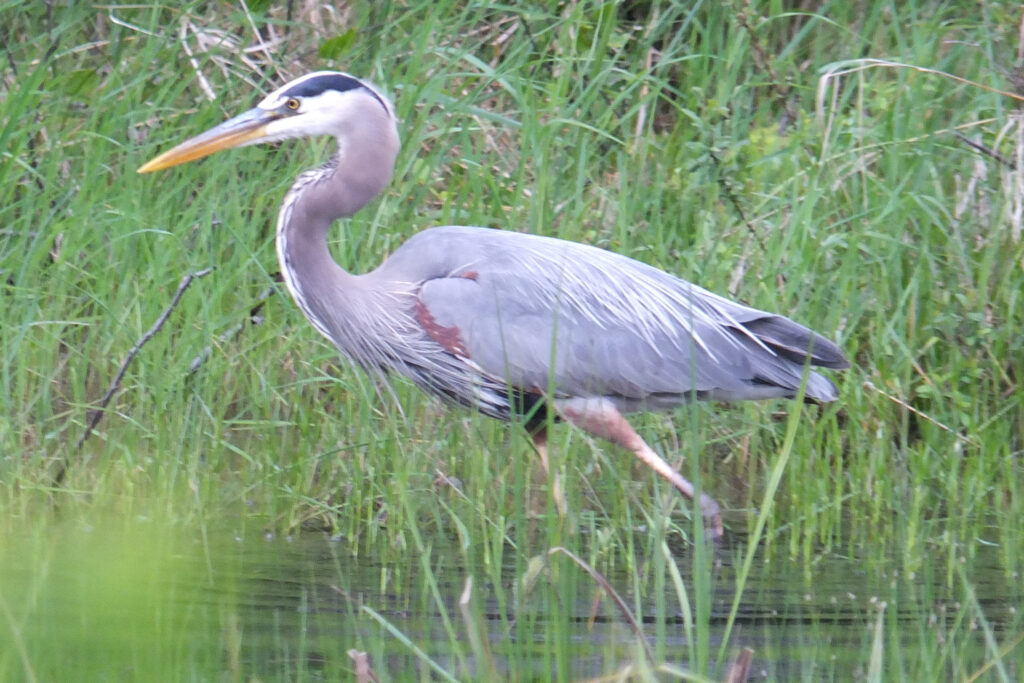
Great Blue Heron is second only to Goliath in size. This superb adult in breeding plumage was in the Algonquin National Park in northern Ontario.
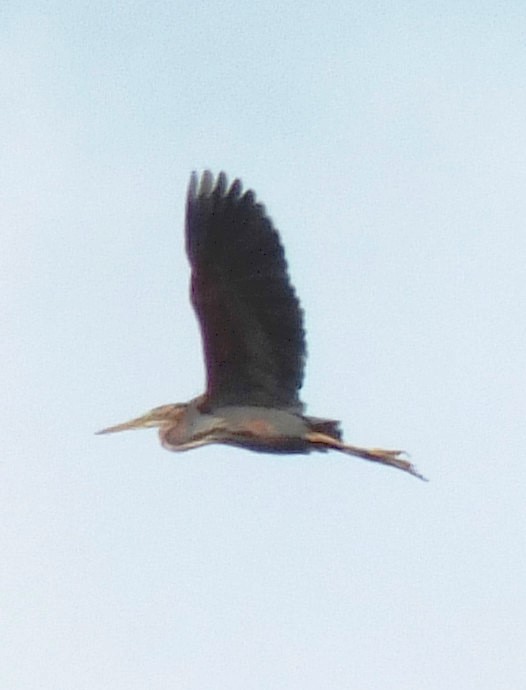
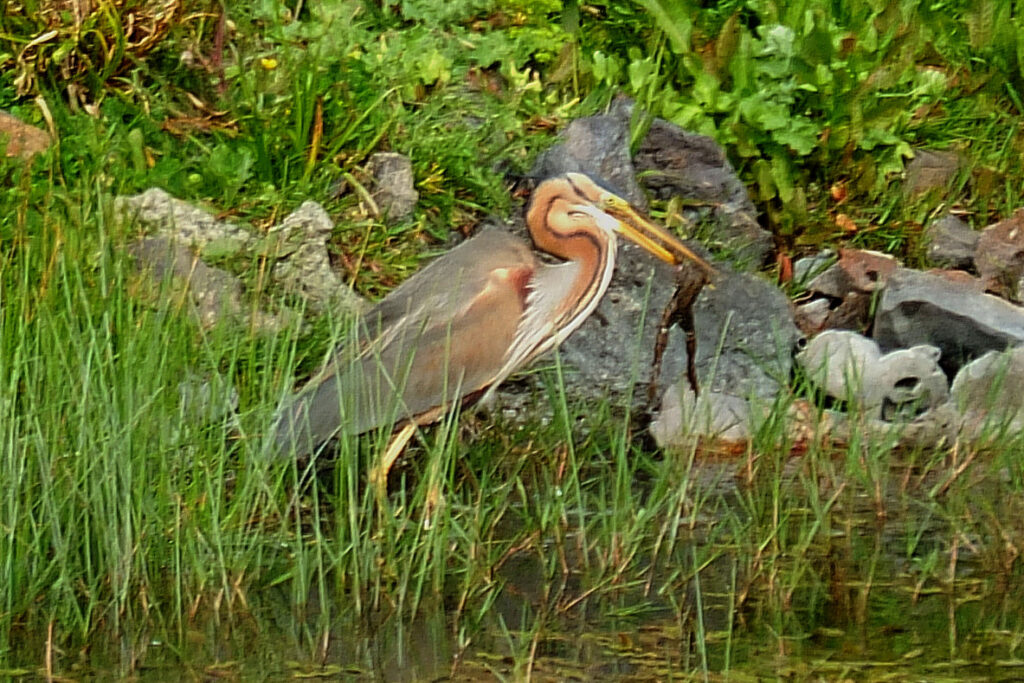
My most memorable experiences of typical herons have been with Purple, from vagrants in Britain and migratory flocks in central Turkey, north Cyprus and Kefallinia to photogenic strays on Santa Maria (below) and, most recently, spring arrivals from Africa ‘coasting’ past Salema in the Algarve.
Santa Maria also intercepts some northbound Night Herons in spring, probably deflected into the Atlantic by the strong north-east ‘trade winds’.
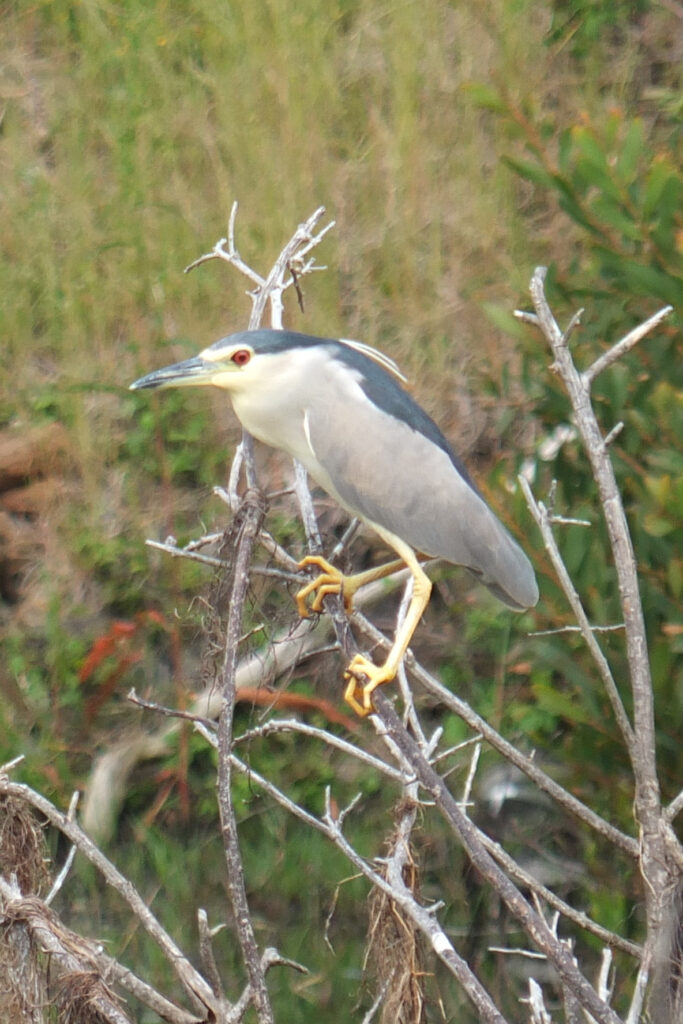
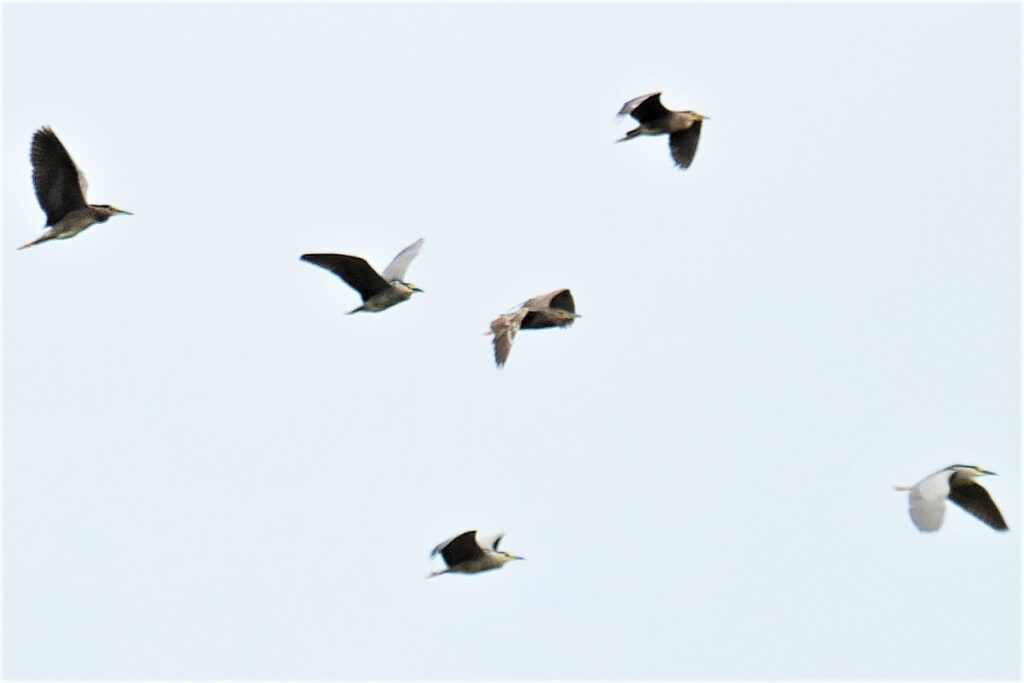
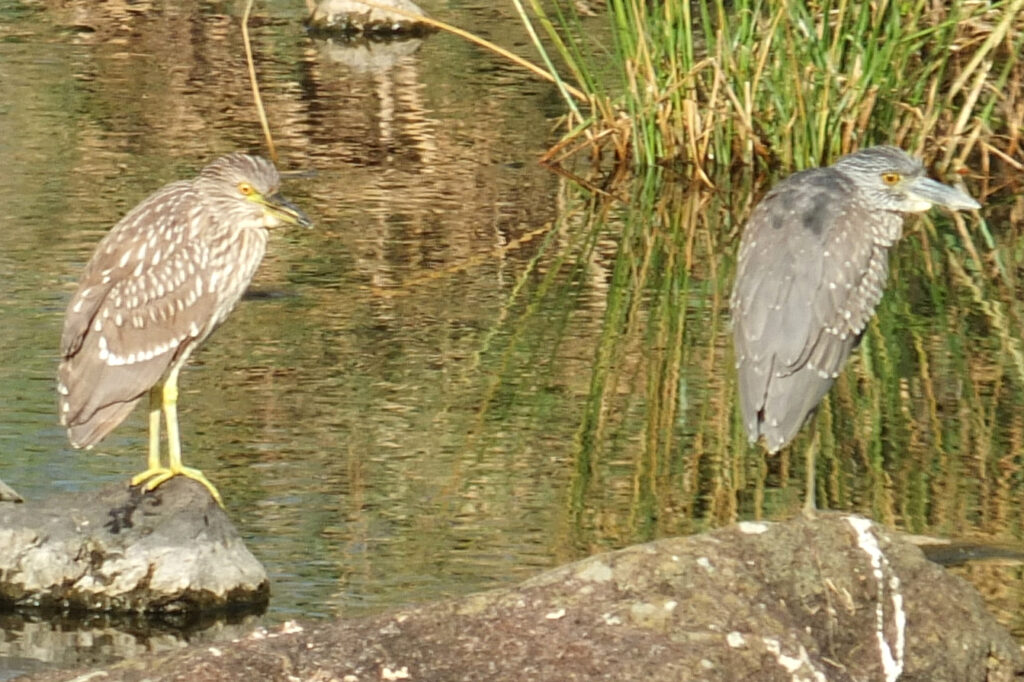
In October 2013 the island also hosted a unique duo which remained together until early January: juvenile Black-crowned and Yellow-crowned Night Herons. This was the first autumn record of Black-crowned in the Azores and the first occasion on which both species had been seen together in the Western Palearctic. It is possible, of course, that the Black-crowned was also of Nearctic origin.

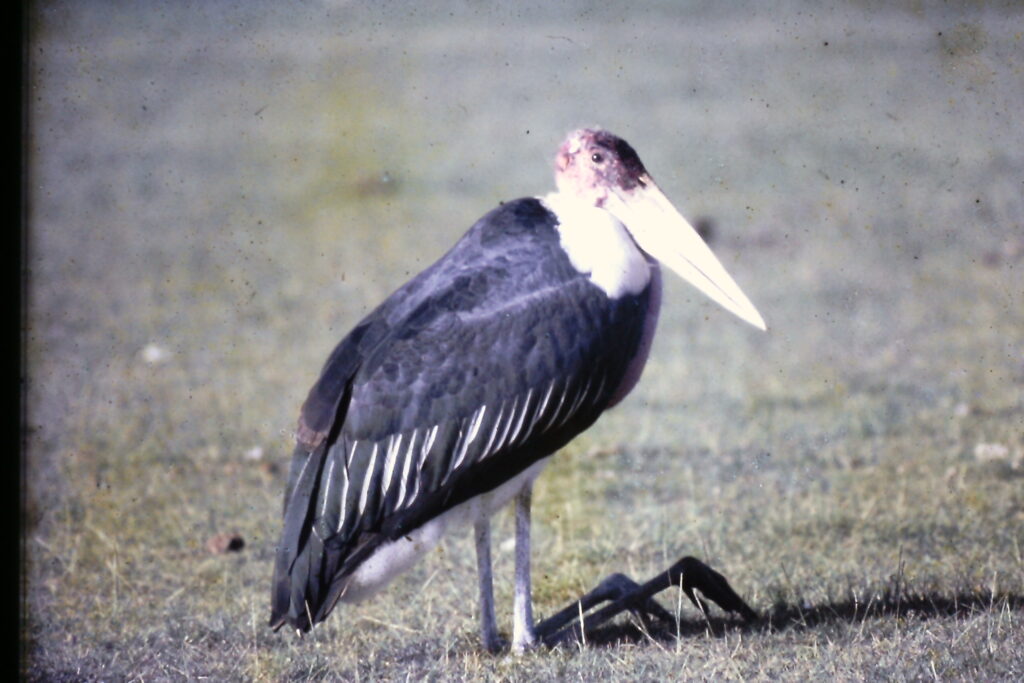
Whilst White Stork must be one of the most photographed birds in the world, Black Storks, nesting in remote mountainous areas, offer a greater challenge. Fortunately, they come to me in the Algarve each autumn, sometimes embedded in Griffon flocks.


It’s a hard life being a Marabou in Africa . . . . . .
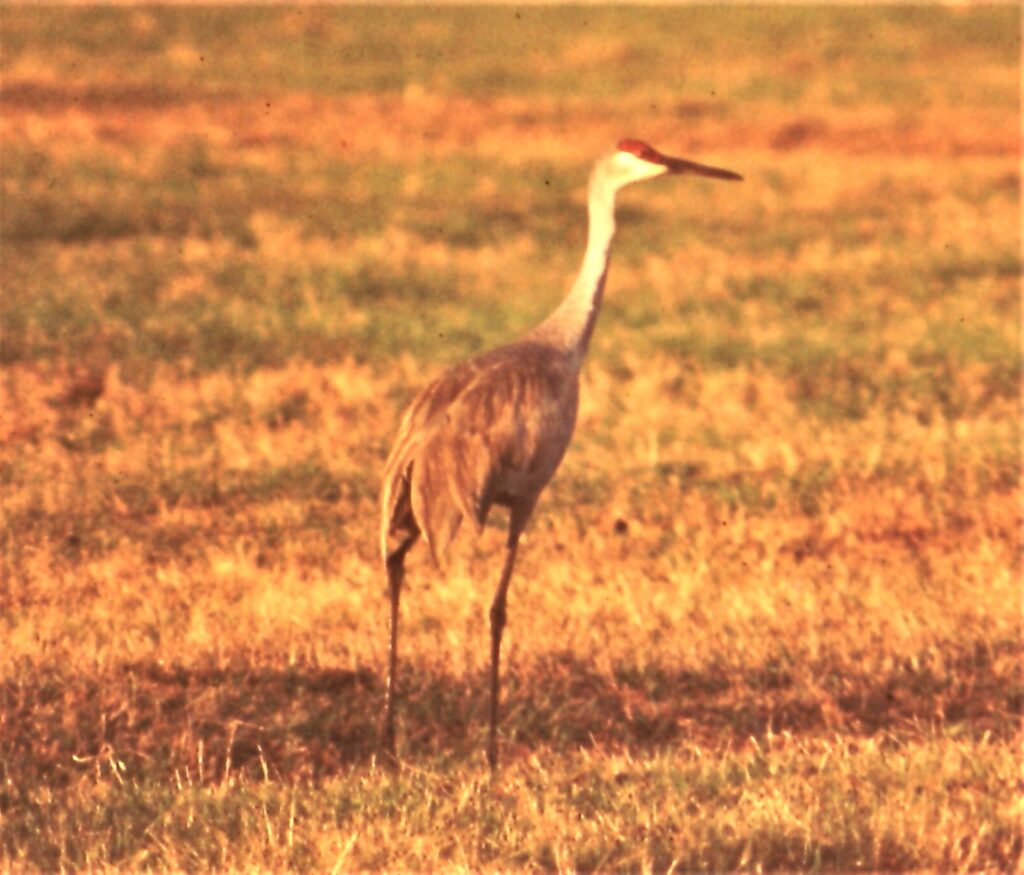
Cranes of any description are awe-inspiring. In Florida I only saw Sandhill Crane once, in late evening sunlight.
I saw many more in Ontario in 2013, on the shores of Lake Erie and further north near Tobermory. At the latter location I was waiting in a queue of about forty people at the entrance to the National Park to get the required day permit when I heard a Sandhill Crane bugling. The noise got ever louder and then the crane appeared over the trees, still calling, only about 20m above our heads. Not one person in the queue even glanced up!
A Common Crane on Cowpen Marsh, Teesmouth, in the late fifties was then a major event. A party of five unringed Demoiselles in the same area in spring was put down to ‘probable escapes’ at the time, but from where? I now see no reason why they could not have been genuine vagrants at this season.
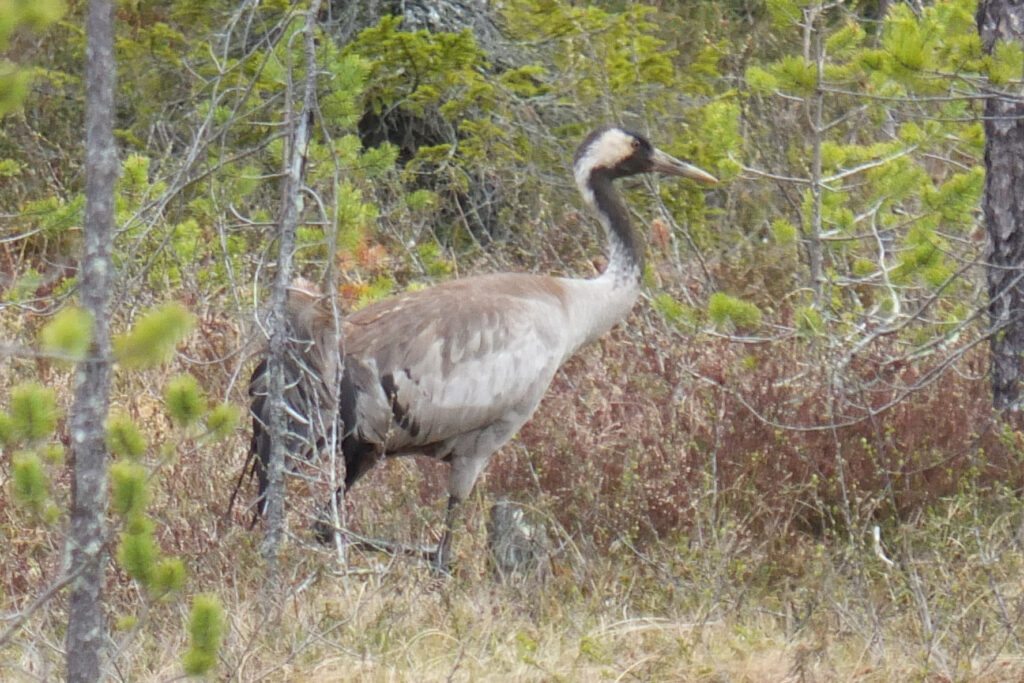
I saw many migratory and a few breeding Common Cranes in Turkey and encountered breeders again in Sweden and Finland on my way up to Lapland in 2012. A small clearing in boggy woodland seemed to suffice for this individual in southern Sweden.
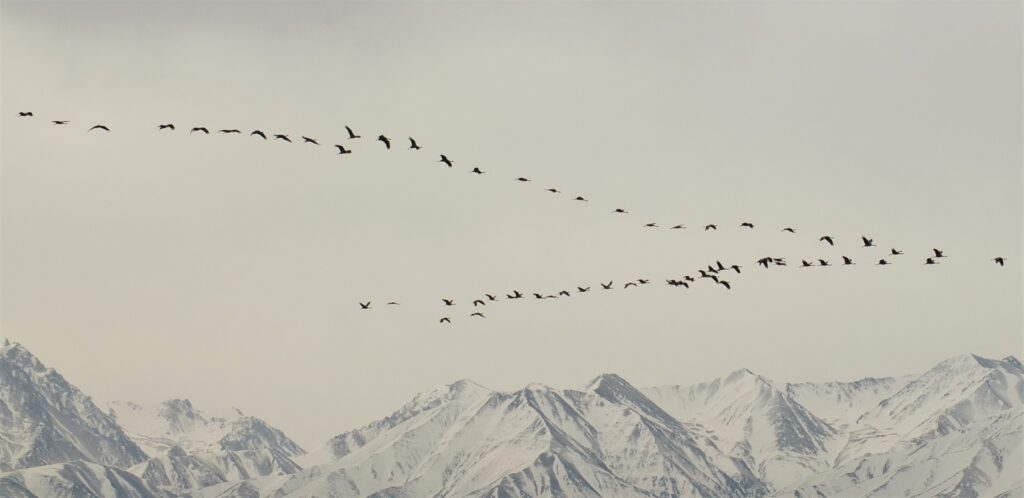
I saw only one flock of Demoiselles migrating north in Pakistan in 1974 but visited Kazakhstan at the peak of their spring migration in April 2015. I cannot match the filming of them being attacked by Golden Eagles in Himalayan passes but the spectacle of large flocks against the background of the Tien Shan mountains was reward enough.

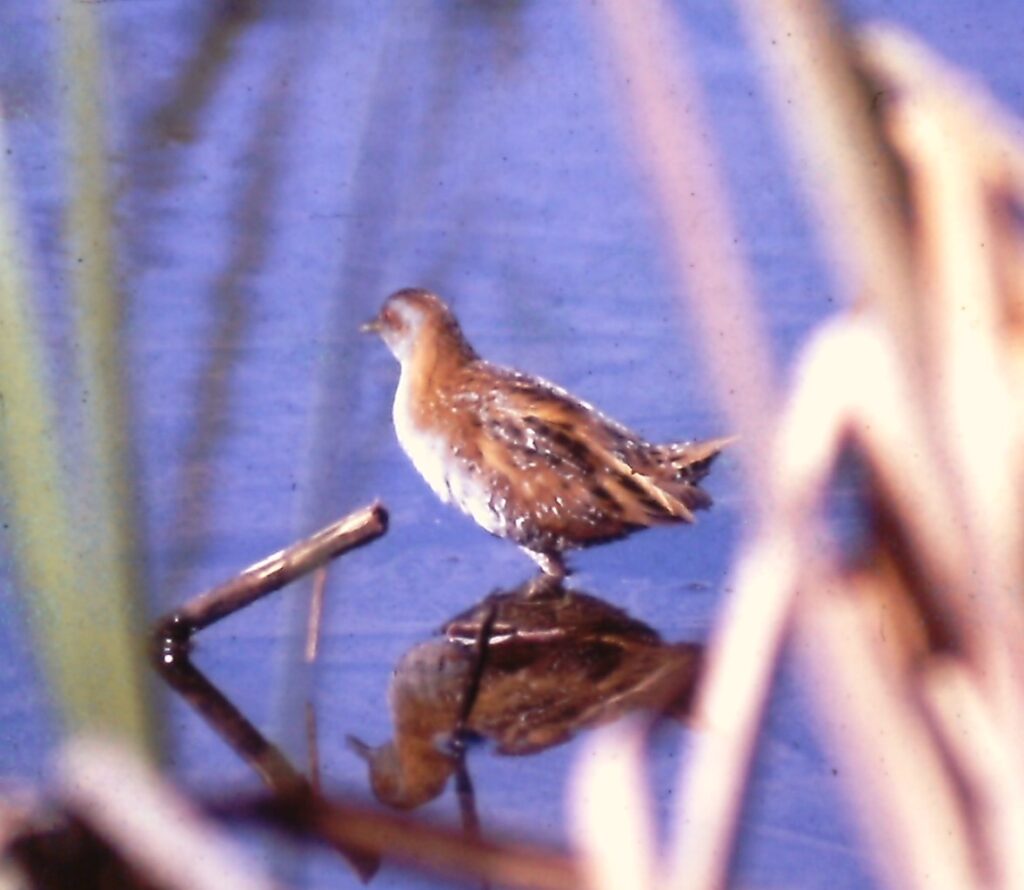
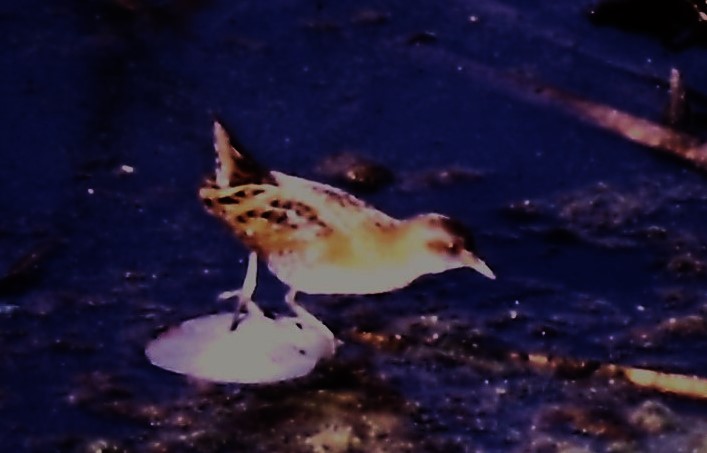
The Balloki Headworks on the Sutlej River in the Pakistan Punjab had large bunded tanks with reeds and other emergent vegetation. Three species of bittern could be seen there as well as Ruddy, Brown, Spotted and Baillon’s Crakes. These last were surprisingly confiding, feeding in the open just below me. Most of my many transparencies are damaged but two of the survivors are reproduced below.
More recently, two male Baillon’s Crakes were calling from the Boca do Rio reedbed close to my Algarve home in January 2024 before floodwater drove them out. During exceptional, prolonged rainfall in the spring of 2025 the sandy tracks in my valley were saturated and I found Baillon’s Crake footprints (identified from measurements) being regularly replenished until the weather relented in early May.

The measurement guide below the prints measured 3cm
Although I obtained ‘record shots’ of Spotted Crake in Pakistan, I assumed the more obliging bird on Santa Maria in October 2012 was a newly arrived migrant.
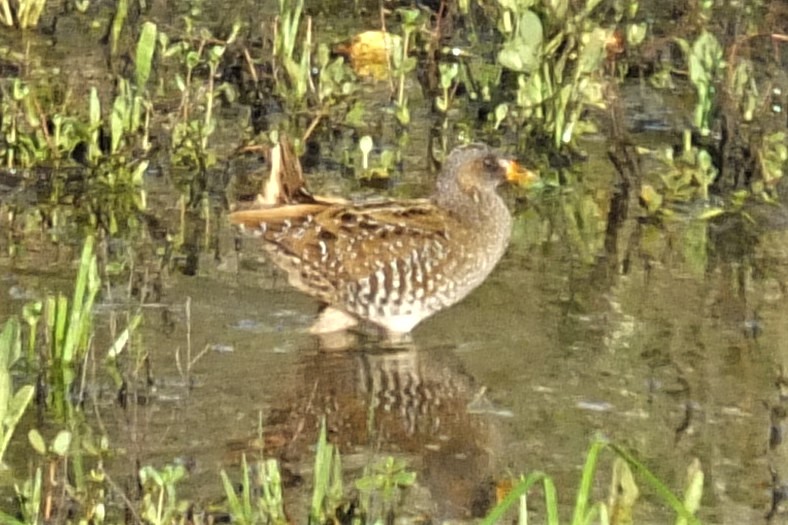
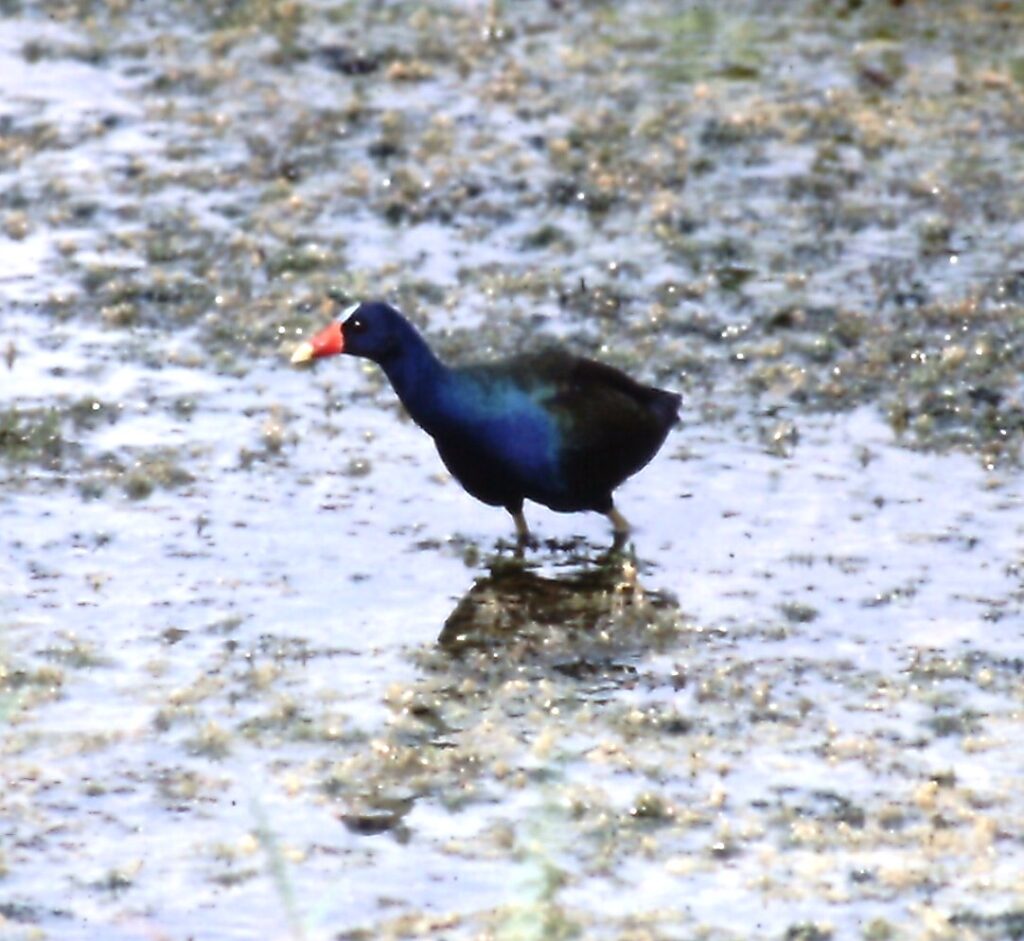
However, in 2016 I discovered a hidden pool with reeds and fringing brambles (not even known to resident birder Nelson Moura), which had an adult Allen’s Gallinule. During a return visit to the island in May 2017 there was an immature Allen’s Gallinule there, plus several newly hatched ‘crakelings’ at the water’s edge. I did not see the parent, but its calls: a sharp ‘klep’, several ‘boos’ and a long squealing note (quieter than Water Rail’s) are all consistent with Spotted Crake – the first breeding record for the Azores.
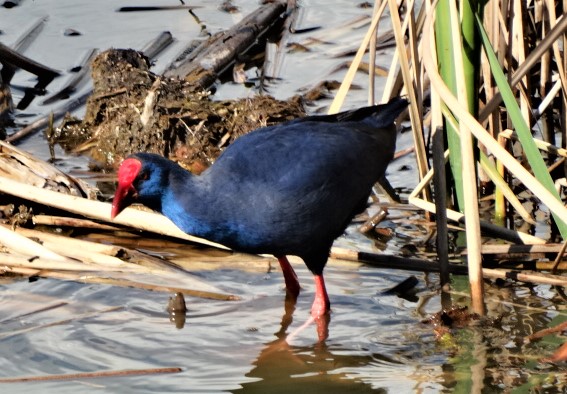
At the other end of the size spectrum is Purple Swamphen. When I first visited the Algarve in 1979 the chances of seeing this species in the Ria da Formosa Parque Naturale were almost nil. Since then, the proliferation of coastal golf courses with water features has rendered them unmissable and easily photographed. Purple Gallinules in Florida were equally confiding.